Algeria
 Egypt
 Libya
 Morocco
 Sudan
 Benin
 Burkina Faso
 Cabo Verde
 Côte d'Ivoire
 Ghana
 Guinea
 Guinea-Bissau
 Liberia
 Mali
 Mauritania
 Niger
 Nigeria
 Senegal
 Sierra Leone
 The Gambia
 Togo
 Cameroon
 Central African Republic
 Chad
 DR Congo
 Equatorial Guinea
 Gabon
 Republic of the Congo
 São Tomé and Príncipe
 Burundi
 Comoros
 Djibouti
 Eritrea
 Ethiopia
 Kenya
 Madagascar
 Malawi
 Mauritius
 Mozambique
 Rwanda
 Seychelles
 Somalia
 South Sudan
 Tanzania
 Uganda
 Angola
 Botswana
 Eswatini
 Lesotho
 Namibia
 South Africa
 Zambia
 Zimbabwe
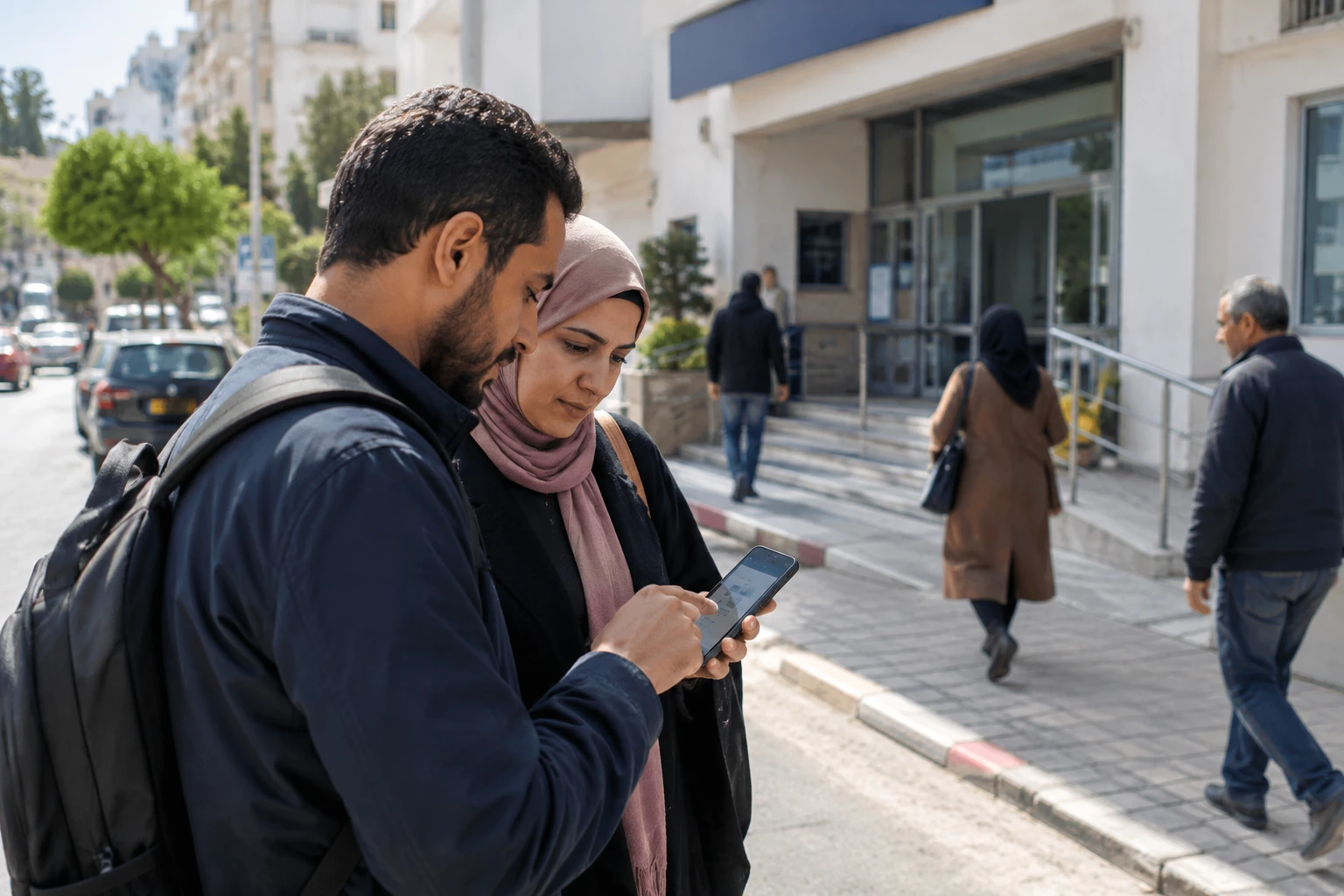
For a Tunisian woman or man, an online procedure is progress only if it works, protects data and remains accessible beyond the major urban centres. That is the practical test by which Tunisia’s 2027 digital programme will be judged, far more than by the amount shown in budget documents.
One billion dinars, but not one billion paid by the state
The announced figure needs clarification. The Communications Technologies mission is estimated at around 1.074 billion dinars for 2027. But this allocation does not represent spending funded entirely by the state budget: around 858.5 million dinars would come from the own resources of state-owned companies overseen by the ministry. The state’s contribution would amount to 215.6 million dinars. This distinction changes how public spending and the responsibilities for its implementation should be understood.
Minister Sofiene Hemissi presented these plans on 6 November 2026 to committees of the National Council of Regions and Districts. The project provides for a 9.3% increase compared with the previous financial year, according to figures released during the budget review. Tunisia’s National Radio reports, however, that the portion corresponding to the ministerial mission in the draft budget is 215 million dinars, while the higher amount includes the resources of bodies and companies under its supervision. Tunisia’s National Radio report on the ministry’s budget and details on funding for the mission describe these two levels of spending.
From public services to connectivity, the announced projects
The government wants to increase the number of services on the Khadamet app from more than 40 to 150. It also plans to activate 1.5 million digital identities and develop 200 interoperability services, meaning data exchanges between government departments. The customs, health and justice systems are among the sectors involved.
For users, the value will depend on whether services are genuinely available and whether government departments can process requests. A digital portal can reduce travel and waiting times. It does not, however, replace support for people who are less comfortable with digital tools, or in-person counters when connections or platforms fail.
The programme also plans to extend broadband, connect more public institutions and strengthen national storage and cloud-computing capacity. The commissioning of the Medusa submarine cable is presented as another way to improve connectivity. IT audits, child protection online and the security of public systems are also on the agenda.
On the economic front, Tunis aims to have 2,000 companies with “Start-up” status in 2027, compared with around 1,400 in 2026. Platforms for exporters, community enterprises and the marketing of products made by rural women have been announced. The government also plans to revise legislation on telecommunications and personal data, regulate digital platforms and online freelance work, and draw up an ethics charter on artificial intelligence.
Success will also depend on access and trust
These ambitions form part of a trajectory in which administrative modernisation remains unfinished business. The Prime Minister’s Office listed 114 digital transformation projects under way in 2026 and announced the launch of Khadamet with more than 40 services. The target of 150 services therefore requires significant expansion, as well as continuity: platforms will need to be maintained, updated and connected to government systems. The Tunisian Prime Minister’s Office portal on digital projects outlines the programme.
International indicators point to both progress and room for improvement. In its 2024 E-Government Development Index, the UN ranked Tunisia 87th out of 193 countries, with a score of 0.6935 out of 1. The International Telecommunication Union, meanwhile, places the country in Tier 3, “Establishing”, in its 2024 Global Cybersecurity Index. The ranking assesses commitments and capabilities across several areas; on its own, it is not a measure of the security of every digital service. The ITU’s 2024 Global Cybersecurity Index places Tunisia in this category.
During budget discussions, elected representatives raised practical concerns: inadequate network coverage in some areas, data protection and children’s online safety. They also referred to post offices and ATM outages. These difficulties are a reminder that digital transformation also concerns local services and everyday payments, not just apps and core infrastructure.
A national issue within a regional context
Tunisia belongs to the Arab Maghreb Union, but regional co-operation there is making slow progress. In this context, connectivity, rules on data and digital services are also matters for co-ordination with its neighbours and Mediterranean partners. The Medusa cable can strengthen international connectivity; on its own, it cannot guarantee affordable access or balanced coverage across Tunisian territory.
Across the continent, the challenge is shared: developing digital public services while protecting citizens and preventing disparities in network access from becoming disparities in access to rights. In 2027, the indicators to watch will therefore include not only the funds actually mobilised, but also the number of services that people can genuinely use, their availability in the regions and the safeguards for personal data. The allocation measures the scale of the ambition; results will depend on its implementation and oversight.