Algeria
 Egypt
 Libya
 Morocco
 Sudan
 Benin
 Burkina Faso
 Cabo Verde
 Côte d'Ivoire
 Ghana
 Guinea
 Guinea-Bissau
 Liberia
 Mali
 Mauritania
 Niger
 Nigeria
 Senegal
 Sierra Leone
 The Gambia
 Togo
 Cameroon
 Central African Republic
 Chad
 DR Congo
 Equatorial Guinea
 Gabon
 Republic of the Congo
 São Tomé and Príncipe
 Burundi
 Comoros
 Djibouti
 Eritrea
 Ethiopia
 Kenya
 Madagascar
 Malawi
 Mauritius
 Mozambique
 Rwanda
 Seychelles
 Somalia
 South Sudan
 Tanzania
 Uganda
 Angola
 Botswana
 Eswatini
 Lesotho
 Namibia
 South Africa
 Zambia
 Zimbabwe
When the heat bears down on households and networks
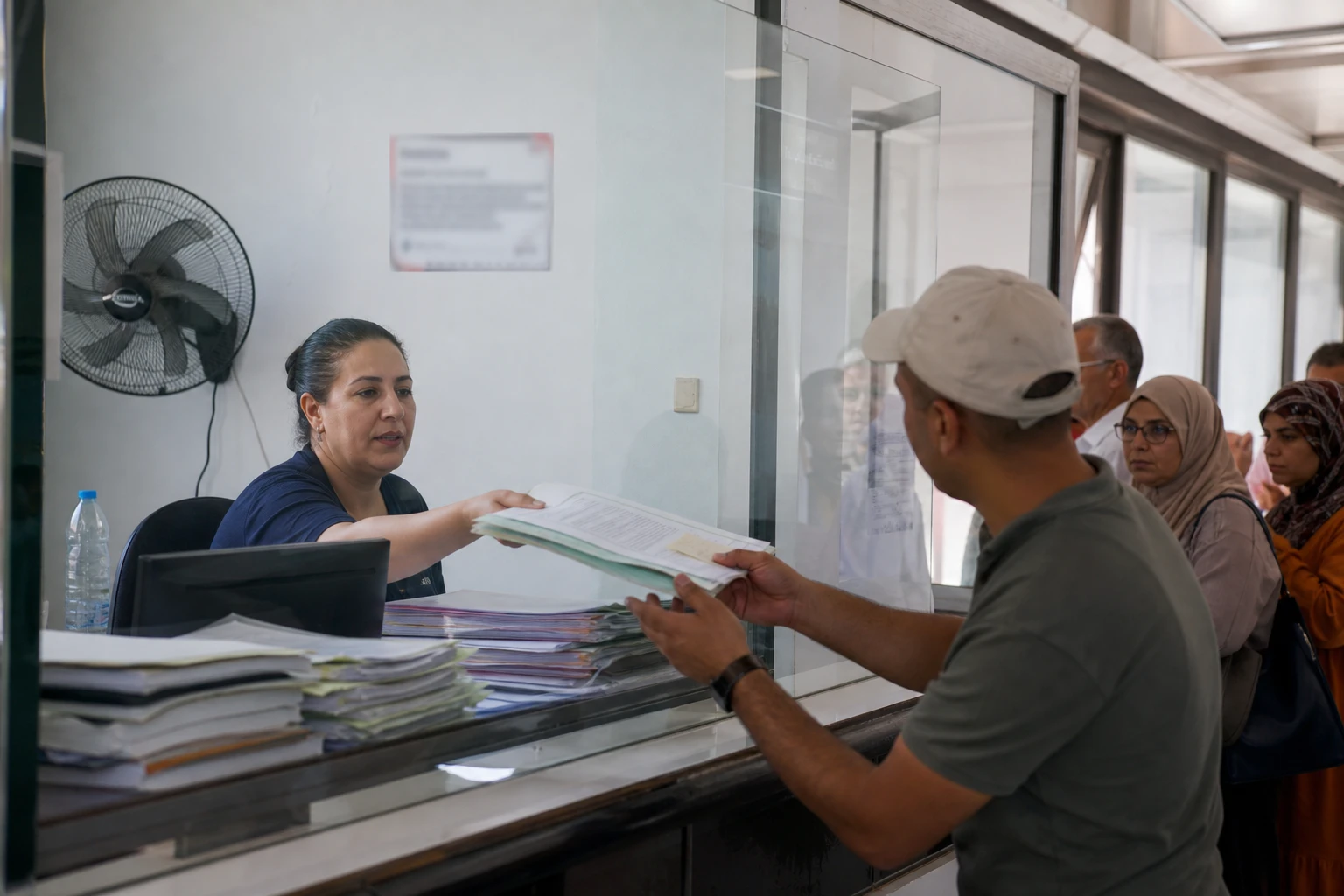
In Tunis, the heat is no longer measured only by the thermometer. It can also be seen in queues, water bottles disappearing from shelves and hours spent without electricity. In Tunisia, a new heatwave has put the country under meteorological watch, with peaks forecast or recorded at around 48 to 49 °C in several regions, according to the National Institute of Meteorology.
Households are feeling the pressure first. Businesses, transport, small neighbourhood enterprises and essential services are affected next. In Greater Tunis, home to around 3 million people, pressure on electricity and water quickly becomes an everyday concern. SONEDE supplies drinking water across Tunisia through a network of more than 48,000 kilometres of pipes and 1,412 reservoirs, while STEG manages the national electricity network.
A local episode, but in a country already under strain
Tunisia is not facing an isolated crisis. It lies in a Mediterranean region that UN institutions describe as one of the areas most exposed to global warming, with temperatures rising faster than the global average and growing pressure on water resources. Demand for water in the Mediterranean basin is also expected to increase sharply by 2050, while periods of intense heat are becoming longer and more frequent.
In this context, heatwaves are more than seasonal discomfort. They become a stress test for infrastructure. In Tunisia, water networks rely heavily on electric pumping stations. When the power goes out, water supplies can be interrupted in turn. This dependence explains why a power failure can almost immediately become a failure of access to water.
The country has nevertheless launched several projects to strengthen its water security. In June 2026, SONEDE inaugurated the Sfax desalination plant, presented as a strategic project to secure water supplies. In 2026, the government also approved measures to modernise distribution, improve leak management and develop non-conventional water resources. But these investments take time. They cannot immediately ease the pressure of a heatwave bearing down on an already strained network.
The facts: power cuts, load shedding and dwindling stocks
For several weeks, STEG has published notices of power cuts on its official channels. The interruptions affect different regions, including Greater Tunis, the north, centre, south, Sfax and the north-west. The state-owned company describes these operations as load shedding: planned cuts intended to prevent the network from collapsing when demand exceeds available capacity.
The mechanism is simple. When consumption rises, particularly with the widespread use of air conditioning, the network comes under strain. Power cuts are then imposed in different areas. But the consequences go beyond electricity alone. Pumps supplying part of the water network stop working during outages. In several localities, taps run dry for hours.
Businesses are also feeling the strain. According to available information, shortages sometimes affect bottled water itself, with quotas at some supermarkets and stocks quickly running out in small shops. This is not just a supply problem. It exposes the vulnerability of an entire chain, from production to distribution, when factories and warehouses are also hit by power cuts.
What the crisis reveals about the state, public services and trust
In response, President Kaïs Saïed referred to «premeditated acts» and «criminal plots» after a meeting with the head of government and the heads of STEG and SONEDE. These accusations have not been publicly supported by verifiable evidence. They come amid political tensions, with the issue of essential services intertwined with that of civil liberties.
Tunisia was long presented as the only lasting success to emerge from the 2011 uprisings. Since 2021, presidential power has grown considerably, and human rights organisations have reported a shrinking political space. In this context, every social crisis takes on an added dimension. It is not just about the price of electricity or pressure on water reserves. It raises questions about the state’s ability to protect the population without turning scarcity into widespread suspicion.
For urban residents, the crisis means more difficult days, disrupted businesses and extra spending to obtain water or adjust household use. For low-income households, the room for manoeuvre is even narrower. In rural areas and outlying districts, where access to services may already be more unequal, even a brief interruption is felt more quickly. The contrast is clear between neighbourhoods where people can find alternatives and those where they simply have to endure it.
A warning from Tunisia for North Africa
What is happening in Tunisia extends beyond its borders. North Africa shares the same underlying climate trends: rising temperatures, water stress, rapid urbanisation and electricity networks under growing pressure in summer. Across the Mediterranean region, policymakers now face the same chain of events: extreme heat, excess consumption, a vulnerable network, then a domino effect on water, prices and sometimes public order.
Tunisia is making progress on some fronts, notably through its desalination projects and network modernisation. But the current episode is a reminder of a broader reality: climate adaptation is judged not only by strategies, but by the ability to keep taps running and lights on when temperatures approach record levels. That is the real-world measure of a public service’s resilience.