Algeria
 Egypt
 Libya
 Morocco
 Sudan
 Benin
 Burkina Faso
 Cabo Verde
 Côte d'Ivoire
 Ghana
 Guinea
 Guinea-Bissau
 Liberia
 Mali
 Mauritania
 Niger
 Nigeria
 Senegal
 Sierra Leone
 The Gambia
 Togo
 Cameroon
 Central African Republic
 Chad
 DR Congo
 Equatorial Guinea
 Gabon
 Republic of the Congo
 São Tomé and Príncipe
 Burundi
 Comoros
 Djibouti
 Eritrea
 Ethiopia
 Kenya
 Madagascar
 Malawi
 Mauritius
 Mozambique
 Rwanda
 Seychelles
 Somalia
 South Sudan
 Tanzania
 Uganda
 Angola
 Botswana
 Eswatini
 Lesotho
 Namibia
 South Africa
 Zambia
 Zimbabwe
Heat that goes beyond mere discomfort
In Tunisia, the heat is no longer simply making summer days uncomfortable. It is disrupting habits, exhausting people, slowing workshops and putting essential networks under strain. When the thermometer nears 50 degrees inland, the issue is no longer just meteorological: it affects public health, the economy and the organisation of daily life.
This spell comes as a country already exposed to heatwaves, declining rainfall and growing pressure on water. Tunisia’s Ministry of the Environment says average temperatures are expected to rise further by 2050, while annual rainfall could fall by 5% to 10%.
Local records, a national alert
On 17 July 2026, the governorate of Kairouan recorded 49.7°C, according to the National Institute of Meteorology. The previous local record was 49.2°C. In the governorate of Zaghouan, the mercury reached 48.6°C, compared with 48°C previously. Béja also topped 47°C.
The following day, the National Institute of Meteorology placed ten governorates on orange alert: Jendouba, Béja, Zaghouan, Le Kef, Siliana, Kairouan, Sidi Bouzid, Gafsa, Tozeur and Kébili. The alert was issued for an ongoing heatwave.
The authorities reiterated simple but essential precautions: avoid unnecessary outings during the hottest hours, limit direct exposure to the sun and drink water regularly. During an episode such as this, these recommendations are not merely a matter of comfort. They help reduce the risks of dehydration, fainting and heatstroke.
When the weather meets the electricity bill
The heat is also having an immediate effect on the economy. As temperatures rise, electricity consumption climbs, particularly for air conditioning and household needs. At the same time, power supply disruptions have affected several parts of the country, with load-shedding reported in some regions in mid-July. The Tunisian Federation of Textiles and Clothing has even cited a slowdown in activity linked to the heatwave and these outages.
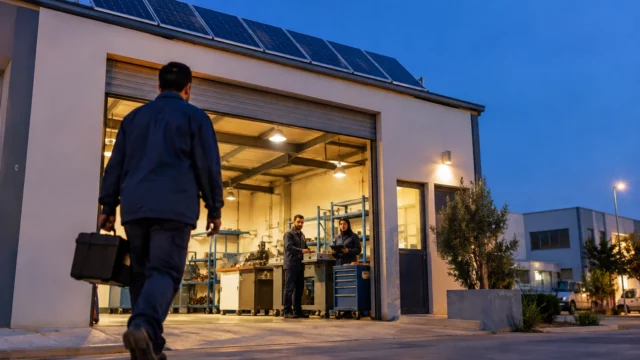
This matters particularly for businesses geared towards continuous production, industrial SMEs and workers in the informal sector. An outage lasting several hours is more than an inconvenience. It disrupts production lines, delays deliveries and drives up costs. In working-class neighbourhoods as well as rural areas, it also affects food preservation, stored water and night-time rest.
In its national ecological transition strategy, Tunisia has already set the goal of a more sustainable, resilient model adapted to climate change. The official document emphasises governance, financing, the protection of natural resources and the resilience of communities.
A warning sign of vulnerabilities already known
This heatwave is not creating Tunisia’s vulnerability. It is making it more visible. The Tunisian Ministry of the Environment identifies water resources, agriculture, the coastline, fisheries, tourism and health as among the most sensitive sectors. In other words, these are the very pillars underpinning a large part of national activity.
The country has also acknowledged in its own recent work that global warming is about more than rising temperatures. It is changing water availability, agricultural productivity, food security and the balance of ecosystems. The ministry projects an increase of 1°C to 1.8°C in average temperatures by 2050, with more pronounced warming in the west and far south.
The economic picture is just as stark. The World Bank estimates that, without sufficient measures, climate impacts could cut Tunisia’s GDP by 3.4% by 2030, or about 5.6 billion dinars a year. In another document, it warns that losses could reach 6.5% of GDP by then if adaptation remains too slow.
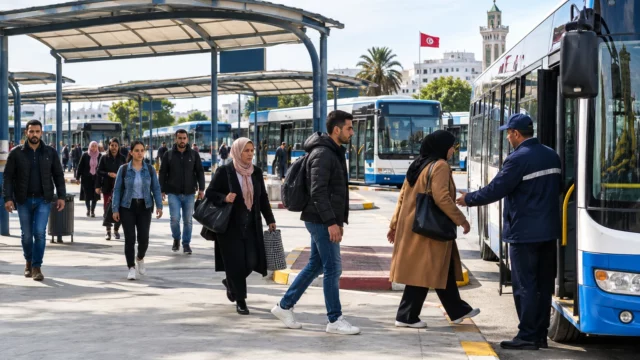
For the population, this means shorter working days, higher energy costs and mounting pressure on public services. For the state, it means better co-ordination between meteorology, health, civil protection and energy. In agricultural areas, especially in the centre and south, each extreme event adds further strain to land already under water stress.
What Tunisia says about its own path
Tunisia is not relying solely on occasional alerts. It has embarked on a broader examination of adaptation. In 2026, its Ministry of the Environment published a summary of climate vulnerabilities and priority measures. The document highlights water, agriculture, the coastline and health as priority areas for action.
This approach reflects a wider African challenge. Across the Mediterranean basin and North Africa, states face longer periods of heat, more frequent droughts and greater pressure on infrastructure. For Tunisia, the question is therefore not just how to get through a summer peak. It is how to strengthen an economy capable of absorbing repeated climate shocks.
The regional implications are clear. A more resilient Tunisia also protects its trade with neighbouring countries, tourist flows and Mediterranean supply chain. The current alert is a reminder that in North Africa, climate adaptation is no longer a distant prospect. It is already a test of capacity for administrations, businesses and households.
What happens next will depend on how long the heatwave lasts, how power cuts develop and how robust the protective measures in place prove to be. But one conclusion is already clear: in Tunisia, temperature records are no longer isolated exceptions. They are part of a climate reality that has become structural.