Algeria
 Egypt
 Libya
 Morocco
 Sudan
 Benin
 Burkina Faso
 Cabo Verde
 Côte d'Ivoire
 Ghana
 Guinea
 Guinea-Bissau
 Liberia
 Mali
 Mauritania
 Niger
 Nigeria
 Senegal
 Sierra Leone
 The Gambia
 Togo
 Cameroon
 Central African Republic
 Chad
 DR Congo
 Equatorial Guinea
 Gabon
 Republic of the Congo
 São Tomé and Príncipe
 Burundi
 Comoros
 Djibouti
 Eritrea
 Ethiopia
 Kenya
 Madagascar
 Malawi
 Mauritius
 Mozambique
 Rwanda
 Seychelles
 Somalia
 South Sudan
 Tanzania
 Uganda
 Angola
 Botswana
 Eswatini
 Lesotho
 Namibia
 South Africa
 Zambia
 Zimbabwe
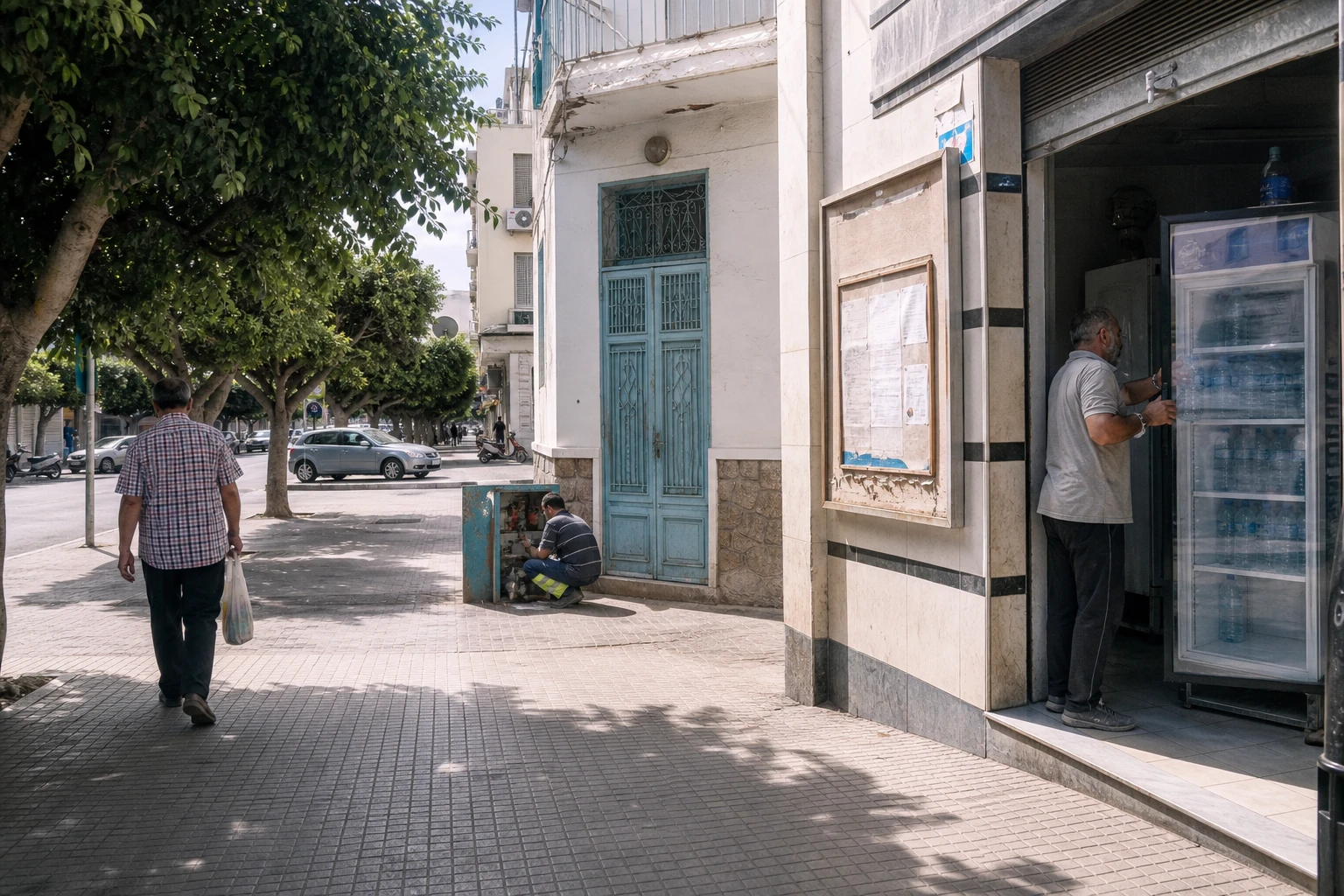
In Tunisia, the summer of 2026 tested more than people’s physical resilience. It put electricity, access to water, public services and detention conditions under strain. In Tunis and the interior regions alike, the heat exposed the fragility of essential networks when demand reached exceptional levels.
Exceptional heat from north to south
The National Institute of Meteorology described the summer of 2026 as the hottest recorded in Tunisia since meteorological records began in 1950. According to the data released, the average temperature was 2.9°C above the previous record.
The most severe episodes came in July and August. Meteorological services described intense and prolonged heatwaves. The phenomenon also extended into the night, with unusually high minimum temperatures. When nights remain hot, the body has less chance to recover. Demand for air conditioning also rises for several consecutive days.
The highest reported temperature reached 49.7°C in Kairouan, in central Tunisia, in mid-July. Readings of 49.2°C in Béja, in the north-west, and 48.4°C in Tozeur, in the south, were also reported. These figures reflect a trend already observed by Tunisia’s meteorological service, which described the summer of 2025 as exceptionally hot, particularly in the interior regions.
Scientists link these episodes to climate change. That explanation does not, however, remove the need to examine local factors. The state of networks, urbanisation, access to healthcare and regional inequalities also determine the real-world consequences of a heatwave.
Power network faces record demand
The heat drove up air-conditioner use. The Tunisian Electricity and Gas Company, STEG, resorted to load-shedding: scheduled power cuts intended to prevent a system-wide outage.
Interruptions affected several regions, sometimes for several hours. STEG said the measures were intended to reduce pressure on infrastructure during peak consumption. Industry officials cited demand that could reach 6,000 megawatts, following an initial peak estimated at 5,600 megawatts.
The effects were not the same in Tunis, coastal towns and rural areas. Households with a generator or the financial means to do so were able to limit the consequences. Small businesses, workshops, farms and families reliant on electrical equipment were more exposed.
President Kaïs Saïed rejected the idea that these were simply isolated incidents, referring to “criminal plans” and “attempts at provocation”. This political interpretation was added to STEG’s technical explanation. For consumers, however, the immediate concern remained the same: keeping food fresh, running pumps and maintaining a bearable temperature at home.
In early August, the Tunisian authorities announced that load-shedding would end for the rest of the summer, following the stabilisation of the network. The decision does not resolve the underlying questions. Rising summer consumption, ageing infrastructure in some areas and dependence on fossil fuels remain challenges for energy planning.
Water, the second weak link
In Tunisia, electricity and water are closely connected. Many water supply systems depend on electric pumps. A power cut can therefore disrupt water distribution in neighbourhoods, villages and farms.
Power cuts thus worsened existing difficulties in accessing water in some regions. A shortage of bottled mineral water put further pressure on households. The Tunisian Organisation for Consumer Guidance attributed the disruption to the exceptional rise in demand and production and distribution difficulties caused by the outages.
The situation was particularly acute for older people, people with chronic illnesses, children and those working outdoors. It also affected hotels, guesthouses and tourism businesses, which depend on a reliable supply of water and electricity during the peak season.
This summer’s crisis is a reminder of a regional reality. In North Africa, heatwaves are coinciding with growing pressure on water resources. Tunisia must therefore manage electricity security, the continuity of drinking-water supplies and the adaptation of its cities to extreme temperatures at the same time.
Health impact remains difficult to measure
The authorities have not published a definitive national tally of deaths directly linked to the heatwaves. This makes it difficult to assess the true health impact. Heat-related deaths are often underestimated because hyperthermia can aggravate cardiovascular, respiratory or kidney disease without being recorded as the primary cause.
A group of young Tunisian doctors reported numerous deaths that it attributed to the high temperatures. This tally must, however, be distinguished from an official count established by the health authorities.
The issue has become particularly sensitive in prisons. The Tunisian Human Rights League recorded 23 deaths in penitentiaries and linked them to the combination of heat, overcrowding, difficulties accessing water and power cuts. The World Organisation Against Torture in Tunisia also warned of deteriorating detention conditions during the summer.
The authorities dispute that a death can be attributed to the heat without medico-legal confirmation. This is an important factual caveat. It does not, however, remove the need for an independent investigation into detention conditions, access to healthcare, cell ventilation and the continuity of water supplies.
A warning for Tunisia and the Maghreb
The summer of 2026 was more than a weather event. It showed how a climate shock can become a public services crisis. The effects reinforce one another: heat increases electricity consumption, power cuts disrupt water pumps, shortages complicate daily life and the most vulnerable have fewer options to fall back on.
The response will therefore depend on more than weather forecasts. It will also require network upgrades, worker protection, improved conditions in penitentiaries, public health information and a reduction in disparities between Tunis, secondary cities and the interior regions.
Across North Africa, Tunisia shares these challenges with its neighbours. The question is whether extreme events will continue to be treated as short-term emergencies or prompt lasting planning for water, energy and public health.