Algeria
 Egypt
 Libya
 Morocco
 Sudan
 Benin
 Burkina Faso
 Cabo Verde
 Côte d'Ivoire
 Ghana
 Guinea
 Guinea-Bissau
 Liberia
 Mali
 Mauritania
 Niger
 Nigeria
 Senegal
 Sierra Leone
 The Gambia
 Togo
 Cameroon
 Central African Republic
 Chad
 DR Congo
 Equatorial Guinea
 Gabon
 Republic of the Congo
 São Tomé and Príncipe
 Burundi
 Comoros
 Djibouti
 Eritrea
 Ethiopia
 Kenya
 Madagascar
 Malawi
 Mauritius
 Mozambique
 Rwanda
 Seychelles
 Somalia
 South Sudan
 Tanzania
 Uganda
 Angola
 Botswana
 Eswatini
 Lesotho
 Namibia
 South Africa
 Zambia
 Zimbabwe
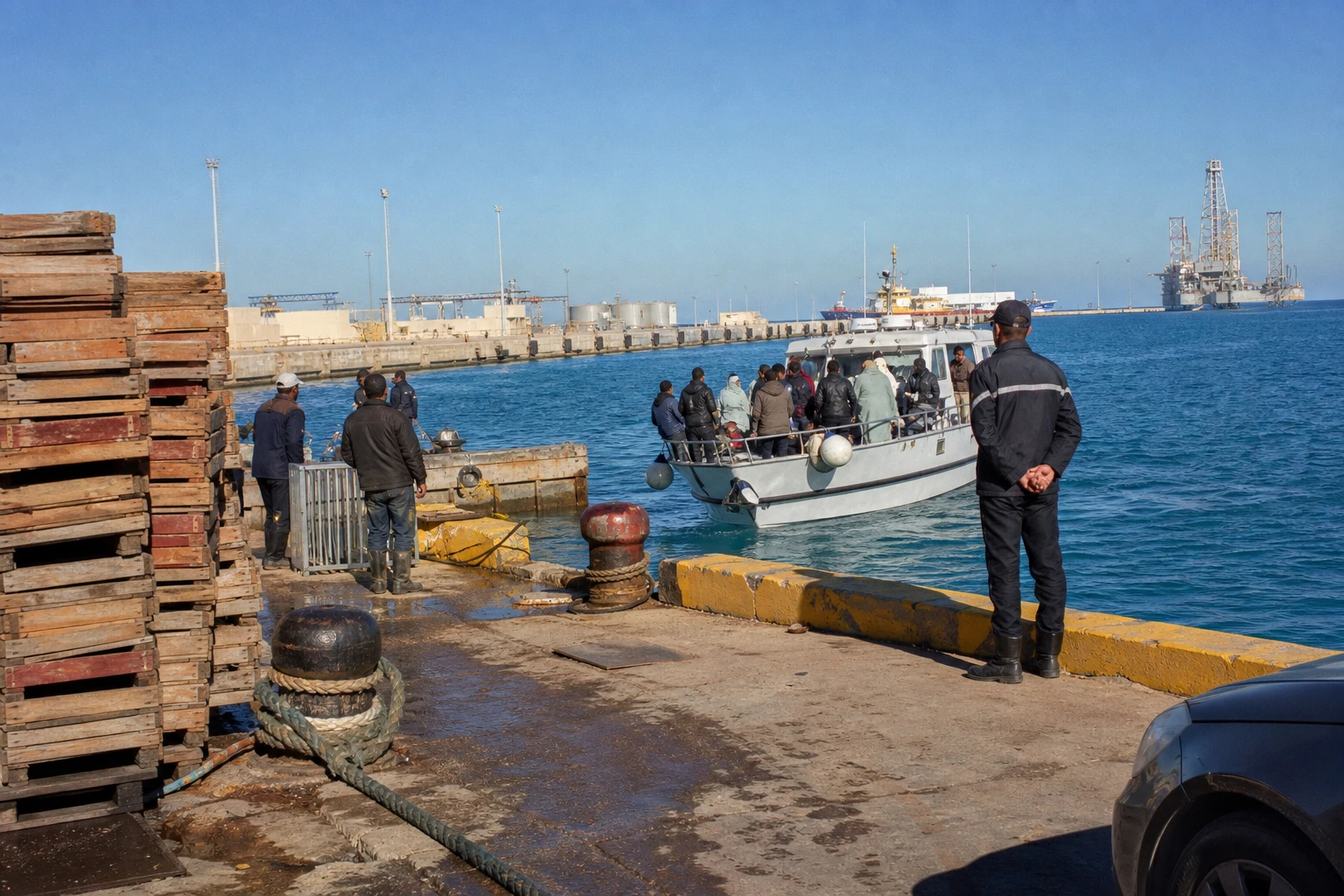
In the Gulf of Gabès, a gas platform became an improvised refuge for people whose boat had just sunk. The shipwreck left at least two people dead, including a child, while six people remain missing, according to initial accounts gathered after the rescue.
Rescue operation off Tunisia
On Tuesday 29 September 2026, the rescue vessel Aurora, chartered by the Sea-Watch organisation, spotted a nearly deflated inflatable boat in international waters. Five survivors were still on board. Rescuers also found the bodies of two people, including a child.
Another 23 survivors had managed to reach the Hasdrubal gas platform, about 100 kilometres off the Tunisian coast. They had clung to it after the shipwreck to avoid remaining in the water. The Aurora’s crew handed them life jackets before transferring them on board.
A total of 28 people were taken aboard the vessel. They included five women and a young child. The survivors are said to have originated from Eritrea, Ethiopia, South Sudan, Pakistan and Nigeria, among other countries.
The survivors said at least six people were missing. Three children from the same family were reportedly among those missing. Rescuers were unable to determine, however, whether the child found dead was one of them. This has yet to be established.
The Italian authorities asked the Aurora to head to Lampedusa, Italy, designated as the port of disembarkation. The crossing will allow the survivors to receive medical care and be identified. The precise circumstances of the shipwreck remain unknown. The time of departure and the exact place of embarkation, in Tunisia or Libya, have not been confirmed.
The Gulf of Gabès at the heart of a contested maritime area
The shipwreck occurred in the maritime search and rescue zone for which Tunisia is responsible. This zone does not necessarily correspond to Tunisian territorial waters. It primarily defines the area in which the relevant services must co-ordinate rescue operations.
The Hasdrubal platform lies off south-eastern Tunisia, in an area marked by energy activities and the passage of small boats. The region is also close to the sea routes used by people attempting to reach Italy from North Africa.
Tunisia therefore occupies a particular position in the central Mediterranean. The country is a point of departure, a transit area and a rescue zone. Departures can also take place from Libya, complicating the assignment of responsibility and the tracking of missing people.
In southern Tunisia, this maritime reality overlaps with the concerns of coastal towns. Residents of Zarzis, Djerba and other localities in the governorate of Médenine regularly face rescue operations, the arrival of bodies and searches at sea. Families, meanwhile, often wait a long time for confirmation.
Figures that mask a persistent emergency
According to data attributed to the International Organization for Migration, 21,897 people are said to have reached Italy via the central Mediterranean route since the start of 2026. On the same route, 997 people are reported to have died or gone missing.
These figures should be treated with caution. IOM data are based on recorded arrivals and reported cases. They do not always make it possible to establish the actual number of shipwrecks or of people who have gone missing without witnesses.
A comparison with 2025 also shows the limits of a reading based solely on arrivals. Nearly 49,000 people reached Italy by sea that year, while 855 deaths or disappearances were recorded in the central Mediterranean. A fall in arrivals does not necessarily mean a fall in danger.
Rescue organisations point out that the boats used are often fragile, overcrowded and ill-suited to maritime conditions. Distance, weather and the lack of reliable communications increase the risks. In several shipwrecks, survivors do not know how many people went missing when the boat capsized.
Shared responsibility between states and rescue organisations
The Aurora’s intervention illustrates the continuing role of civilian vessels in the central Mediterranean. Their presence makes it possible to locate boats in distress, recover survivors and document operations. It does not, however, replace a permanent public search and rescue system.
Tunisia co-ordinates rescues across a substantial part of this maritime zone. Italy then organises the reception of people brought ashore on its territory. Libya, meanwhile, remains another major point of departure. Between these areas, people on the move are exposed to decisions made by several authorities, with different rules and intervention capacities.
For European governments, a fall in arrivals is often a political indicator. For families and rescuers, the human toll remains the most tangible measure. The shipwreck of 29 September highlights this tension: even when crossings decline, boats can still cause significant loss of life within minutes.
A tragedy that goes beyond Tunisia’s borders
The shipwreck directly concerns Tunisia, but it is part of a wider regional crisis. The central Mediterranean links the Tunisian and Libyan coasts to Italy. It also connects people from the Horn of Africa, West Africa, Central Africa and South Asia.
The next steps in the operation will depend on disembarkation in Lampedusa, the identification of the victims and any further searches in the shipwreck area. They will also depend on confirmation of the number of people missing and the boat’s exact origin.
In Tunisia, the incident has once again brought the question of maritime co-ordination to the fore. Rescue operations can save lives, but they often take place after boats that are already in danger have set off. As long as legal routes and regional protection mechanisms remain limited, the Gulf of Gabès will continue to be the scene of human tragedies that extend far beyond its waters.