Algeria
 Egypt
 Libya
 Morocco
 Sudan
 Tunisia
 Benin
 Burkina Faso
 Cabo Verde
 Côte d'Ivoire
 Ghana
 Guinea
 Guinea-Bissau
 Liberia
 Mali
 Mauritania
 Niger
 Nigeria
 Sierra Leone
 The Gambia
 Togo
 Cameroon
 Central African Republic
 Chad
 DR Congo
 Equatorial Guinea
 Gabon
 Republic of the Congo
 São Tomé and Príncipe
 Burundi
 Comoros
 Djibouti
 Eritrea
 Ethiopia
 Kenya
 Madagascar
 Malawi
 Mauritius
 Mozambique
 Rwanda
 Seychelles
 Somalia
 South Sudan
 Tanzania
 Uganda
 Angola
 Botswana
 Eswatini
 Lesotho
 Namibia
 South Africa
 Zambia
 Zimbabwe
In Dakar, the Youth Olympic Games are also measured by the paths they bring into view. On 10 November 2026, Senegalese taekwondo athlete Marie Sarr won gold in the under-55kg category. Her victory puts a face to the host country’s investment in sport, but also raises a practical question: how can a home victory be turned into lasting prospects for young athletes?
A hard-fought final, a confirmed result
Marie Sarr beat Tunisia’s Yasmine Haouani in the final, after three rounds, by a score of 2-1, according to the Senegalese Press Agency (APS). The victory was also reported by Senegalese Radio and Television (RTS). The 2-0 score given in some summaries therefore does not match these Senegalese reports, which give the result as 2-1.
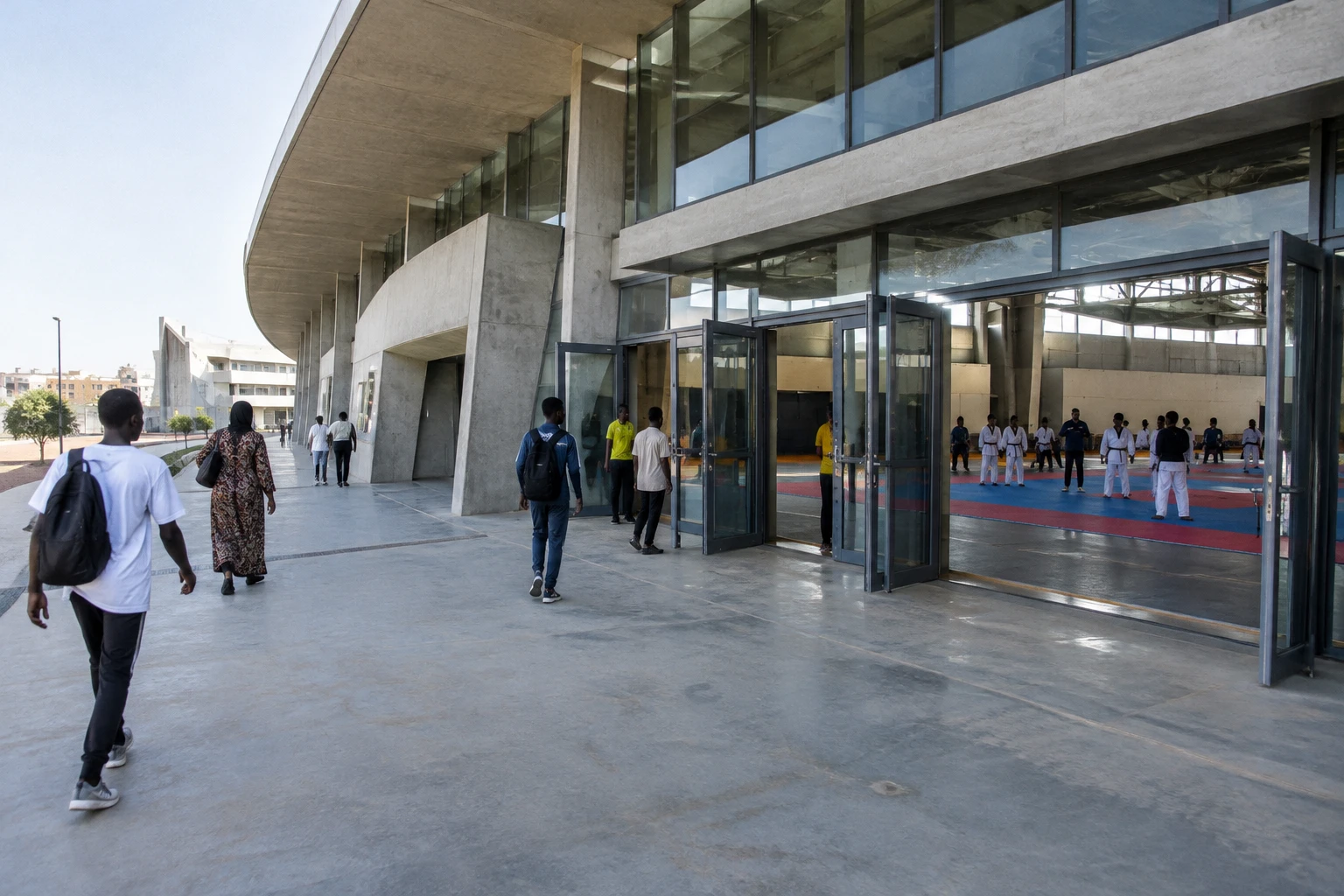
The taekwondo competition is being held at the Iba Mar Diop Complex in Dakar. By reaching the final, Sarr had already come through the previous rounds, including a semi-final against American Karlee Vogel, the Senegalese daily Le Soleil reports. That journey matters as much as the podium: it shows an athlete able to fight her way through a tournament on the international stage, in front of her home crowd.
After winning her medal, the young champion thanked her coach, the national team and her family. APS reported her reaction, which is a reminder that individual achievement rests on sporting support and a network around the athlete. Details of any appeal by her coach to the state to strengthen support for taekwondo have not been confirmed by the reports consulted; the statement should therefore not be attributed to him as an established fact.
Historic Games for Senegal and the continent
The Youth Olympic Games (YOG), an international event for young athletes, are being held from 31 October to 13 November 2026. Dakar, Diamniadio and Saly are hosting events. It is the first time an Olympic event has taken place on African soil, the International Olympic Committee notes. Senegal’s selection puts the country at the centre of a global competition, but also of a continental sporting operation organised on a rarely seen scale.
For Senegal, the stakes go beyond the image of the capital. Events are spread across several venues, and the competitions require infrastructure, technical teams and hosting services. Their legacy will depend on how they are used after the closing ceremony: regular access for clubs, maintenance of facilities and opportunities for young people to compete, in major cities and in the regions.
The medal is also part of an event involving delegations from many countries. It puts a Senegalese athlete in the spotlight in a sport practised internationally, against a Tunisian opponent. Beyond the sporting rivalry, the final illustrates exchanges between African federations and young athletes at a global competition hosted in Africa.
From the podium to training conditions
A medal does not sum up the state of a sport. For it to open up prospects, athletes need support before and after major events: regular training, equipment, medical care, travel and participation in tournaments. These needs concern federations and public authorities, as well as clubs and families, which often make day-to-day participation possible.
The benefits may vary depending on where people live. Dakar is hosting the events and has a concentration of infrastructure, while young people in other regions depend more on local opportunities and travel. Marie Sarr’s paternal grandmother, interviewed by APS in Niakhar, in the Fatick region, described the medal as the culmination of several years of work. Her testimony places the champion’s journey beyond the competition venue, but on its own does not make it possible to assess access to taekwondo across the country.
The recent precedent set at these Games gives the victory another dimension. On 7 November, Senegalese wrestler Élisabeth Diatta won gold in beach wrestling, according to the Associated Press. Sarr’s success shows that Senegalese achievements are not limited to a single sport. But the significance of these results will also be judged by their ability to inspire sustained sporting careers, rather than just a moment of celebration.
A regional signal, a legacy to build
For West African countries, the YOG are a showcase and a meeting place for young athletes. Senegal is a member of the Economic Community of West African States (ECOWAS), which brings together countries in the region, but the competition belongs to the international Olympic movement rather than to this political and economic organisation. The presence of a Tunisian finalist is also a reminder that sporting exchanges go beyond West Africa’s borders.
On a continental scale, hosting the Games in Dakar shifts the focus: Africa is not only represented by its athletes, it is also welcoming delegations and organising the event. That responsibility makes questions about the legacy especially tangible. The facilities, the experience gained by local teams and the visibility of sports will need to serve a purpose beyond the two weeks of competition.
Marie Sarr’s victory is therefore both a specific sporting result — gold in the under-55kg category, won on 10 November against Yasmine Haouani — and a marker for what comes next. The next question is whether the attention generated by the YOG will translate into regular support for clubs, coaches and young athletes, including beyond Dakar. That continuity will be one measure of the Games’ sporting legacy.
APS report on the final and the score · RTS confirmation of the medal · Marie Sarr’s route to the final, reported by Le Soleil · Marie Sarr’s reaction after winning her medal · Family testimony gathered in Niakhar · Official overview of the Dakar 2026 Games · Associated Press report on Élisabeth Diatta’s gold