Algeria
 Egypt
 Libya
 Morocco
 Sudan
 Benin
 Burkina Faso
 Cabo Verde
 Côte d'Ivoire
 Ghana
 Guinea
 Guinea-Bissau
 Liberia
 Mali
 Mauritania
 Niger
 Nigeria
 Senegal
 Sierra Leone
 The Gambia
 Togo
 Cameroon
 Central African Republic
 Chad
 DR Congo
 Equatorial Guinea
 Gabon
 Republic of the Congo
 São Tomé and Príncipe
 Burundi
 Comoros
 Djibouti
 Eritrea
 Ethiopia
 Kenya
 Madagascar
 Malawi
 Mauritius
 Mozambique
 Rwanda
 Seychelles
 Somalia
 South Sudan
 Tanzania
 Uganda
 Angola
 Botswana
 Eswatini
 Lesotho
 Namibia
 South Africa
 Zambia
 Zimbabwe
A crackdown that says something about Tunisia’s market
In Tunis, cocaine trafficking is no longer limited to discreet handovers or street sales. It also reaches affluent neighbourhoods, fast transport routes and media figures capable of blurring the public’s perceptions. That is what makes this case sensitive for Tunisians: it points to crime that is more mobile, more connected and more lucrative than simple retail dealing.
Authorities have stepped up anti-drug operations across the country in recent months. The trend is not isolated. In 2025, Tunisia’s Ministry of the Interior reported 14,300 drug cases and 20,289 arrests, according to figures carried by TAP. In 2026, it also cited 15,253 cases and 27,338 people involved, confirming sustained police pressure on this market.
What the authorities announced in Tunis
According to a security source cited by the Tunisian press, units from the National Guard’s Directorate of Intelligence and Research dismantled a cocaine network operating in several parts of Greater Tunis. The operation targeted, in particular, Les Berges du Lac, La Marsa, Gammarth, Sidi Daoud and Manouba. Thirteen people were arrested and a fourteenth is being sought.
Searches led to the seizure of a significant quantity of cocaine, a substantial sum of money, a drone, three cars and two large-capacity motorcycles. Investigators say the equipment was used to transport and distribute the drugs. The central anti-drug unit is now continuing its investigation with the judicial authorities.
The same source described the network as being structured around a well-known rapper. At this stage, this remains a police attribution, not a definitive judicial finding. Caution is warranted in a case of this kind: the file does not yet say who gave the orders, who financed the operation or who transported the goods at each stage.
Why Greater Tunis is a focus for this kind of case
Greater Tunis remains a strategic area. It combines residential neighbourhoods, fast roads, leisure zones and routes connecting to the wider urban area. For traffickers, this geography facilitates discretion, movement and high-margin sales. For security forces, it requires simultaneous raids, close surveillance and cooperation between several units.
This case also forms part of a broader regional trend. The United Nations Office on Drugs and Crime notes that cocaine seizures have been recorded in North Africa, along routes running through Europe, Libya or other trans-Saharan corridors. In other words, Tunisia is not at the end of a peripheral route; it is exposed to a market already linking Latin America, West Africa, the Mediterranean and Europe.
The country faces another challenge: trafficking often intersects with consumer goods, high-value vehicles, intermediary networks and sometimes prominent figures in cultural life. This complicates judicial work. It is therefore necessary to distinguish between fame, association, possession, complicity and criminal liability, rather than collapsing everything into a single narrative.
What this means for authorities, neighbourhoods and the justice system
For the Tunisian authorities, the aim is twofold. First, they must strike at sales points and local cells. Then they must trace supply routes, because isolated seizures are not enough to break up an organisation. Figures published by the Ministry of the Interior also show a high volume of cases, suggesting that the security response alone is not closing down the market.
For residents of the areas concerned, the stakes are more immediate. In residential neighbourhoods in northern Tunis, the presence of cocaine networks fuels distrust, undermines people’s sense of security and exposes more young adults to circuits of use or resale. The situation is different in working-class city centres, where the police presence is more visible, but where networks can also re-form more quickly.
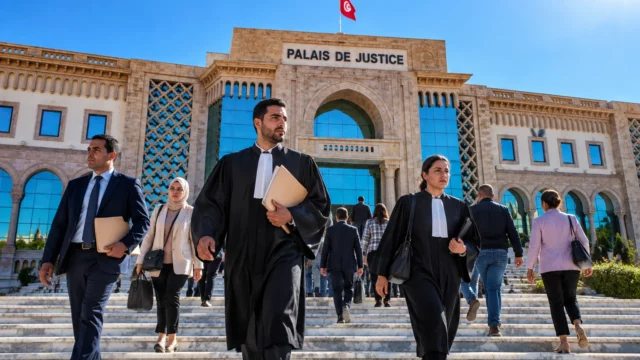
The justice system, for its part, will have to go beyond the seizure. Investigators will need to establish the ownership chain for the vehicles, the origin of the money, the role of the drone, communications between suspects and each person’s precise status. Until the case has been tried, those arrested remain presumed innocent. This clarification is essential, especially when the case involves a public figure.
A Tunisian case, but also a Maghreb one
In North Africa, cocaine trafficking is no longer a phenomenon imported from afar with no local roots. International reports show that it now feeds resale, money-laundering and consumption networks in several countries in the region. Tunisia, with its coastline, its proximity to Libya and its Mediterranean links, remains exposed to these flows.
The continent-wide significance is clear. When a network is dismantled in Greater Tunis, it is not just a local police matter. It is an indicator of how drug markets are moving into densely populated urban areas, acquiring technical tools and using well-known social figures to obscure their image. In the region, as across the rest of the continent, the question is no longer only one of seizures. It is also about financing, movement and the laundering of criminal proceeds.
In the short term, attention will turn to the judicial proceedings and any warrants issued for the fourteenth person being sought. It will also be important to see whether the Tunisian authorities publish further details on the origin of the seized cocaine and on accomplices outside the core group already arrested. This is often where the true significance of a crackdown becomes clear: in the justice system’s ability to trace a network from a Tunis neighbourhood to its higher-level links.