
 Algeria
 Egypt
 Libya
 Morocco
 Sudan
 Tunisia
 Benin
 Burkina Faso
 Cabo Verde
 Côte d'Ivoire
 Ghana
 Guinea
 Guinea-Bissau
 Liberia
 Mali
 Mauritania
 Niger
 Nigeria
 Senegal
 Sierra Leone
 The Gambia
 Togo
 Cameroon
 Central African Republic
 Chad
 DR Congo
 Equatorial Guinea
 Gabon
 Republic of the Congo
 São Tomé and Príncipe
 Burundi
 Comoros
 Djibouti
 Eritrea
 Ethiopia
 Kenya
 Madagascar
 Malawi
 Mauritius
 Mozambique
 Rwanda
 Seychelles
 Somalia
 South Sudan
 Tanzania
 Uganda
 Angola
 Botswana
 Eswatini
 Lesotho
 Namibia
 Zambia
 Zimbabwe
A return to profit that says most about the state of rail and ports
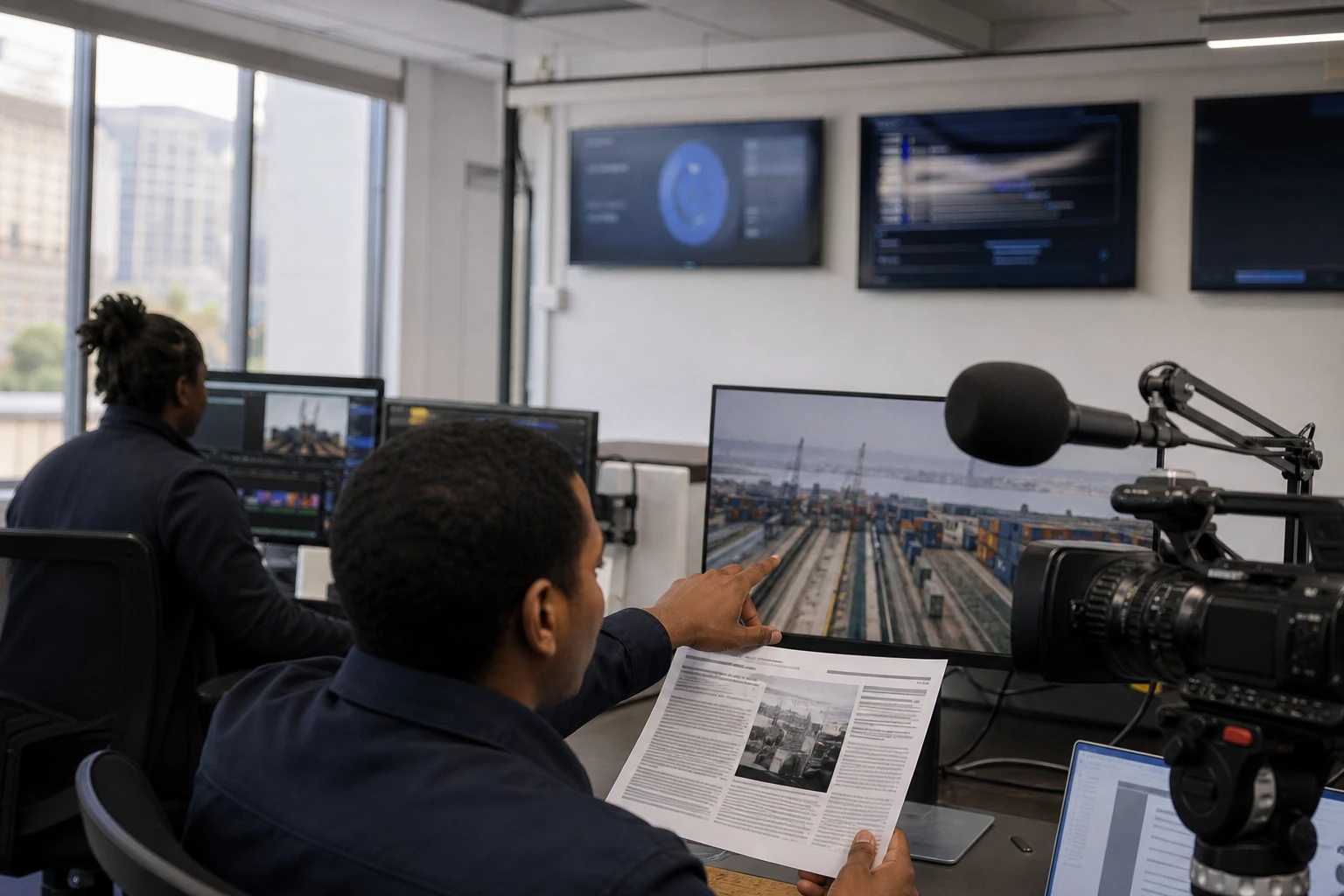
In South Africa, a profit alone is not enough to tell the story of a recovery. At Transnet, the real test is more concrete: moving more freight, faster, with fewer disruptions at ports and on the railways. The state-owned group, which remains at the heart of the country’s logistics network, is trying to prove that opening up to the private sector can deliver more than a mere boost to its balance sheet.
This question goes beyond accounting. It affects exporters’ competitiveness, the smooth running of supply chains and transport costs for the South African economy. In a country whose rail and port network has long suffered from maintenance delays, theft, vandalism and bottlenecks, Transnet’s reform has become an industrial as well as a political issue.
Better results, but underpinned by a still-fragile recovery
For the financial year ended 31 March 2026, Transnet reported a net profit of 4.6 billion rand, following a net loss of 1.9 billion rand a year earlier. Revenue rose by 7.1% to 88.6 billion rand, while EBITDA reached 30.9 billion rand, up 0.7%. Rail freight volumes increased by 4.9% to 167.9 million tonnes. These figures were reported by South African public media and the international press, allowing them to be considered firmly corroborated.
The figures should nevertheless be interpreted with caution. The company itself said its progress continued to be held back by persistent operational constraints. In its financial documents, Transnet notes that the rail recovery has not resolved infrastructure problems or the operational difficulties that continue to weigh on overall performance.
In other words, the return to profit reflects a genuine improvement, but not yet a full normalisation. In a group that manages ports, railways and pipelines, a positive result can stem from better management and higher volumes, but also from exceptional items such as asset disposals. That is why profitability still needs to be confirmed over several financial years.
Durban, a closely watched test case for public-private partnerships
The most closely watched case remains Durban, South Africa’s main port and a major gateway for the country’s trade with southern Africa. Transnet and International Container Terminal Services, Inc. signed a 25-year partnership in December 2025 for the DCT Pier 2 container terminal, now known as Durban Gateway Terminal. The arrangement took effect on 1 January 2026. The terminal is operated through a structure in which Transnet retains ownership of the asset, while the private partner provides capital and operational expertise.
The deal also has an immediate financial dimension. The Philippine operator’s documents state that the transaction was completed on 1 January 2026, with operational control of the terminal taken over on the same day. They also specify that the project vehicle has the exclusive right to operate DCT2 until 31 December 2050. This duration shows that the reform is primarily intended to provide investment stability, rather than just a one-off budgetary boost.
But Durban also illustrates the limits of the model. In August 2026, disruption again affected the terminal, with truck queues and delays reported by industry players. South African trade publications reported that the problem went beyond a simple IT incident and exposed broader pressures in container-flow management. For citrus exporters, even a brief outage means hours lost, leading to additional costs and risks to the cold chain.
The issue is therefore easy to state but difficult to resolve: private-sector participation has a lasting effect only if execution follows. Without available equipment, coordination with rail, smooth customs processes and maintenance, new capital is not enough. This is precisely where Transnet will be judged.
Rail is opening up, but the transformation remains incomplete
The same logic applies to rail. In March 2026, the South African government approved access to the national network for 11 private rail operators. In May 2026, Transnet Rail Infrastructure Manager confirmed that it had concluded Rail Access Agreements with the 11 companies. The South African state presented this opening as a major step in reforming rail freight, with commercial operations expected to begin from 2027.
The timetable matters. The network remains public, but operations are becoming more open. This is intended to increase use of the lines, attract additional investment and return freight volumes to rail after years of decline. According to the authorities, the new entrants could carry several tens of millions of tonnes a year, easing pressure on roads and reducing logistics costs for some mining and agricultural sectors.
The potential gains for operators are clear. For Transnet, the stakes are broader. The company still needs to restore track reliability, reduce vandalism, modernise equipment and meet access deadlines. Without this, opening up the network risks remaining theoretical, or benefiting only the best-served corridors.
A South African issue with regional reach
What is at stake at Transnet extends beyond South Africa. The country is a logistics hub for the Southern African Development Community, SADC, and the efficiency of its ports affects several neighbouring economies that are landlocked or dependent on South African corridors. When Durban slows, regional export chains also come under strain.
The continental significance is just as clear. South Africa’s reform is a test of a broader idea, often raised in discussions about the African Continental Free Trade Area, AfCFTA: intra-African trade advances not only through agreements, but also through logistics, railways, ports and reliable operators. If Transnet can stabilise its performance, the country could offer an African model for the gradual transformation of a public monopoly into open infrastructure, without relinquishing strategic control of the asset.
The next milestone will therefore be operational, not symbolic. Observers will need to watch the ramp-up of the Durban terminal, the effective arrival of the new rail operators, and then the group’s ability to sustain its gains without exceptional support. This is the measure by which it will become clear whether the return to profit was merely an accounting rebound or the beginning of a genuine industrial transformation in South Africa.



