Algeria
 Libya
 Morocco
 Sudan
 Tunisia
 Benin
 Burkina Faso
 Cabo Verde
 Côte d'Ivoire
 Ghana
 Guinea
 Guinea-Bissau
 Liberia
 Mali
 Mauritania
 Niger
 Nigeria
 Senegal
 Sierra Leone
 The Gambia
 Togo
 Cameroon
 Central African Republic
 Chad
 DR Congo
 Equatorial Guinea
 Gabon
 Republic of the Congo
 São Tomé and Príncipe
 Burundi
 Comoros
 Djibouti
 Eritrea
 Ethiopia
 Kenya
 Madagascar
 Malawi
 Mauritius
 Mozambique
 Rwanda
 Seychelles
 Somalia
 South Sudan
 Tanzania
 Uganda
 Angola
 Botswana
 Eswatini
 Lesotho
 Namibia
 South Africa
 Zambia
 Zimbabwe

For a Togolese company, selling in Senegal or Egypt does not follow the same path. The former is already a West African market. The latter has a sharp trade imbalance, with Togo’s purchases far exceeding its sales. In Lomé, the Togo Chamber of Commerce and Industry (CCI-Togo) is seeking to turn diplomatic contacts into concrete business opportunities.
Two markets, two commercial realities
The rapprochement is part of a broader ambition: to expand market opportunities for Togolese companies and facilitate trade across the continent. But regional proximity and the existence of trade agreements are not always enough. Formalities, transport costs and border checks can weigh on transactions, particularly for small businesses.
The African Continental Free Trade Area (AfCFTA) aims to gradually reduce barriers to trade between African countries. For businesses, it can open up prospects, provided the rules are applied and logistics networks keep pace. In West Africa, ECOWAS — the Economic Community of West African States — provides another framework for integration and the movement of goods.
The issue is a practical one for Togo. In September 2026, a mission from the ECOWAS representation in the country examined the application of community rules at the borders with Benin and Ghana. It also gathered feedback on difficulties reported by traders, transporters and travellers. These findings are a reminder that trade openness also depends on day-to-day practices at border posts.
CCI-Togo bets on business meetings
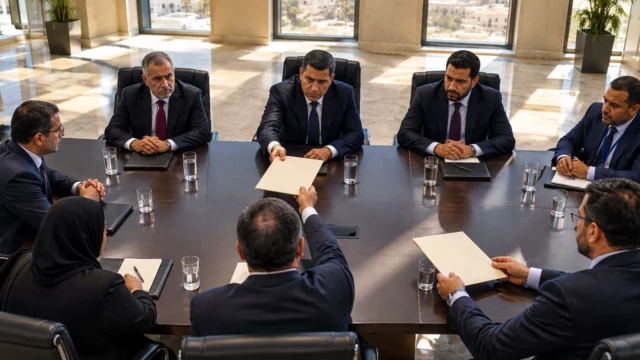
On Saturday 17 October 2026, CCI-Togo president José Kwassi Symenouh received the ambassadors of Senegal and Egypt. Discussions focused on facilitating trade and connecting economic operators. The meeting was reported by several Togolese media outlets.
With Senegal, the aim is to bring companies in the two countries closer together and facilitate their access to markets. Difficulties encountered at borders were also on the agenda. The dialogue concerns two economies already linked by trade and West African business networks.
Data from the National Institute of Statistics and Economic and Demographic Studies (INSEED) offer an indication of this relationship: Senegal accounted for 6.2% of Togo’s exports in the second quarter of 2025. It was among Togo’s main customers, behind Côte d’Ivoire, India and Burkina Faso, among others. This figure relates to a specific quarter; on its own, it does not measure the annual trend.
A marked trade imbalance with Egypt
The trade relationship with Egypt has a different profile. According to UN Comtrade data for 2025, Togo imported $30.29m worth of Egyptian goods. Its exports to that market amounted to around $302,000. Figures published by Togo First are similar and confirm the gap between the two flows.
Construction materials, sugar and sugar products, and fuels are among the main imports from Egypt. By contrast, Togolese sales to the country remain limited. The imbalance does not mean that all cooperation would be unfavourable; it does, however, underline the challenge of identifying Togolese products that can find buyers and meet the conditions for access to the Egyptian market.
Sectors identified for cooperation include medicines, agriculture, technology and construction. A visit to Togo by Egypt’s foreign minister, accompanied by businesspeople, has been announced for the first quarter of 2027. The visit could provide a political framework for discussions, but it is not in itself a trade agreement or a guarantee of investment.
From dialogue to contracts: the decisive step
For Togolese companies, the value of a diplomatic meeting depends on what follows: direct contacts with buyers, information on standards, access to finance and transport solutions. Larger organisations generally have more resources to explore a distant market. SMEs, agricultural producers and traders often have to contend with higher costs for market research and compliance.
CCI-Togo can act as an intermediary by organising meetings between companies and clarifying trade procedures. But removing border barriers is also the responsibility of the relevant administrations and regional mechanisms. In trade with Senegal, the smooth operation of West African corridors is crucial. With Egypt, companies will also need to assess logistics costs and the rules governing access to a market outside the region.
The challenge is therefore twofold: preserve existing regional markets and diversify partners without widening imbalances further. For Togo, whose capital, Lomé, is home to a port that plays an important role in regional trade, the ability to connect companies with nearby and distant markets remains a major economic issue.
A test for African economic integration
These trade links illustrate two dimensions of African integration. Trade with Senegal highlights the importance of neighbouring markets and the obstacles to movement that can hinder exchanges. The Egyptian case raises a different question: how can Togolese sales be developed in a relationship that is currently heavily unbalanced?
The next step will be to establish whether the discussions lead to sustained commercial contacts, agreements between companies or identifiable projects. The Egyptian visit announced for early 2027 will be worth watching. Until then, trade figures and the difficulties reported by operators will help measure whether rapprochement initiatives deliver results beyond announcements.