Algeria
 Egypt
 Libya
 Morocco
 Sudan
 Tunisia
 Benin
 Burkina Faso
 Cabo Verde
 Côte d'Ivoire
 Ghana
 Guinea
 Guinea-Bissau
 Liberia
 Mali
 Mauritania
 Niger
 Nigeria
 Senegal
 Sierra Leone
 The Gambia
 Togo
 Cameroon
 Central African Republic
 Chad
 DR Congo
 Equatorial Guinea
 Gabon
 Republic of the Congo
 São Tomé and Príncipe
 Burundi
 Comoros
 Djibouti
 Eritrea
 Ethiopia
 Kenya
 Madagascar
 Malawi
 Mauritius
 Mozambique
 Rwanda
 Seychelles
 Somalia
 South Sudan
 Uganda
 Angola
 Botswana
 Eswatini
 Lesotho
 Namibia
 South Africa
 Zambia
 Zimbabwe
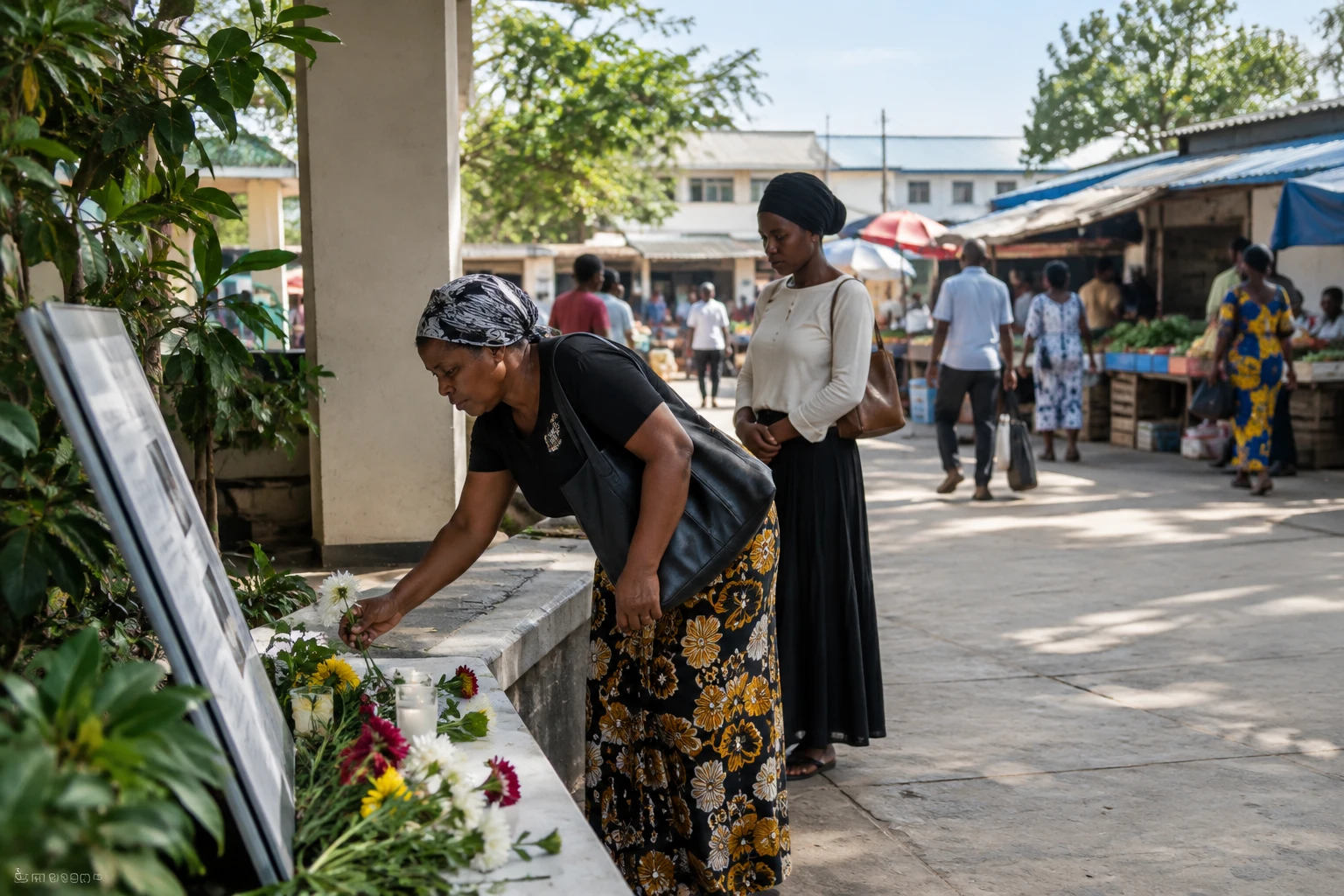
In Dar es Salaam, a return to daily life is not enough to put behind what the 29 October 2025 vote left in its wake. For bereaved families, the injured and people who fled their neighbourhoods, the first anniversary revives a question that remains unanswered in full: who will account for the deaths and disappearances?
A disputed vote, then battered streets
Tanzania votes in a system where the ruling party, Chama cha Mapinduzi (CCM), has dominated political life since independence. Before the 2025 vote, the main opposition party, Chadema, was barred from the contest after a dispute over the electoral code. Its leader, Tundu Lissu, was in detention and facing treason charges. The ACT-Wazalendo party’s candidate was also excluded from the presidential race.
These restrictions undermined the credibility of the process. In its preliminary assessment, the African Union mission noted obstacles to political participation, problems with observer access and a nationwide internet shutdown during the vote. It called for constitutional reforms and a more inclusive policy. The African Union observer mission’s statement thus places the violence in an already tense electoral context.
On 29 October 2025, protests broke out in several cities after the vote. The authorities imposed movement restrictions and internet access was cut off. Residents of Dar es Salaam fled neighbourhoods where clashes and gunfire threatened their safety. One resident, identified as Asama in the account provided, says she saw a man shot in front of her. Her account illustrates the trauma experienced, but cannot on its own establish the overall death toll or the circumstances of each death.
President Samia Suluhu Hassan was declared the winner with 97.66% of the vote, according to the result announced by the authorities. The score, achieved while the main opposition forces were not fully in the race, fuelled protests. The demonstrations that followed were suppressed by the security forces. Individual responsibility and the legality of each use of force remain at the heart of calls for an investigation.
518 deaths recorded, but questions remain
The death toll remains one of the most sensitive issues. An inquiry commission established by the presidency recorded at least 518 deaths linked to the election violence. Its report, submitted on 23 April 2026, says the count may not be exhaustive: some families are said to have buried their relatives without making an official declaration. The Associated Press news agency also reported this caveat, while Tanzanian daily The Citizen covered the commission’s detailed findings.
Chadema and human rights organisations have put forward higher estimates, which the United Nations said it could not verify under the conditions at the time. These competing figures should therefore not be presented as established. The figure of 518 deaths is the commission’s official count, not a definitive answer to every question about the victims or the circumstances of the deaths.
The commission documented the deaths, but observers and human rights organisations accuse it of not sufficiently examining the role of the security forces or establishing responsibility. Human Rights Watch notes that a year after the vote, no arrests of officers for the alleged violations had been announced. The organisation is calling for independent investigations and accountability mechanisms. The commission’s report therefore provides an official point of reference, but does not close the debate over accountability.
The impact extends beyond bereaved families. Residents say they remain scarred by scenes of violence. Opposition figures and critics of the government fear arbitrary arrests or prosecution on treason and terrorism charges. For traders and workers in the informal economy, days of closure, disrupted journeys and communication blackouts also affected incomes. In Dar es Salaam, these consequences are felt in neighbourhoods and markets; in Dodoma, the political capital, they directly challenge the institutions responsible for the inquiry and the public response.
Mourning cannot replace transparency
On the anniversary, church services were held in memory of the victims and Chadema announced a seven-day period of mourning. These gestures give public expression to grief in a country where many families are still seeking information about their loved ones. They do not, however, replace the publication of verifiable facts or the examination of complaints and reported disappearances.
The presidential commission has referred to reconciliation measures and reforms. For families, the issue is more concrete: finding out where the missing are, understanding the circumstances of the deaths, recovering the bodies when they have been identified and securing a credible investigation. The authorities have a responsibility to protect the rights of those accused as well as those of the victims. A transparent process must be able to distinguish between established facts, allegations and proven responsibility.
This issue also concerns East Africa. Tanzania is a member of the East African Community (EAC), which brings several neighbouring countries together around regional co-operation. The African Union has already called for reforms and more inclusive political participation. How Dodoma responds to the commission’s findings will therefore affect Tanzanians’ trust in their institutions and the credibility of regional democratic commitments.
The next milestone will not be only a commemoration. It will be the action taken on the commission’s recommendations, families’ access to information and the ability of institutions to investigate without shielding the people presumed responsible. A year after the vote, the official figures shed light on part of the toll. The full truth and accountability, however, remain to be established.