Algeria
 Egypt
 Libya
 Morocco
 Sudan
 Tunisia
 Benin
 Burkina Faso
 Cabo Verde
 Côte d'Ivoire
 Ghana
 Guinea
 Guinea-Bissau
 Liberia
 Mali
 Mauritania
 Niger
 Nigeria
 Senegal
 Sierra Leone
 The Gambia
 Togo
 Cameroon
 Central African Republic
 Chad
 DR Congo
 Equatorial Guinea
 Gabon
 Republic of the Congo
 São Tomé and Príncipe
 Burundi
 Comoros
 Djibouti
 Eritrea
 Ethiopia
 Kenya
 Madagascar
 Malawi
 Mauritius
 Mozambique
 Rwanda
 Seychelles
 Somalia
 South Sudan
 Uganda
 Angola
 Botswana
 Eswatini
 Lesotho
 Namibia
 South Africa
 Zambia
 Zimbabwe
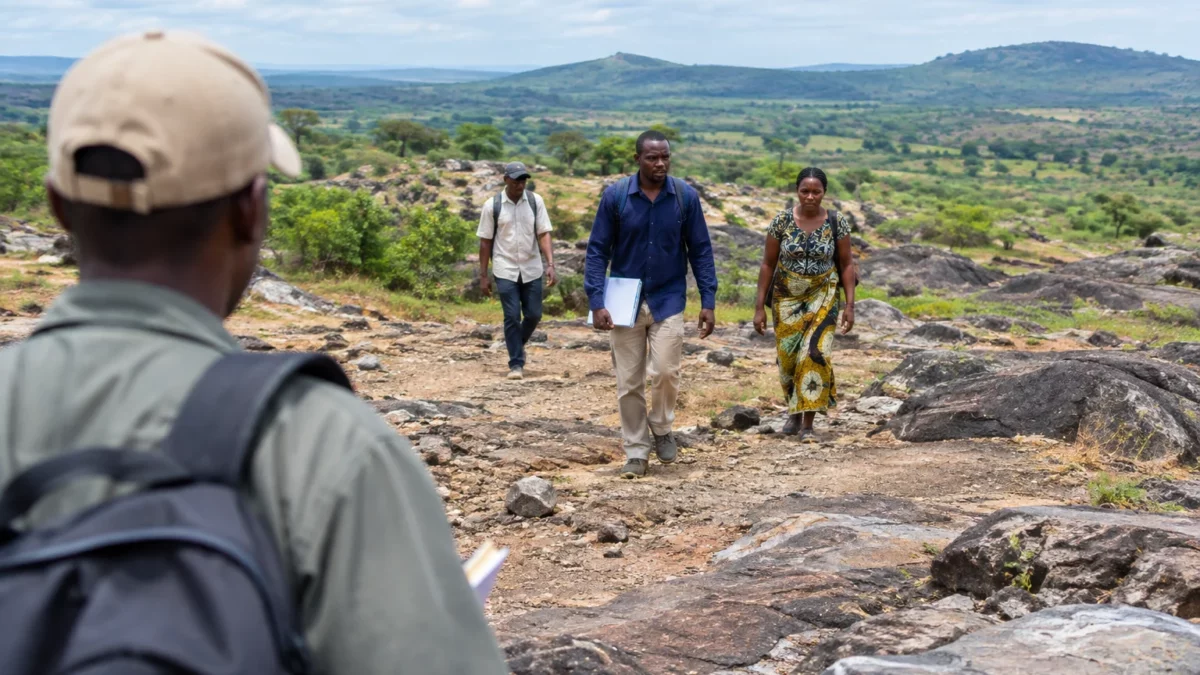
At Mahenge in Tanzania, the question is no longer simply whether graphite can be mined. The necessary capital, permits and guarantees must now be assembled to move from a mining project to a construction site. A new proposed investment from African investors brings that prospect closer, but does not yet guarantee it.
Financing package still to be completed
The project is located in Ulanga District, in the Morogoro Region. It is being developed by Faru Graphite Corporation, which is 84% owned by Black Rock Mining. The Tanzanian state retains a 16% free-carried interest, provided for in the framework agreement signed with the company in 2021.
Mahenge forms part of a broader effort to develop Tanzania’s mineral resources. In East Africa, where countries are seeking to attract investment while increasing local benefits, ownership and financing arrangements matter as much as the volumes announced. Tanzania is a member of the East African Community (EAC), which brings several countries in the region together for economic co-operation.
On 16 November 2026, Black Rock Mining announced two steps in the financing of the project’s first phase. First, a non-binding agreement in principle with African Critical Minerals (ACM) provides for a $70m investment in Imara Resources, a new Tanzanian project-holding company. The company has also revised its share investment agreement with South Korean group POSCO International, for a planned contribution of $40m.
The status of these commitments is crucial. ACM’s proposal is non-binding and remains subject to due diligence, approval by its investors and the signing of definitive agreements. POSCO’s investment is also conditional, notably on completion of the ACM transaction and receipt of the necessary approvals. Black Rock says neither transaction is certain to proceed on the announced terms.
African stake with governance rights
ACM is backed by Lionhead Capital and the Public Investment Corporation (PIC), a South African institutional investor. Under the proposed structure, the platform would hold 36.7% of Imara. Imara would own 84% of Faru Graphite. ACM’s indirect economic interest in the project would therefore be about 30.8%.
Black Rock would retain 63.3% of Imara, including a portion held by a reward fund it controls. Its effective economic interest in Mahenge would fall from 84% to 53.2%. The Tanzanian state would keep its 16% stake in Faru. ACM would gain board representation and consent rights over certain reserved matters, while Black Rock would remain the project operator.
The proposed entry of African investors gives practical substance to the idea of financing mining development with capital from the continent. It does not, however, mean that operational control would pass to ACM, or that value would automatically be created in Tanzania. The benefits will also depend on jobs, local procurement, public revenues and the ability to process some of the ore in the region. The terms made public focus first on financing and governance.
Regional lenders and an Asian partner
The total funding requirement announced to build the first phase is about $298m. The plan includes a $138m construction loan, a $10m prepayment facility from POSCO, and the proposed investments from ACM and POSCO. According to Black Rock, these sources could cover $258m. About $40m in equity would therefore still need to be committed before ACM’s and POSCO’s conditional contributions become payable.
Bank financing involves CRDB, a Tanzanian bank, as well as two South African institutions: the Development Bank of Southern Africa (DBSA) and the Industrial Development Corporation (IDC). Their total financing agreement amounts to $204m, but comprises several separate facilities. The $138m construction loan cited in the plan is therefore not equivalent to the total amount of the bank facility.
The package thus combines Tanzanian, South African, Australian and South Korean capital. POSCO, a long-standing strategic partner, would provide equity and also has a prepayment agreement. The group’s voting stake in Black Rock could increase substantially if the transaction is approved by shareholders. The group would be capped at 49.99%, and the company estimates its stake at about 37.6%, depending on the terms of the capital raising.
Tight timetable before final decision
The immediate difficulty is the timetable. At the end of October, Black Rock said it had secured an extension to 30 November 2026 of the deadline for reaching financial close on its credit facilities. On 16 November, the company was targeting financial close by 31 December and said lenders had been informed of the proposed timetable. A further extension is still needed to align these deadlines, but is not guaranteed.
The company must also secure the roughly $40m in equity still missing, complete ACM’s due diligence and obtain regulatory and shareholder approvals. Until these steps are completed, the final investment decision and full construction start remain on hold. Preparatory work is under way, but Black Rock said in October that its continuation depended on final financing.
For communities near the site, the issue is not limited to the date of the first ground-breaking. Preparatory work and access roads can affect travel and land use; local jobs and contracts will depend on the actual pace of construction. At regional level, Mahenge illustrates a challenge shared by so-called critical minerals projects: turning investor interest into financing that is actually secured, and then into verifiable benefits for the host country.
The next milestone will therefore be the financial close announced for 31 December 2026, as well as lenders’ response on the deadline for the facilities. Until then, ACM’s proposed $70m and POSCO’s $40m should be regarded as conditional components of a financing package that is still incomplete, not as funds already paid in.
The financing terms and ownership structure are detailed in Black Rock Mining’s announcement of 16 November 2026. The previous financing update appears in its quarterly report published on 29 October 2026. The project’s history is set out by Faru Graphite Corporation.