Algeria
 Egypt
 Libya
 Morocco
 Sudan
 Tunisia
 Benin
 Burkina Faso
 Cabo Verde
 Côte d'Ivoire
 Guinea
 Guinea-Bissau
 Liberia
 Mali
 Mauritania
 Niger
 Nigeria
 Senegal
 Sierra Leone
 The Gambia
 Togo
 Cameroon
 Central African Republic
 Chad
 DR Congo
 Equatorial Guinea
 Gabon
 Republic of the Congo
 São Tomé and Príncipe
 Burundi
 Comoros
 Djibouti
 Eritrea
 Ethiopia
 Kenya
 Madagascar
 Malawi
 Mauritius
 Mozambique
 Rwanda
 Seychelles
 Somalia
 South Sudan
 Tanzania
 Uganda
 Angola
 Botswana
 Eswatini
 Lesotho
 Namibia
 South Africa
 Zambia
 Zimbabwe
Northern Ghana at the heart of a logistics push
In northern Ghana, the question is no longer simply how to produce more. Products must also be transported quickly, stored better and sold further afield. For vegetable growers, fruit exporters and processors, the cost of distance is often greater than the cost of harvesting.
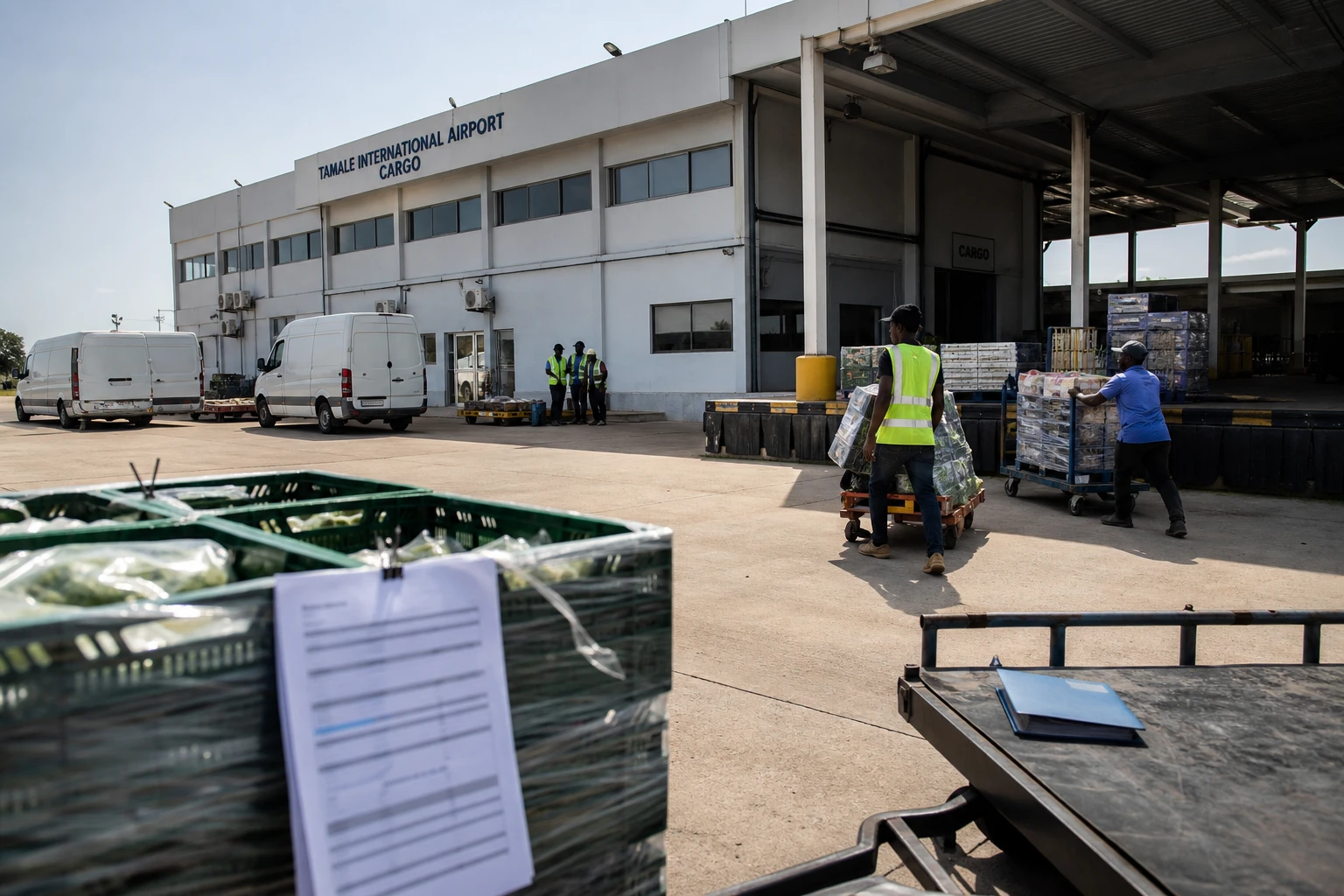
Against this backdrop, Accra is focusing on Tamale, a key city in northern Ghana and an air hub that is already strategically important to the country. Ghana Airports Company Limited describes Tamale International Airport as Ghana’s third-largest airport facility for domestic flights from Accra. This makes it a logical base for linking the North’s agricultural production areas to overseas markets.
The project is also part of a broader national trajectory. The Ghanaian government has launched the 24-Hour Economy and Accelerated Export Development policy, designed to expand production, industrialisation and exports. The programme’s official website describes the strategy as an economic transformation agenda.
What the government plans for Tamale
According to information reported by the state-run Ghana News Agency, the government wants to develop an air-freight hub covering about 150 acres at Tamale International Airport. The aim is clear: to facilitate the export of vegetables, fruit and other high-value agricultural products grown in the north of the country. The project is being led by Goosie Tanoh, national coordinator of the 24-Hour Economy programme.
The same official says the project should help create an integrated system linking agriculture, manufacturing, energy and logistics in the North. This approach is not isolated. It extends the direction of the national programme, which aims to create shorter, better-coordinated value chains.
Tamale’s location makes economic sense. Northern Ghana has extensive agricultural land and significant production of food crops and horticultural products. Ghana’s ministry responsible for enterprise development notes that the northern savannah zone is the country’s largest agricultural area. The northern regions produce vegetables, fruit, maize, pulses and tubers, among other crops.
Cutting costs, not just expanding infrastructure
The core problem is logistics. Perishable goods quickly lose value when delays mount. A poor road, inadequate storage or slow customs procedures can be enough to reduce a shipment’s commercial quality. In this kind of trade, speed matters as much as volume.
Ghana already faces this export constraint. A report published by the International Trade Centre in July 2024 estimates that reducing internal and external trade barriers, including export inspections, conformity assessments and customs procedures, could increase the country’s annual exports by as much as $4.3bn in one year. The challenge therefore goes beyond Tamale airport. It affects the entire process of getting goods out of the country.
Ghanaian authorities have already launched other initiatives along similar lines: round-the-clock operations at the ports of Tema and Takoradi, port modernisation, the development of inland transport routes and the strengthening of cold chains. The idea is simple: if products reach a port or an aircraft more quickly, they also arrive in better condition at the buyer’s end.
This strategy is consistent with national data. In 2024, Ghanaian exports were still dominated by gold, hydrocarbons and cocoa, which together accounted for 83.4% of external sales, according to the Ghana Statistical Service. In other words, the country is still seeking to diversify its export base. High-value agricultural products are part of the answer.
A signal for West Africa
The Tamale project has implications beyond Ghana. Across West Africa, several countries are seeking to better connect production areas to regional and international markets. The Economic Community of West African States (ECOWAS) has long promoted trade integration, but logistics costs, administrative delays and inadequate infrastructure continue to hinder the movement of goods.
For stakeholders in northern Ghana, the expected impact is tangible. Producers hope to move perishable goods more quickly. Agribusinesses could target more lucrative markets. Transporters and cargo handlers would gain new business. Conversely, without suitable warehouses, reliable refrigeration, regular cargo links and efficient customs procedures, the hub risks being underused.
The government, meanwhile, has placed the project within a broader ambition: to increase revenue from non-traditional exports from $3.5bn to at least $10bn by 2030. This target was reiterated in a presidential statement and in announcements surrounding the advisory committee tasked with promoting exports. The planned cargo hub at Tamale is therefore not a standalone project. It is one part of a wider effort to make Ghana a more diversified, faster and more competitive exporter.