
 Algeria
 Egypt
 Libya
 Morocco
 Sudan
 Tunisia
 Benin
 Burkina Faso
 Cabo Verde
 Côte d'Ivoire
 Guinea
 Guinea-Bissau
 Liberia
 Mali
 Mauritania
 Niger
 Nigeria
 Senegal
 Sierra Leone
 The Gambia
 Togo
 Cameroon
 Central African Republic
 Chad
 DR Congo
 Equatorial Guinea
 Gabon
 Republic of the Congo
 São Tomé and Príncipe
 Burundi
 Comoros
 Djibouti
 Eritrea
 Ethiopia
 Kenya
 Madagascar
 Malawi
 Mauritius
 Mozambique
 Rwanda
 Seychelles
 Somalia
 South Sudan
 Tanzania
 Uganda
 Angola
 Botswana
 Eswatini
 Lesotho
 Namibia
 South Africa
 Zambia
 Zimbabwe
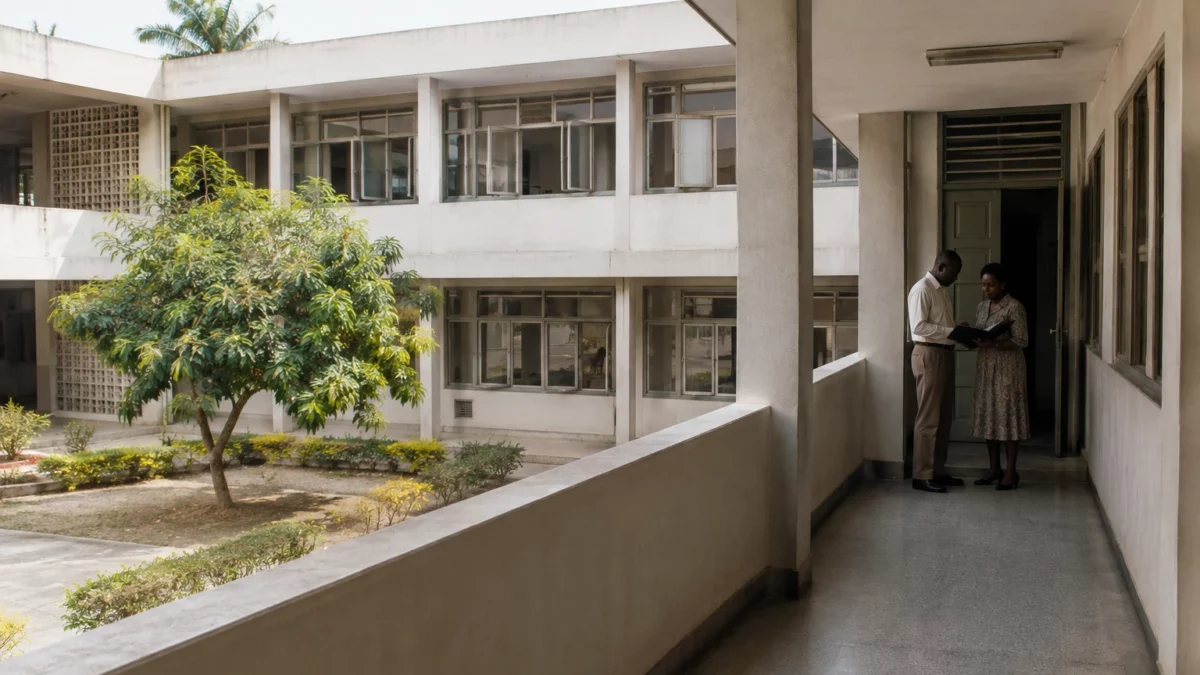
In Accra, a private relationship exposed Ghanaian informants, weakened a clandestine American network and triggered a diplomatic crisis. The Sharon Scranage affair is a reminder that, in intelligence work, access to secrets also depends on the people who handle them.
Rawlings’s Ghana at the heart of Cold War rivalries
In 1985, Ghana was governed by the Provisional National Defence Council (PNDC), which had come to power after Jerry Rawlings’s coup on 31 December 1981. The country was operating amid rivalries between Washington, Moscow and their allies, while African governments sought to defend their room for manoeuvre.
This was an important backdrop. Foreign intelligence services gathered information on the authorities, the armed forces and opposition groups. Ghanaian leaders, for their part, monitored foreign activity on their territory. Accusations of covert intelligence gathering and interference therefore weighed on a bilateral relationship already marked by mistrust.
Ghana is a member of ECOWAS, the Economic Community of West African States. The regional organisation was not at the centre of this affair, but the episode illustrates the tensions that international rivalries can bring to relations between West African states and outside powers.
Confidential information passed from Accra
Sharon Scranage had worked for the CIA since 1976. Assigned to its Accra office in May 1983 as an operations support assistant, she had access to confidential documents. These concerned, among other things, Ghanaians who were secretly providing information to the US agency.
She began a relationship with Michael Agbotui Soussoudis, a Ghanaian described by the US authorities as linked to his country’s intelligence services. US court documents describe disclosures that began in December 1983. Scranage is said to have shared informants’ identities, information about CIA activities and details relating to its operations.
The relationship is often summed up by the term “honey trap”, which refers to the exploitation of a romantic or sexual relationship to approach a target. But the information made public also describes pressure and threats. It would therefore be reductive to portray the affair as a simple romance successfully used by a foreign intelligence service.
On 11 July 1985, Scranage and Soussoudis were arrested in the United States. The investigation accelerated after Scranage admitted passing on information. She subsequently co-operated with the US authorities, who arrested Soussoudis at a meeting arranged in Virginia. The dates and charges are reported in US records and the press at the time. UPI’s account of the arrests cites details from the affidavit submitted to the court.
A prisoner swap lays bare the balance of power
In Accra, the Ghanaian authorities arrested eight people suspected of working for the CIA, according to reports at the time. Washington and Ghana then negotiated an arrangement. In November 1985, the eight Ghanaians were expelled to Togo; Soussoudis, who had been sentenced in the United States to 20 years in prison, suspended on condition that he leave the country, was sent back to Ghana.
Reports at the time varied somewhat on the exact terms. The central point, confirmed by several accounts, remains the exchange: the US authorities secured the return of their nationals, who were presumed to be involved, while Soussoudis left the United States. The contemporaneous account of the expulsion of the eight Ghanaians documents the negotiations.
Court records do not confirm the eight-month sentence sometimes cited for Scranage. In September 1985, she pleaded guilty to disclosing classified information. A court subsequently sentenced her to five years in prison; her sentence was reduced in 1986, making her eligible for release after serving 18 months. Court records published by The Washington Post give details of her plea and the charges brought.
For those identified as sources, the consequences were more direct than for the governments: their identities had been exposed, and some had to be relocated with their families. An analysis published by the CIA’s Centre for the Study of Intelligence says the affair compromised agents and operations. This assessment comes from the US institution itself and should be read as such, not as an independent account of the full impact in Ghana.
What the affair says about intelligence services
In the United States, the affair highlighted the risks involved in access to sensitive data and in preparing staff posted abroad. Declassified CIA documents describe Scranage as a support employee whose work gave her access to information about human sources. They also point to the pressure exerted in the relationship. The CIA’s declassified analysis of the affair sets out these details, with some passages still redacted.
But the episode cannot be reduced to a technical lesson about US internal security. For Ghana, it came during a period in which the Rawlings government monitored the activities of foreign powers and sought to preserve its authority. Accra may have used the information obtained to strengthen its position vis-à-vis Washington; open sources, however, do not establish precisely what was passed on to each foreign partner, or which operations were subsequently affected.
The outcome also shows that espionage accusations are not settled in court alone. Intergovernmental negotiations influenced the fate of those arrested and the US diplomatic presence in Ghana. Across West Africa, the affair is a reminder that sovereignty, intelligence and alliances are also negotiated through bilateral power dynamics. Nearly four decades later, its lesson remains clear: protecting sources depends as much on procedures as on access controls and the ability to detect pressure being exerted on individuals.



