Algeria
 Egypt
 Morocco
 Sudan
 Tunisia
 Benin
 Burkina Faso
 Cabo Verde
 Côte d'Ivoire
 Ghana
 Guinea
 Guinea-Bissau
 Liberia
 Mali
 Mauritania
 Niger
 Nigeria
 Senegal
 Sierra Leone
 The Gambia
 Togo
 Cameroon
 Central African Republic
 Chad
 DR Congo
 Equatorial Guinea
 Gabon
 Republic of the Congo
 São Tomé and Príncipe
 Burundi
 Comoros
 Djibouti
 Eritrea
 Ethiopia
 Kenya
 Madagascar
 Malawi
 Mauritius
 Mozambique
 Rwanda
 Seychelles
 Somalia
 South Sudan
 Tanzania
 Uganda
 Angola
 Botswana
 Eswatini
 Lesotho
 Namibia
 South Africa
 Zambia
 Zimbabwe
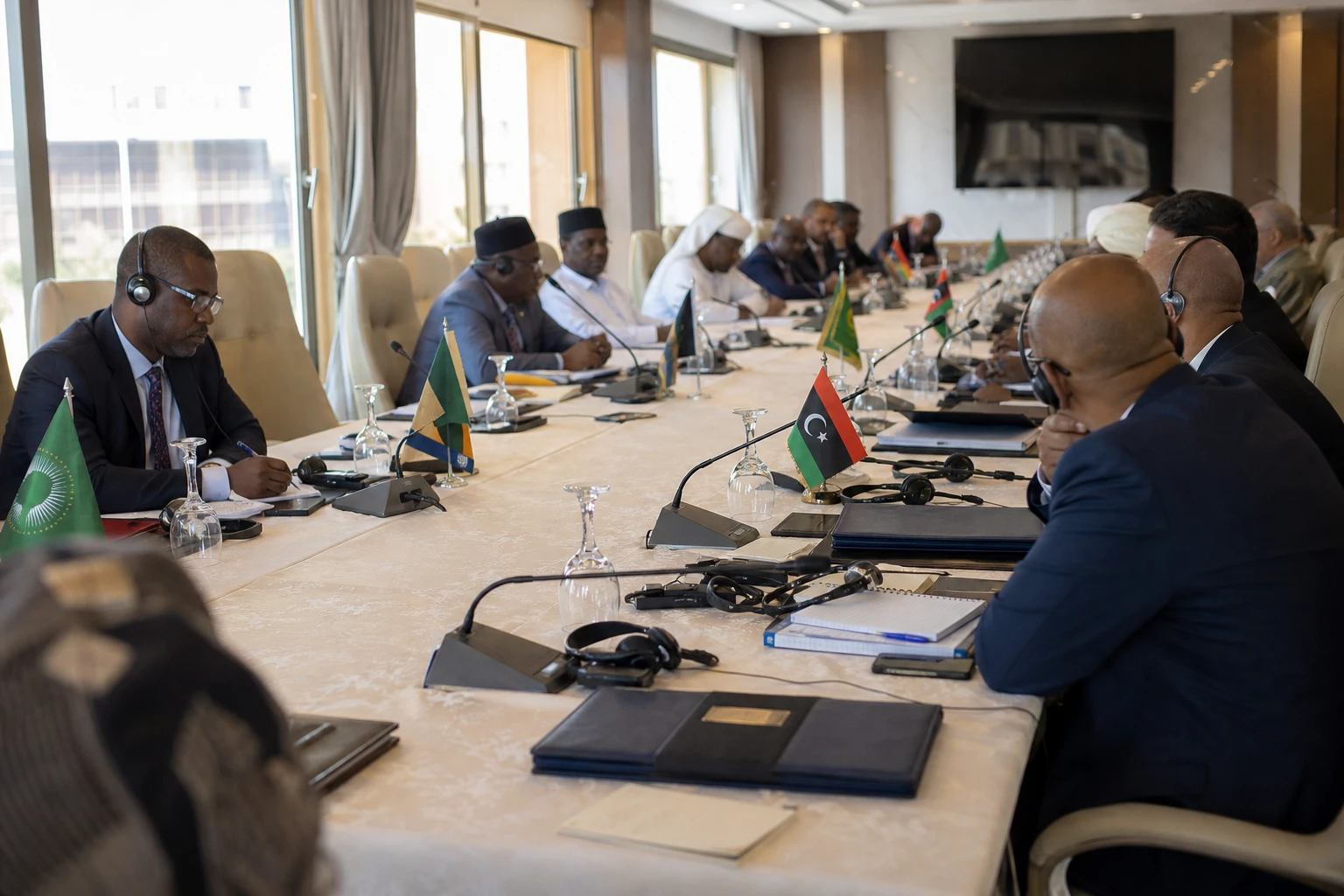
Tripoli puts diplomacy back at the centre of the game
In a Libya still divided by political and security fault lines, reopening an embassy is never a purely ceremonial gesture. It also shows how states choose whether or not to return to a country where sovereignty remains contested and every diplomatic signal carries political weight. In Tripoli, the resumption of activities at the Syrian mission marks just such a measured return, after more than fourteen years of rupture.
Libya’s context remains that of a country administered by rival institutions: the Government of National Unity led by Abdul Hamid Dbeibah in Tripoli, and the eastern administration based in Benghazi. Since August 2025, the UN has been pushing a roadmap aimed at unified institutions and presidential and parliamentary elections within an overall timeframe of 12 to 18 months. At the same time, armed tensions and competition among influential groups in Tripoli are reminders that diplomatic normalisation is advancing on still unstable ground.
What was agreed between Tripoli and Damascus
On Sunday 30 August 2026, Syrian Foreign Minister Asaad Hassan al-Shaibani took part in a ceremony in Tripoli to open the Syrian embassy headquarters, alongside Libya’s foreign affairs official, Taher al-Baour. The decision formalises the resumption of Syrian diplomatic work in the Libyan capital, after a closure that began in 2012. The two sides also announced the revival of the Libyan-Syrian Joint Higher Committee, a coordination mechanism operating at prime ministerial level.
The same issue includes a second element: the announced opening of a Syrian consulate in Benghazi, in eastern Libya. This expansion is significant. It extends Syria’s consular presence beyond Tripoli and takes account of the country’s political geography, where administrative channels and power dynamics vary between the west, east and south. In practice, it also makes procedures easier for Syrian nationals living in Libya, whose numbers have been described by regional media as substantial, although no single officially consolidated figure has gained public consensus.
The discussions covered very practical issues: security cooperation, counter-terrorism, consular services, the situation of prisoners, detainees and refugees, as well as financial arrears between Libyan and Syrian institutions. Talks also covered energy and investment, following a meeting between the Syrian foreign minister, Libya’s Minister of Oil and Gas and the head of the Libyan Investment Authority.
Why this rapprochement matters in Libya
For Tripoli, this diplomatic sequence serves first to reaffirm its role as a de facto capital, able to host foreign missions and organise technical cooperation despite the country’s fragmentation. It also forms part of a broader strategy by Dbeibah’s government: to show that it remains a useful interlocutor for states wishing to engage with Libya on consular, economic or security issues. This drive for an international presence has already been seen with other embassies, some of which reopened or moved their services to Tripoli in 2025.
For Libyans, the stakes are more down to earth. Consular services, when they function, reduce queues, secure documents, oversee voluntary returns and make it possible to deal with family or administrative situations that have often been stalled for years. In a Libyan economy where informality remains widespread and travel between regions is still sensitive, restoring a diplomatic service desk can therefore directly affect individual lives, far beyond the symbolism between capitals.
The security element, meanwhile, reflects shared caution. Libya and Syria have both experienced a decade marked by institutional collapse, the rise of armed actors and the movement of fighters, refugees and cross-border networks. In this context, discussing cooperation against terrorism also means acknowledging that both countries are seeking to regain control over human and security flows that wars have long disrupted. The objective, however, remains constrained by the reality in Libya: weapons, rivalries for influence and the weakness of a fully unified central authority continue to weigh on any implementation.
Significance beyond the two capitals
The return of Syrian diplomacy to Tripoli is part of a broader reshaping of the Arab and North African landscape. Since the fall of Bashar al-Assad in December 2024, followed by a change in diplomatic direction in Damascus, several capitals have been testing new forms of cooperation with post-Assad Syria. Libya, for its part, sees an opportunity to resume bilateral relations without abandoning its own internal equation, which remains contingent on the reunification of institutions and the holding of credible elections.
The continental dimension is also evident in the role of regional organisations and the United Nations. In New York, Security Council members welcomed the UN roadmap for ending Libya’s transition in early September 2025. In this context, any diplomatic stabilisation in Tripoli matters, as it raises the profile of the institutions that continue to function and may, at the margins, facilitate the movement of goods and people and the conduct of negotiations. But it cannot replace the reunification of the executive or clarify the balance of power between Tripoli, Benghazi and the country’s other centres.
In the short term, two things remain to be watched: the embassy’s actual return to operation in Tripoli and the announced opening of the consulate in Benghazi. Over the medium term, it will be necessary to see whether this Libyan-Syrian rapprochement leads to concrete agreements on energy, investment or consular affairs, or whether it remains a largely political normalisation, useful for appearances but limited in practice. In a still divided Libya, diplomacy only carries weight if it is reflected in administration, public services and everyday security.