Algeria
 Egypt
 Libya
 Morocco
 Sudan
 Tunisia
 Benin
 Burkina Faso
 Cabo Verde
 Côte d'Ivoire
 Ghana
 Guinea
 Guinea-Bissau
 Liberia
 Mali
 Mauritania
 Niger
 Nigeria
 Senegal
 Sierra Leone
 The Gambia
 Togo
 Cameroon
 Central African Republic
 Chad
 DR Congo
 Equatorial Guinea
 Gabon
 Republic of the Congo
 São Tomé and Príncipe
 Burundi
 Comoros
 Djibouti
 Eritrea
 Ethiopia
 Kenya
 Madagascar
 Malawi
 Mauritius
 Mozambique
 Rwanda
 Seychelles
 Somalia
 Tanzania
 Uganda
 Angola
 Botswana
 Eswatini
 Lesotho
 Namibia
 South Africa
 Zambia
 Zimbabwe
With less than three months to go before the announced vote in South Sudan, the question is no longer simply one of setting a date. It is also whether political actors will be able to participate, whether institutions are ready and whether the vote can take place without reigniting tensions.
South African President Cyril Ramaphosa and his South Sudanese counterpart Salva Kiir Mayardit met on Wednesday 7 October 2026 in Pretoria. They discussed, among other things, the implementation of the peace agreement and the conditions for an inclusive electoral process, according to the South African presidency. The announced date is 22 December.
A vote framed by a fragile peace agreement
South Sudan, independent since 2011, has never held general elections. The electoral timetable has been postponed several times amid delays in implementing the 2018 peace agreement and security and logistical difficulties.
Signed to end the civil war and organise a political transition, the Revitalised Agreement on the Resolution of the Conflict provides for power-sharing between the main parties. In September 2024, the Intergovernmental Authority on Development (IGAD), the East African regional organisation that facilitated the agreement, confirmed a further postponement: the transition was to last until February 2027 and the vote, initially scheduled for December 2024, was pushed back to December 2026. It was then the fourth extension since 2018.
Several African institutions are now backing this deadline. On 1 October, the African Union reaffirmed its support for implementing the agreement and preparing peaceful and credible elections. IGAD, too, called for an inclusive and transparent vote in its recent statement. The organisation continues to regard the peace agreement as the political framework of reference.
Ramaphosa stresses political trust
After their meeting in Pretoria, Ramaphosa called on South Sudanese leaders to fully respect the peace agreement. He also stressed the trust and cooperation between the parties needed to resolve the remaining difficulties and create an environment conducive to elections, the South African presidency reported.
This initiative is part of his role as chair of the African Union’s High-Level Ad Hoc Committee on South Sudan, also known as the C5. The group brings together five African countries tasked with supporting the political process. On 1 October, following a virtual meeting chaired by Ramaphosa, the African Union said the committee had reviewed the implementation of commitments made at a summit held in Addis Ababa in February.
Both presidencies present this sequence of events as a commitment to supporting the process. But diplomatic backing is not enough to establish that the conditions for a vote are in place. Practical decisions — a detailed timetable, security, access for political parties and the functioning of electoral institutions — will matter just as much.
The date does not resolve the obstacles
The fragility of the timetable has increased in recent weeks. On 16 September, Salva Kiir replaced the chair of the National Elections Commission, three months before the vote. The Associated Press reports that South Sudanese analysts have voiced concerns about the impact of the change on preparations and the legal procedure followed.
On 22 September, Kiir dissolved the transitional government and announced an interim administration. The decision changes the institutions as the vote approaches. Analysts quoted by the Associated Press said a change of this scale, without a new political agreement, could further weaken the 2018 compromise. The United Nations Commission on Human Rights in South Sudan, for its part, warned that elections without guarantees or inclusive dialogue could fuel further tensions.
The question of political participation also remains open. Opposition leader Riek Machar, the suspended first vice-president who is facing prosecution, is under house arrest in Juba, the capital. The Associated Press reports that it has not been established whether he will be able to stand as a candidate. His opposition movement disputes the political and security conditions for the vote. These disagreements directly affect the credibility of the result, beyond the practical holding of the vote itself.
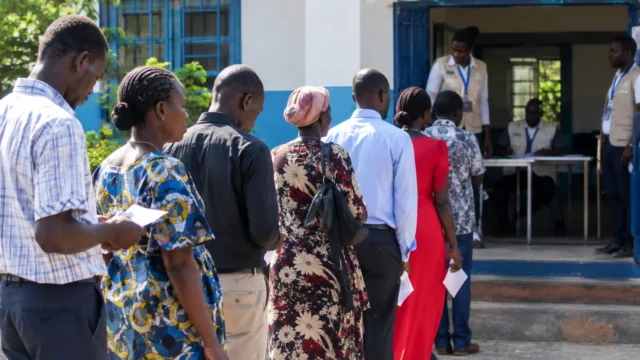
For residents, the stakes go beyond negotiations between leaders. In areas where insecurity makes travel difficult, voter registration, campaigning and access to polling stations could prove more challenging. Electoral officials will also have to establish rules that are clear and accessible across the different regions. Without concrete guarantees, the announced date risks remaining far removed from voters’ real experience.
A test for regional mediation
The meeting in Pretoria gives greater visibility to the efforts of South Africa, the African Union and IGAD. It is not, however, a guarantee that elections will take place or an endorsement of the state of preparations. IGAD’s statement calls on the parties to restore trust and agree on a path towards the December elections. It thus underlines that the timetable also depends on a sufficiently broad-based political agreement.
The issue tests the ability of African institutions to support a process they helped negotiate, without confusing the announcement of an election with the resolution of political disputes. Going forward, the signs to watch are clear: the effective participation of the different forces, the independent functioning of electoral bodies, security guarantees and the conditions for citizens and parties to express themselves.
The 22 December 2026 vote therefore remains the official deadline, but its credibility will depend on the steps taken in the coming weeks. For South Sudanese people, it will not be enough simply to vote on the scheduled date. They will need to be able to choose within a framework that does not close off the path to peace.