
 Algeria
 Egypt
 Libya
 Morocco
 Sudan
 Tunisia
 Benin
 Burkina Faso
 Cabo Verde
 Côte d'Ivoire
 Ghana
 Guinea
 Guinea-Bissau
 Liberia
 Mali
 Mauritania
 Niger
 Nigeria
 Senegal
 Sierra Leone
 The Gambia
 Togo
 Cameroon
 Central African Republic
 Chad
 DR Congo
 Equatorial Guinea
 Gabon
 Republic of the Congo
 São Tomé and Príncipe
 Burundi
 Comoros
 Djibouti
 Eritrea
 Ethiopia
 Kenya
 Madagascar
 Malawi
 Mauritius
 Mozambique
 Rwanda
 Seychelles
 Somalia
 South Sudan
 Tanzania
 Uganda
 Angola
 Botswana
 Eswatini
 Lesotho
 Namibia
 Zambia
 Zimbabwe
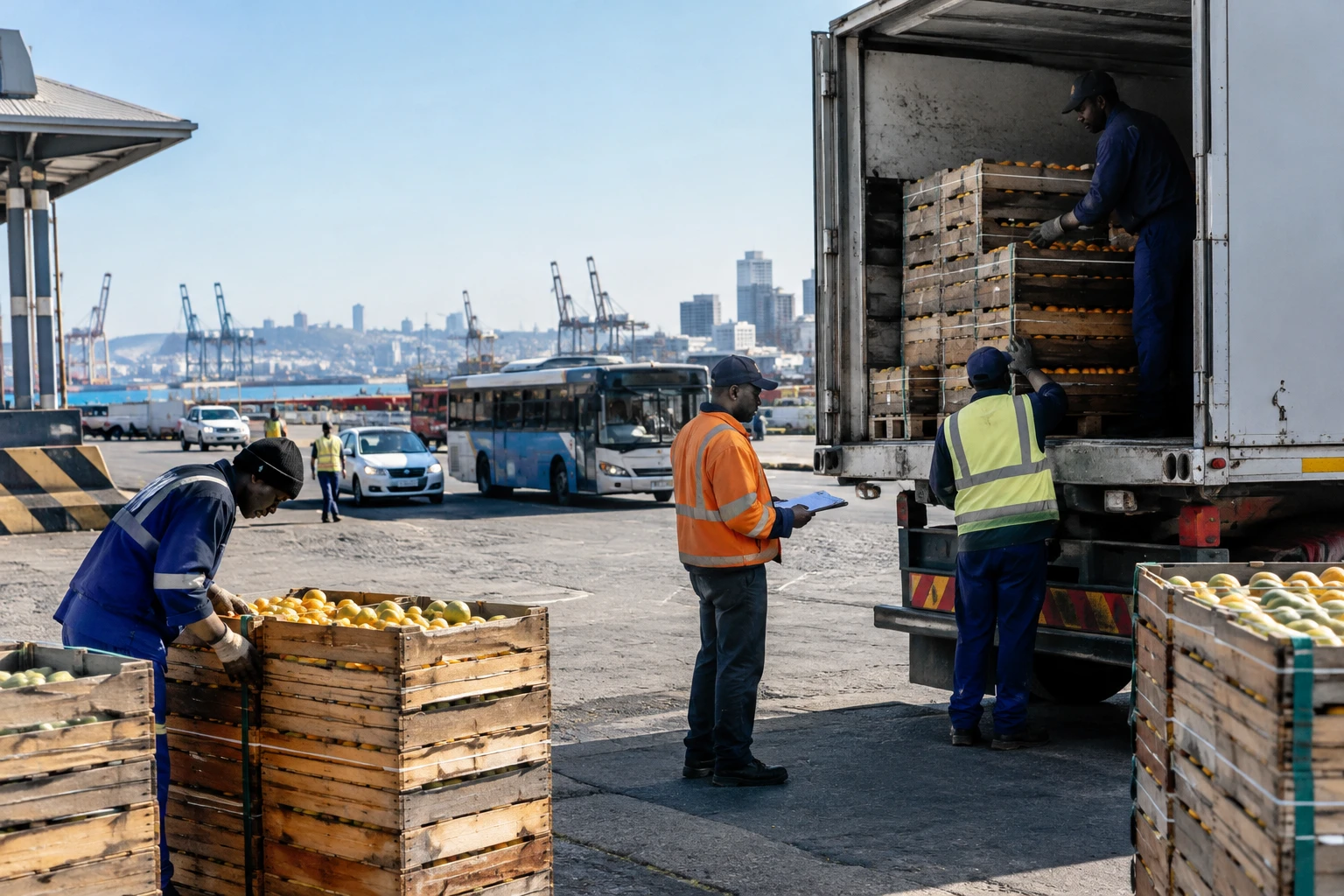
Removing tariffs can open a door. It does not guarantee lasting orders or jobs in South Africa. In Pretoria, the debate now centres on whether South African businesses can turn preferential access to the Chinese market into local production and more diversified exports.
Easier access, but temporary
Since 1 May 2026, China has applied a zero-tariff regime to eligible products from African countries with which it has diplomatic relations. South Africa is among them. The measure is due to run until 30 April 2028: it is a temporary arrangement, not a permanent trade deal.
The regime covers a wide range of products, but does not mean that every good enters China automatically without charges. Tariff-rate quotas apply to some lines, and exporters must meet rules of origin. These determine whether a product can be considered South African and qualify for the preference. An official certificate is also required. The South African government sets out the conditions for accessing the scheme.
The opening comes within an already significant trading relationship. China is South Africa’s largest trading partner globally. Bilateral trade reached 642 billion rand in 2025, according to figures presented by South Africa’s trade, industry and competition minister, Parks Tau. South African exports to China amounted to 222 billion rand, compared with 420 billion rand in Chinese imports.
Exports rise, but the deficit remains
On Thursday 22 October, at a meeting in Pretoria devoted to the scheme, Parks Tau urged businesses to move beyond initial interest and secure contracts. China’s ambassador, Wu Peng, said trade between the two countries had approached $15 billion between May and August, an annual increase of about 24%. South African exports were said to have risen by nearly 25% to $5.3 billion, while imports from China reached $9.47 billion.
These figures, reported at the meeting and covered by South African business media, point to growth, but do not yet show the net effect of the tariff regime. On their own, they cannot distinguish additional sales from those that would have taken place without the measure. The gap between exports and imports also remains marked: higher sales are therefore not enough to rebalance trade.
Agriculture is among the sectors that could benefit from cheaper access. South African agricultural exports to China are said to have approached $500 million over the four months in question, up more than 35% year on year. Citrus, apples, stone fruit and wine are among the sectors that could find new markets. But tariffs are only one factor: health standards, market-access approvals, logistics and the capacity to deliver regularly remain decisive.
The measure also covers processed and industrial products. Pretoria says it has drawn up a portfolio of 100 value-added products to promote in China, including agribusiness, beverages, chemicals, medicines, medical equipment, processed metals and automotive products. The aim is to sell more than raw materials by developing processing and production chains on South African soil.
Certificates are the first test for businesses
To qualify for the exemption, exporters must prove the origin of their products. Between 1 June and 31 August, the South African Revenue Service (SARS) issued 25,975 certificates of origin. Customs declarations rose by 199% year on year, according to figures provided by Parks Tau and reported by SAnews. This volume shows administrative and commercial mobilisation, but does not directly measure the value or profitability of additional sales.
The rules may weigh more heavily on small businesses, which have fewer specialist staff to prepare paperwork and organise shipments. Large exporters are often better equipped to absorb these compliance costs. SARS says the regime runs for two years and that some goods remain subject to quotas. South Africa’s customs authority sets out the certificates and rules of origin.
For agricultural producers, market access can support sales and activity on farms, at packing stations and in transport. For workers and producing regions, the benefits will depend on the share of value added created locally. An increase in exports does not automatically guarantee higher wages or more jobs, particularly if goods sold abroad undergo little processing.
What comes next will also be negotiated regionally
Parks Tau describes the current access as a stepping stone, as Pretoria and Beijing negotiate a more durable preliminary agreement within the Southern African Customs Union (SACU), which brings together South Africa, Botswana, Lesotho, Namibia and Eswatini. South Africa’s aim is to secure greater predictability beyond 2028 while providing safeguards for local businesses and jobs. The negotiations therefore also matter to its neighbours, whose economies are linked through the customs union.
At continental level, China’s scheme offers African exporters an opportunity to diversify, but the benefits will vary according to each country’s production capacity, infrastructure and eligible products. For South Africa, the test will be tangible: will orders generated by 2028 lead to more processing, investment and jobs, or mainly to a temporary increase in volumes? The next negotiations between China and SACU, as well as export trends after the regime’s first few months, will provide firmer indications.
Pretoria’s challenge is therefore not simply to ship more to China. It is also to strengthen industries capable of meeting market standards, carry out a greater share of processing in South Africa and, over time, reduce the gap between what the country sells and what it buys.



