Algeria
 Egypt
 Libya
 Morocco
 Sudan
 Tunisia
 Benin
 Burkina Faso
 Cabo Verde
 Côte d'Ivoire
 Ghana
 Guinea
 Guinea-Bissau
 Liberia
 Mali
 Mauritania
 Niger
 Nigeria
 Senegal
 Sierra Leone
 The Gambia
 Togo
 Cameroon
 Central African Republic
 Chad
 DR Congo
 Equatorial Guinea
 Gabon
 Republic of the Congo
 São Tomé and Príncipe
 Burundi
 Comoros
 Djibouti
 Eritrea
 Ethiopia
 Kenya
 Madagascar
 Malawi
 Mauritius
 Mozambique
 Rwanda
 Seychelles
 Somalia
 South Sudan
 Tanzania
 Uganda
 Angola
 Botswana
 Eswatini
 Lesotho
 Namibia
 Zambia
 Zimbabwe
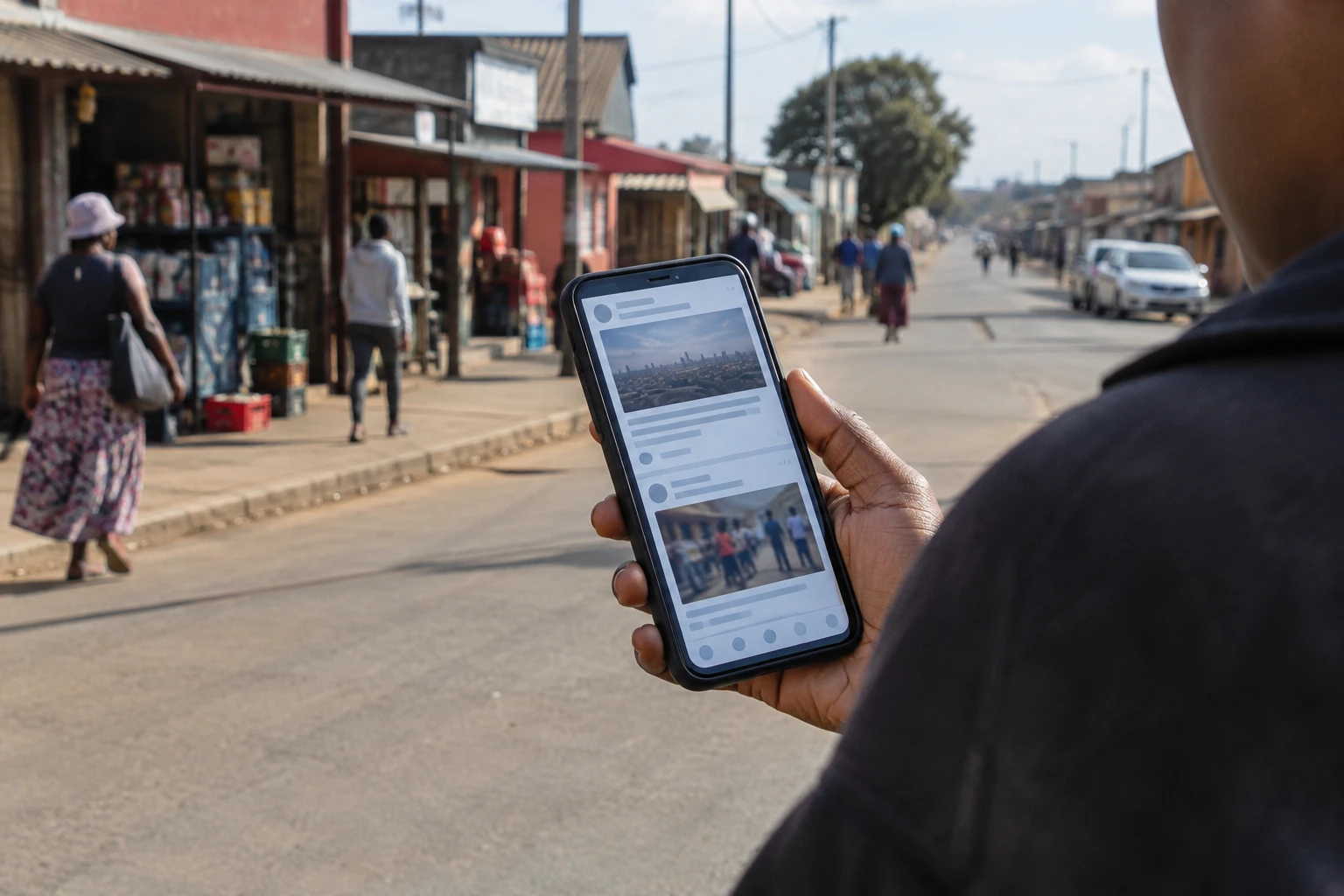
Burnt-out cars lined the streets near an office handling asylum claims in Soweto. In Durban, shops were looted. On Thursday 8 October, a court ruling on access to the asylum process reignited tensions over immigration in South Africa. But the ruling does not automatically grant refugee status: it opens the way for a claim to be examined.
A court ruling at the heart of tensions
South Africa’s Constitutional Court handed down its ruling on 7 July 2026, in a case brought in part by the Scalabrini Centre of Cape Town. It struck down provisions that could prevent some people from lodging an asylum claim, including after irregular entry or failure to meet administrative deadlines. The judgment is intended to ensure that claims can be considered on their merits, rather than rejected outright on those grounds alone. The text of the South African Constitutional Court ruling.
This distinction matters in a debate in which the decision has fuelled misleading claims. On 8 October, the government stressed that the ruling does not automatically regularise a person’s stay or confer refugee status or permanent residence. The authorities nevertheless acknowledge that refugee reception offices have been overwhelmed by the influx of people wishing to lodge a claim. The South African interministerial committee on migration’s clarification.
The process applies to people seeking protection because they fear persecution in their home country. It does not prejudge the final decision: each claim must be examined. The immediate challenge, therefore, is both access to this process and the administration’s capacity to process applications.
Vehicles set alight and shops targeted
Police recorded ten vehicles set alight in Soweto, in the Johannesburg area, and 14 in Durban, in KwaZulu-Natal province. Three people were arrested in Durban. No injuries had been reported in the information available after the incidents. In Soweto, the violence took place near a Home Affairs department office in Orlando West. Shops, including grocery stores run by foreign nationals, were also targeted.
Acting National Police Commissioner Puleng Dimpane condemned the destruction and vowed that those responsible would be pursued. The authorities increased the deployment of public order units. Local accounts give differing versions of how the violence in Soweto began, including reports of gunfire preceding fires. In the absence of independent confirmation of these circumstances, they cannot be presented as established fact. South African radio station EWN’s report on the incidents in Soweto.
The number of vehicles set alight, reported by police, has also been covered by South African and international media. In Durban, three arrests have been reported, but the precise circumstances remain to be established. These details describe the scale of the damage but do not justify attributing the acts collectively to a community or all the demonstrators.
Local concerns and the state’s obligations
Protesters are calling, among other things, for the deportation of people they believe to be in the country irregularly. In several neighbourhoods, queues outside asylum offices and difficulties processing claims are fuelling tensions. Concerns about border management and public services must be distinguished from attacks on people or businesses. Responsibility for checking immigration status lies with the authorities, not private groups.
The consequences are not the same for everyone. Shopkeepers whose businesses close or are looted lose income directly. Residents of affected neighbourhoods face damage, disrupted roads and insecurity. Asylum seekers, meanwhile, may hesitate to approach the services meant to register their claims. For the administration, the challenge is to reduce delays without abandoning individual consideration of claims or the checks required by law.
The judgment also comes amid a political climate in which immigration management is playing an increasingly prominent role in South African debate. The government has said it intends to strengthen processing capacity and clarify how the ruling will be applied. The challenge is a practical one: handling more applications while preventing queues, rumours or administrative delays from becoming flashpoints for confrontation.
An issue that extends beyond South Africa’s borders
South Africa is a major player in the Southern African Development Community (SADC), the regional organisation that brings neighbouring countries together around co-operation and integration. The movement of people in the region reflects a range of realities: work, family ties and trade, as well as the search for protection. SADC has adopted a common regional framework on refugees and asylum seekers, promoting co-operation between states. The SADC declaration on refugee protection in Southern Africa.
What happens next will depend on two related efforts. First, reception services must implement the ruling and be able to process claims within reasonable timeframes. Second, the police and judicial response to the violence must establish responsibility without casting blame indiscriminately. For Pretoria, as for the cities and neighbourhoods concerned, protecting access to justice and ensuring public safety are part of the same rule-of-law imperative.