
 Algeria
 Egypt
 Libya
 Morocco
 Sudan
 Tunisia
 Benin
 Burkina Faso
 Cabo Verde
 Côte d'Ivoire
 Ghana
 Guinea
 Guinea-Bissau
 Liberia
 Mali
 Mauritania
 Niger
 Nigeria
 Senegal
 Sierra Leone
 The Gambia
 Togo
 Cameroon
 Central African Republic
 Chad
 DR Congo
 Equatorial Guinea
 Gabon
 Republic of the Congo
 São Tomé and Príncipe
 Burundi
 Comoros
 Djibouti
 Eritrea
 Ethiopia
 Kenya
 Madagascar
 Malawi
 Mauritius
 Mozambique
 Rwanda
 Seychelles
 Somalia
 South Sudan
 Tanzania
 Uganda
 Angola
 Botswana
 Eswatini
 Lesotho
 Namibia
 Zambia
 Zimbabwe
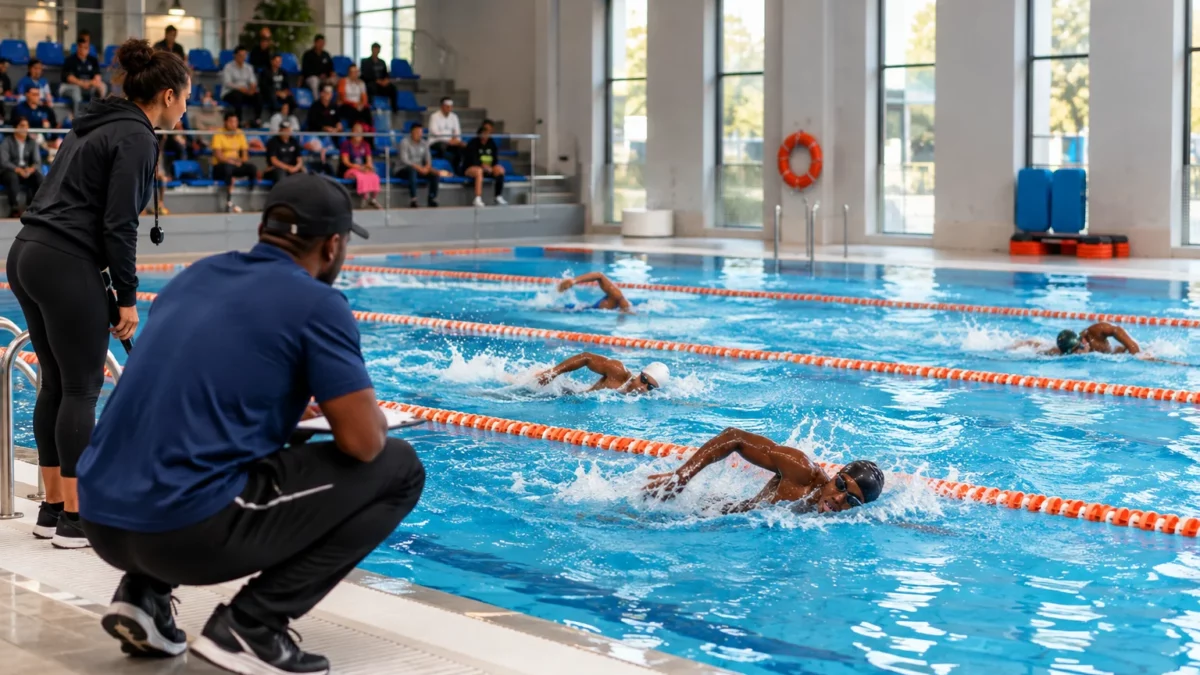
Can a sports prize expose shortcomings across an entire federation? In South Africa, Tatjana Smith’s move to represent the Netherlands has turned a pay dispute into a public examination of swimming governance.
A change of flag amid debate about sport
In elite sport, representing a country also depends on practical conditions for training, funding and support. Smith’s case brings this reality to the fore, without reducing her decision to a single dispute with her federation.
The swimmer holds South African and Dutch nationality. Born Tatjana Schoenmaker, she has won four Olympic medals for South Africa: gold in the 200 metres breaststroke and silver in the 100 metres in Tokyo in 2021, followed by gold in the 100 metres and silver in the 200 metres in Paris in 2024. She is South Africa’s most decorated Olympic athlete. The Dutch swimming federation details her career and change of representation.
After retiring from competition in 2024, Smith returned to swimming this year. On 10 November 2026, she announced that she would henceforth represent the Netherlands. She cited better elite-level support, the possibility of building a more sustainable career and a wish to explore her Dutch roots through sport. She stressed that her connection with South Africa remained important.
Prize money withheld, then inquiry requested
The dispute concerns $35,000 in prize money earned at the 2023 World Championships in Fukuoka, Japan. Smith says the South African swimming federation, Swimming South Africa, withheld the sum for 12 months. She says she then had to seek legal advice to obtain the interest owed.
The federation separately acknowledged that the prize money should not have been withheld. Its acting president, Zikie Molusi, said the dispute was linked to conflicting sponsorship agreements and indicated that athletes’ contracts had since been amended. South African radio station EWN reports the federation’s admission.
The dispute reportedly concerned, in particular, the equipment Smith wore at the World Championships. The swimmer was affiliated with Speedo, while the federation had an agreement with Arena. The precise terms of that agreement have not been made public. South African outlet Newsday says Swimming South Africa cited a confidentiality clause to withhold the contract, while a request for access to information has been filed.
On 17 November, South African Sports Minister Gayton McKenzie asked the South African Sports Confederation and Olympic Committee (SASCOC) to conduct an inquiry. He apologised to Smith and said she had been “treated like an enemy of this country”. These are the minister’s words, not a conclusion of the inquiry. McKenzie said institutional procedures had to be followed, notably to avoid the federation being suspended by World Aquatics, swimming’s international governing body. Reuters reported the facts and the minister’s remarks on 18 November.
Beyond one champion, the conditions for the next generation
The inquiry therefore covers more than the payment of one sum. According to South Africa’s sports ministry, it is to examine how the sponsorship agreement operated, the penalties imposed, whether funds relating to other swimmers were withheld, and the federation’s internal processes. The minister has also called for a review of its statutes and the management of an elite training centre.
For established athletes, a dispute with a federation can affect income, private contracts and preparation. For young swimmers, the issue is one of trust: can they expect clear rules and stable support as they reach elite level? McKenzie himself raised this concern, although the inquiry has yet to establish whether the difficulties Smith reported are shared by other athletes.
The case also comes amid a period of institutional fragility. In September, World Aquatics’ integrity unit provisionally suspended Swimming South Africa’s president and chief executive, who are facing allegations of fraud and abuse of power, according to South African media. These allegations do not amount to a verdict. Their existence nonetheless heightens scrutiny of governance rules and the management of resources in national swimming.
The effects are not distributed equally. A world-renowned athlete may have personal contracts and international visibility. Less well-known swimmers often have fewer ways to challenge a decision or fund their own careers. That is why transparency around commercial agreements and payment criteria matters for the next generation too, not just for a champion.
An issue that extends beyond South Africa
Smith’s decision does not mean she is leaving the country: the Dutch federation says she will remain based in South Africa and continue training with her team, while joining Dutch swimmers at international competitions and training camps. Her first announced event under the Netherlands’ flag is the World Short Course Championships in Beijing, from 1 to 6 December 2026.
For southern Africa, where the Southern African Development Community (SADC) brings the region’s states together for economic and political co-operation, the case raises a practical question: how can national sports bodies retain and support athletes when they have several options for representation? On its own, it does not establish a regional trend. It does, however, offer a case for federations, Olympic committees and public authorities to follow.
The next step will be SASCOC’s work: establishing the facts, examining sponsorship rules and determining whether the disputed practices affected other swimmers. South Africa’s task is now to turn a champion’s departure into a verifiable examination of the mechanisms governing athletes, without confusing recognition of her achievements with institutional accountability.



