Algeria
 Egypt
 Libya
 Morocco
 Sudan
 Benin
 Burkina Faso
 Cabo Verde
 Côte d'Ivoire
 Ghana
 Guinea
 Guinea-Bissau
 Liberia
 Mali
 Mauritania
 Niger
 Nigeria
 Senegal
 Sierra Leone
 The Gambia
 Togo
 Cameroon
 Central African Republic
 Chad
 DR Congo
 Equatorial Guinea
 Gabon
 Republic of the Congo
 São Tomé and Príncipe
 Burundi
 Comoros
 Djibouti
 Eritrea
 Ethiopia
 Kenya
 Madagascar
 Malawi
 Mauritius
 Mozambique
 Rwanda
 Seychelles
 Somalia
 South Sudan
 Tanzania
 Uganda
 Angola
 Botswana
 Eswatini
 Lesotho
 Namibia
 South Africa
 Zambia
 Zimbabwe
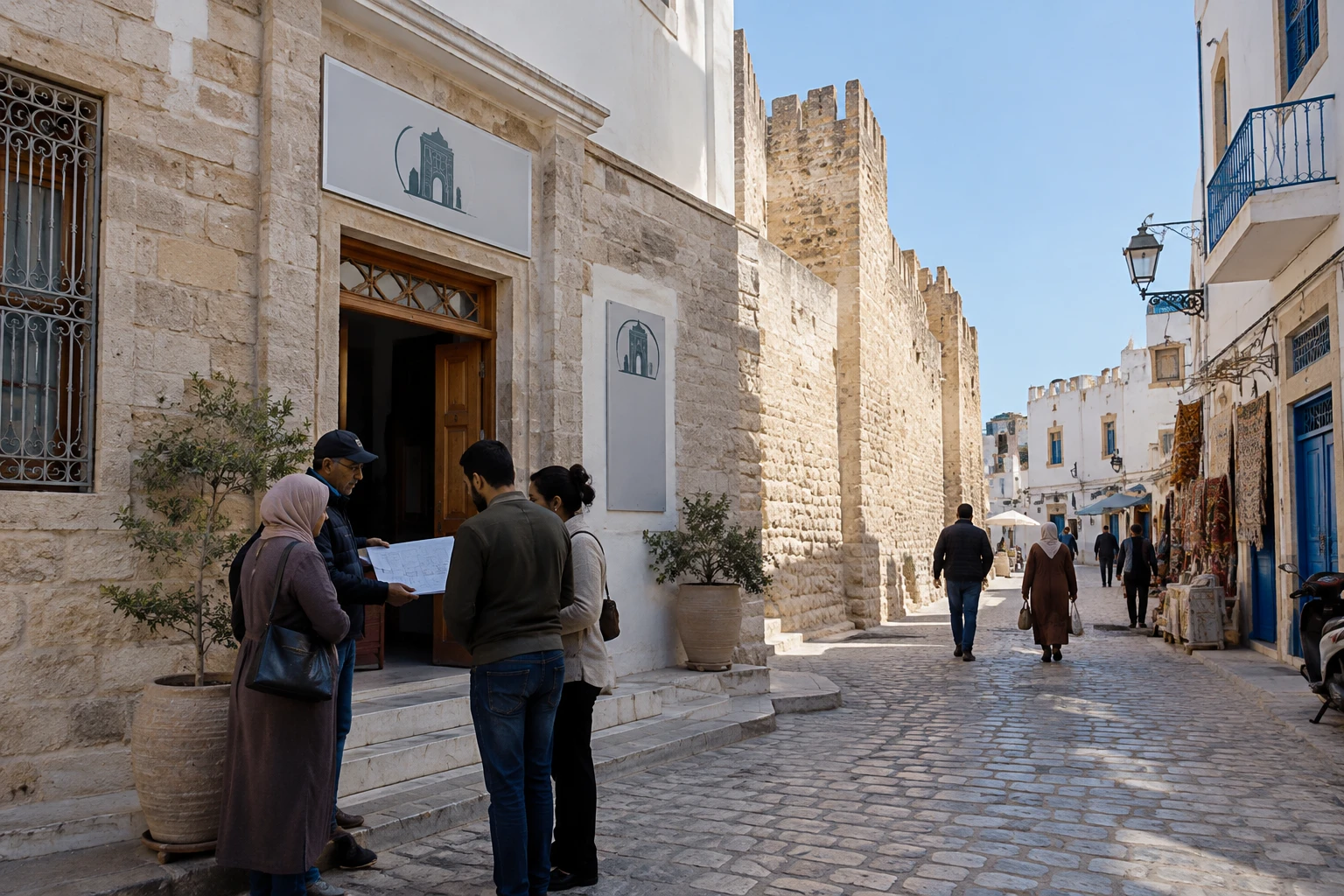
In Sousse, it takes only a few minutes to walk from the alleyways of a fortified medina to the seafront. But this proximity between living heritage and beach tourism raises an essential question: how can visitors and businesses be welcomed without turning the historic heart into a mere backdrop? In this city in Tunisia’s Sahel region, history is not separate from everyday life. It can be read in the monuments, but also in the streets where people live and the trades practised there.
A Mediterranean city with layers of heritage
Located on Tunisia’s east coast, Sousse is one of the country’s main cities; its capital is Tunis. Its history brings together the Mediterranean exchanges of ancient Hadrumetum, a Phoenician and later Roman city, and the urban planning of the early centuries of Islam. The mosaics and ancient remains preserved in the region are reminders of this long succession, rather than of a past reduced to a single era.
The old town has been on UNESCO’s World Heritage List since 1988. The organisation describes the medina as an example of an Arab-Muslim coastal town, with its ramparts, alleyways and monuments. These include the ribat, a fortress and religious building, the Great Mosque, the Kasbah and Bou Ftata Mosque. The medinas of Sousse and Monastir also bear witness to an ancient coastal military architecture shaped by the surveillance and defence of the shoreline.
The city is best explored on foot. Narrow alleyways connect residential neighbourhoods, shops and places of worship. The souks are therefore more than a stop on a sightseeing tour: they are part of an urban fabric where residents, artisans and traders meet. Pottery, metalworking and other crafts contribute to local memory, as well as providing incomes that depend on the ability to pass on skills and find markets.
From heritage to beaches, a local economy
The coastline broadens the experience beyond the medina. Boujaafar beach runs alongside the city, while Port El Kantaoui offers a more recent seaside and marina destination. This variety attracts different groups: visitors coming for the sea, travellers interested in archaeology, Tunisian tourists and visitors from abroad. Their presence can support activity for cafés, accommodation providers, transport services and shops, both in the centre and along the coast.
The effects, however, are not the same for everyone. Seafront businesses depend more heavily on beach holidays and their seasonality. In the medina, artisans and small shops need a steady flow of visitors, but also local customers and residents who continue to live there. Tourism that benefits only a few sectors therefore guarantees neither the vitality of historic neighbourhoods nor the passing on of traditional trades.
Ancient heritage complements the region’s offer. At El Jem, in the neighbouring governorate of Mahdia, the Roman amphitheatre is another major stop for understanding Tunisia’s history. Sousse can thus serve as a starting point for a route linking the coast, the medina and archaeological sites, without conflating the distinct histories of each place.
Preserving a lived-in neighbourhood, not a frozen backdrop
International recognition is not enough to protect a site. In recent documents on the state of conservation of the medina, UNESCO identifies challenges including urban pressure, coordination between stakeholders and the loss of traditional skills. It also notes work under way: building assessments, restoration of the Kasbah and ramparts, an inventory of craft trades and the preparation of guidelines for work on old buildings.
These projects directly affect residents. Restoring a historic house means reconciling heritage rules with contemporary needs: housing, maintenance, access to services and safety. Without support, the costs and constraints can weigh on families and property owners. Conversely, conservation that brings together residents, the municipality, heritage specialists and artisans can sustain activity in the neighbourhood, rather than preserving only its façades.
The issue is also an urban one. New buildings or developments around the ramparts can alter views and the site’s visual balance. The challenge is to manage the development of the entire city, not merely to protect a handful of isolated monuments. Heritage remains more alive when the streets continue to serve those who live and work there.
A Tunisian challenge that extends beyond the tourist season
At national level, Sousse illustrates a choice facing Tunisia: making tourism a driver of economic activity while preserving the cultural resources that make its regions distinctive. Regionally, the city is part of Tunisia’s Sahel, a coastal area where Monastir and Mahdia also have their own heritage and activities. This proximity encourages the development of complementary itineraries rather than competition between destinations.
Tunisia is a member of the Arab Maghreb Union (AMU), a regional framework for co-operation between North African countries. But Sousse’s significance extends beyond institutions: its heritage recalls ancient movements between Mediterranean shores and the place of Tunisian cities in African and regional exchanges. Monitoring restoration work, implementing co-ordinated management and ensuring that residents remain at the heart of the medina will be more telling indicators than a rise in visitor numbers alone.
For Sousse, the future is therefore not a choice between the sea and monuments. It depends on how they are integrated with local life. The beach attracts, the ramparts tell a story, and the workshops pass on skills. The city can welcome visitors without losing what makes it liveable and recognisable only when these dimensions reinforce one another.
For information on the monuments, conservation challenges and local initiatives, see the UNESCO entry for the medina of Sousse, the UNESCO report on its state of conservation and the Sousse visitor website developed with local stakeholders.