Algeria
 Libya
 Morocco
 Sudan
 Tunisia
 Benin
 Burkina Faso
 Cabo Verde
 Côte d'Ivoire
 Ghana
 Guinea
 Guinea-Bissau
 Liberia
 Mali
 Mauritania
 Niger
 Nigeria
 Senegal
 Sierra Leone
 The Gambia
 Togo
 Cameroon
 Central African Republic
 Chad
 DR Congo
 Equatorial Guinea
 Gabon
 Republic of the Congo
 São Tomé and Príncipe
 Burundi
 Comoros
 Djibouti
 Eritrea
 Ethiopia
 Kenya
 Madagascar
 Malawi
 Mauritius
 Mozambique
 Rwanda
 Seychelles
 Somalia
 South Sudan
 Tanzania
 Uganda
 Angola
 Botswana
 Eswatini
 Lesotho
 Namibia
 South Africa
 Zambia
 Zimbabwe
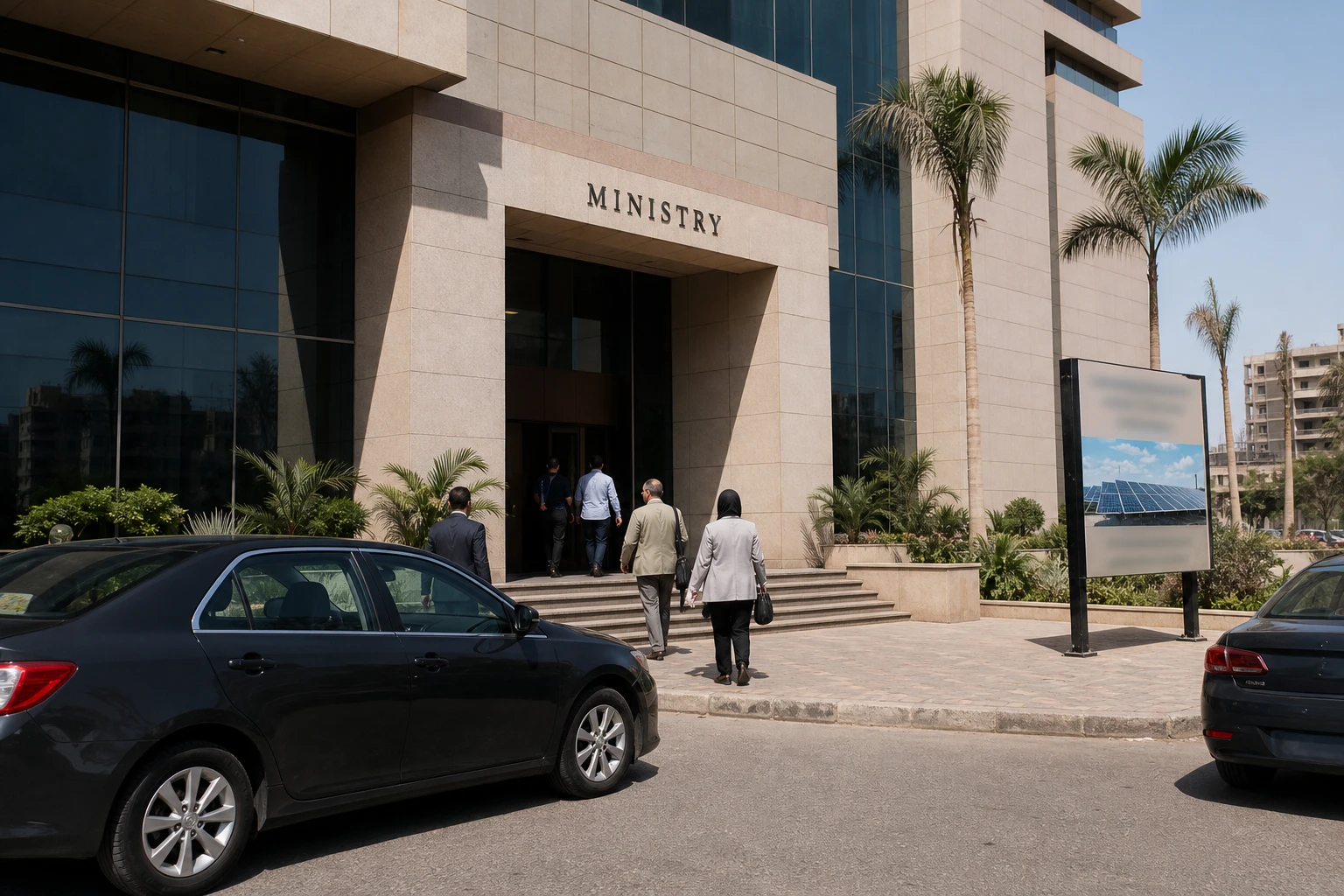
African solar market moves up a gear
Across the continent, the question is no longer simply how many megawatts can be brought online. It is also about who makes the components, who installs them and who captures the value created. In solar power, major projects are now attracting companies specialising in trackers: structures that orient panels towards the sun to improve output. This is a sign of industrial maturity, rather than a mere publicity exercise.
South Africa and Egypt are at the heart of this new phase. South Africa remains the continent’s largest solar market by installed capacity, with more than 10 GW and 1.6 GW added in 2025. Egypt, meanwhile, is consolidating its national strategy, with an official target of 42% renewables in the electricity mix by 2030, rising to more than 60% by 2040. The two countries are now showcases for a broader African solar industry, in which battery storage is becoming as important as generation itself.
Hydra in South Africa sends a strong signal to the industry
The Hydra hybrid complex was inaugurated on 16 July 2026 in South Africa’s Northern Cape province. The project combines 216 MW of solar photovoltaic capacity with 500 MWh of battery storage. According to TotalEnergies, it is expected to supply more than 400 GWh of electricity a year to the national grid under a 20-year power purchase agreement. The project is billed as one of the continent’s largest hybrid renewable energy complexes.
Against this backdrop, equipment supplier GameChange Energy announced that it had supplied its Genius Tracker 1P-5SQ solar tracking systems. In practical terms, these structures adjust the angle of the panels throughout the day to capture more sunlight. Such equipment does not generate electricity in its own right, but it improves a power plant’s overall yield and helps secure part of the business case for large-scale projects.
The Northern Cape is no arbitrary choice. The province has long been home to a number of South Africa’s major solar projects, thanks to its sunshine and vast open spaces. In a country still facing pressure on its electricity grid, Hydra illustrates the shift towards power plants capable of delivering more stable energy by combining solar power with batteries.
Egypt: Benban remains a benchmark, but the supply chain is still imported
A few months earlier, in March 2026, GameChange Solar had already signed a contract to supply its Genius Tracker to a 258 MWp solar project at Benban, Egypt. The deal was concluded with Hassan Allam Construction. The US company said this was its fourth project in the country, taking the combined capacity of its projects in the Arab Republic of Egypt to more than 3 GWp.
Benban remains a cornerstone of Egypt’s strategy. The Egyptian authorities continue to target a 42% share for renewables in the electricity mix by 2030, and an even higher share by 2040, relying on solar, wind and storage. In this context, the New and Renewable Energy Authority monitors the gradual addition of new capacity to the national grid. In the second quarter of the 2025/2026 financial year, it reported an increase in installed renewable capacity from 8.6 GW to 9.1 GW, following the addition of 500 MW linked to the first phase of the Obelisk PV project.
Egypt faces a twofold challenge. On the one hand, the country wants to strengthen its energy security and reduce its fuel bill. On the other, it is seeking to expand domestic industrial capacity. The presence of foreign players in trackers, batteries, inverters and control systems shows that the transition is advancing, but that added value is often still captured outside the continent. The challenge, then, is not simply to generate more clean electricity. It is also to manufacture more equipment in Africa and develop local skills at every stage of the supply chain.
What this says about solar power in Africa today
Across the continent, the Hydra-Benban sequence confirms a clear trend. Large power plants are no longer isolated projects. They are now underpinning a wider market that attracts consortia, lenders, contractors and equipment suppliers. Available analysis shows that Africa recorded its fastest solar growth in 2025, with installed capacity rising by 17%, and that hybrid projects combining generation and storage are gaining ground.
But this momentum remains uneven. South Africa has a deeper market, a structured competitive procurement framework and a more developed electricity grid, although it remains fragile. Egypt, by contrast, is moving ahead with a more centralised public strategy, led by the state and its major operators. In both cases, the message is the same: solar power is no longer just a climate issue. It is an industrial, logistical and financial one, affecting household electricity bills, industrial demand and the competitiveness of African economies.
The next phase will depend on contracts, grid connection times and governments’ ability to retain more value locally. Announcements in 2026 already show that Africa is no longer just buying panels. It is also becoming a strategic market for trackers and batteries, and, in time, for a more complete continental solar industry.