Algeria
 Egypt
 Libya
 Morocco
 Sudan
 Tunisia
 Benin
 Burkina Faso
 Cabo Verde
 Côte d'Ivoire
 Ghana
 Guinea
 Guinea-Bissau
 Liberia
 Mali
 Mauritania
 Niger
 Nigeria
 Sierra Leone
 The Gambia
 Togo
 Cameroon
 Central African Republic
 Chad
 DR Congo
 Equatorial Guinea
 Gabon
 Republic of the Congo
 São Tomé and Príncipe
 Burundi
 Comoros
 Djibouti
 Eritrea
 Ethiopia
 Kenya
 Madagascar
 Malawi
 Mauritius
 Mozambique
 Rwanda
 Seychelles
 Somalia
 South Sudan
 Tanzania
 Uganda
 Angola
 Botswana
 Eswatini
 Lesotho
 Namibia
 South Africa
 Zambia
 Zimbabwe
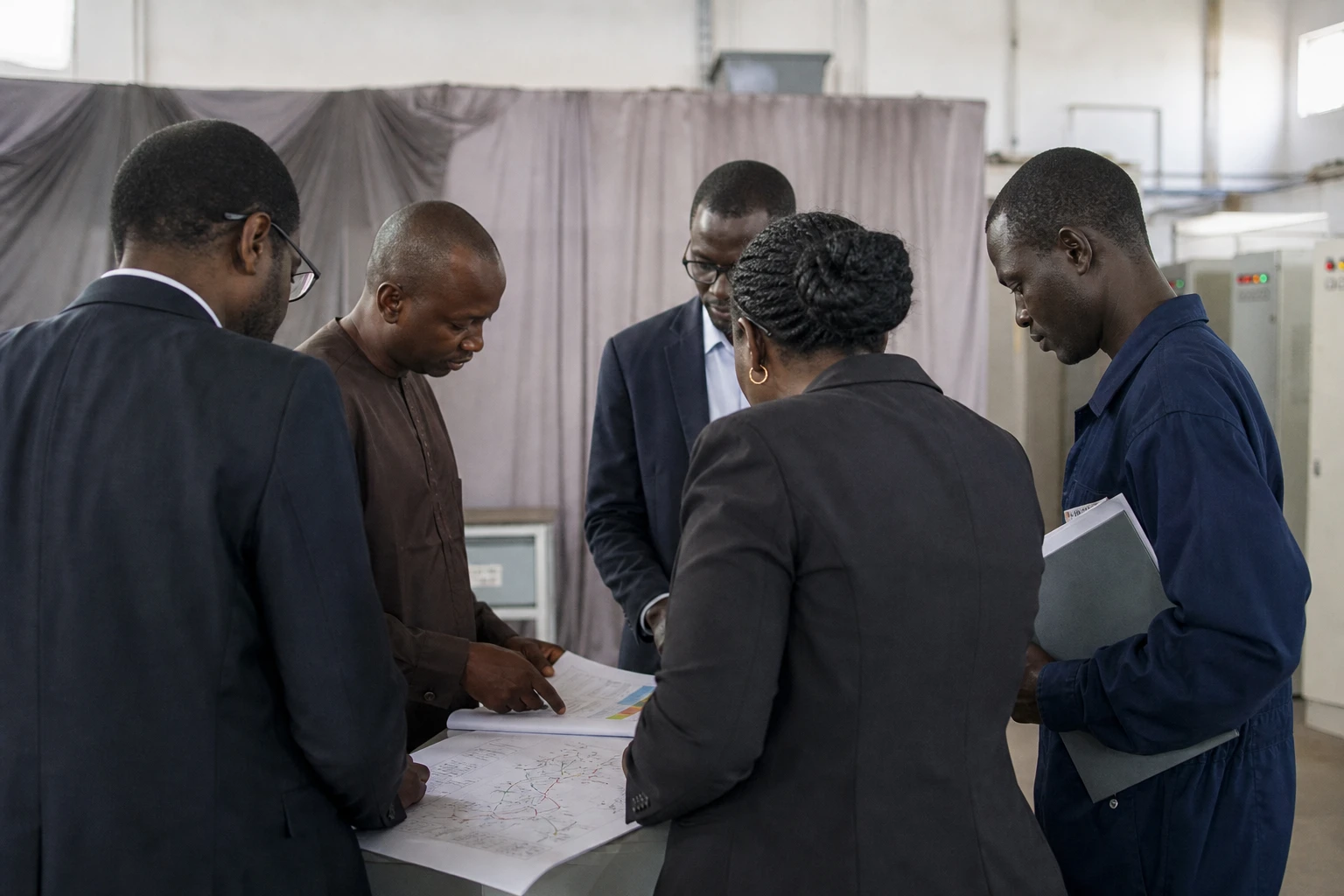
In Dakar, the return of power cuts is a reminder of a simple reality: a grid can make rapid progress and still remain vulnerable to a handful of major outages. Since mid-September 2026, Senegalese households and businesses have faced repeated interruptions, sometimes several times a day. The heat is adding to the strain on households, while businesses have to operate with an unpredictable power supply.
A grid weakened by the loss of several sources of capacity
Senelec, the national company responsible for electricity generation, transmission and distribution, attributes the disruption to a combination of technical and logistical factors. Its chief executive, Papa Toby Gaye, cited two incidents affecting major units in the national fleet on 21 September 2026.
The first involved the Karpowership, a floating power plant installed off Dakar. A failure of the booster pump on its floating storage and regasification unit put nearly 200 megawatts out of service, according to explanations reported by Radiodiffusion Télévision Sénégalaise and the African Press Agency.
The second incident affected a turbine at a thermal power plant on the outskirts of Dakar. The two outages are said to have deprived the system of about 300 megawatts as demand rose with the high temperatures. Senelec therefore introduced rotating power cuts to distribute the shortfall across several areas rather than leave some parts of the grid without power for an extended period.
The company’s management announced that a replacement part for repairing the Karpowership equipment had arrived in Dakar. It hoped to restore the 200 megawatts concerned before the end of the week of 21 September. On 25 September, a situation update published in Dakar reported an improvement in several localities, but did not establish that conditions had stabilised uniformly across the country.
Fuel costs weigh on continuity of service
Outages alone do not explain the strain on the grid. Senelec also cites difficulties securing diesel supplies and increased pressure on its cash flow. According to statements by its chief executive reported by RTS, higher fuel costs have complicated the operation of thermal power plants.
The problem is twofold. On the one hand, diesel is still needed to run some facilities when natural gas is unavailable. On the other, intensive use of a fuel amid logistical constraints can accelerate equipment fouling and increase the number of maintenance operations. Senelec has described a system caught in a pincer effect: less capacity available, higher costs and rising demand.
The situation highlights Senegal’s continuing reliance on thermal power plants. It does not negate the progress made in solar, wind and hydropower. However, when several major thermal units go offline at the same time, these sources are not yet sufficient on their own to absorb the shortfall on the national grid.
For households and businesses, a bill that goes beyond the meter
In Dakar and other localities, the effects are tangible. Power cuts stop fans and air conditioners when the heat is at its most intense. They also prevent people from charging phones, disrupt remote work and put food storage at risk.
Small businesses are particularly exposed. A shop with a freezer, a restaurant, a workshop, a hair salon or a digital services provider cannot always shift its activity to another time. Entrepreneurs who own a generator have to buy more fuel. Others lose time, goods or customers.
Repeated outages also raise questions about the quality of the power supply when it is restored. Voltage fluctuations can damage refrigerators, televisions, air conditioners or computer equipment. For low-income households, replacing a damaged appliance is a far greater expense than the usual cost of electricity.
The return of load-shedding also revives memories of periods when interruptions had become frequent. In recent years, increased installed capacity had helped make such outages less common in the daily lives of some Senegalese. Their return therefore fuels a specific expectation: users want to know not only the immediate cause of the crisis, but also what safeguards are planned to prevent it from happening again.
The shift to gas: promise meets a timing problem
Senegal has for several years been pursuing its “Gas to Power” strategy. It involves using more natural gas to generate electricity, with the aim of reducing reliance on heavy fuel oil and diesel. The approach goes hand in hand with the development of the country’s gas resources and is intended, in time, to lower some generation costs.
In its 2024 annual report, Senelec says it signed a five-year contract with Elton to supply liquefied natural gas. The document says this solution is intended as a transition until domestic gas is expected to become available in 2028.
This timeline creates a difficult interim period. Power plants are gradually being prepared to run on gas, while the anticipated domestic supply is not yet fully available. Senegal’s energy ministry presents this transformation as a lever for energy sovereignty, notably through the development of infrastructure linking gas resources to power plants.
But an energy transition is not simply a matter of converting machinery. It requires synchronisation between supply contracts, pipelines, regasification units, power plants and backup reserves. If any one of these links is delayed, the system has to turn back to more expensive fuels or less suitable capacity.
A national issue with regional implications
The crisis comes as Senegal takes part in the integration of West Africa’s electricity systems. Within the ECOWAS region, the West African Power Pool, or WAPP, is gradually connecting national grids to facilitate trade and the sharing of reserves.
Senegal is also connected to neighbouring grids through the Organisation pour la mise en valeur du fleuve Sénégal. These interconnections can strengthen security of supply, but they cannot replace sufficiently robust domestic generation. They work best when the connected countries themselves have spare capacity.
The development of the regional electricity market, backed by ECOWAS and the WAPP, is intended eventually to make it possible to buy electricity at short notice when domestic generation encounters difficulties. The synchronisation of West African grids is an important step in that direction.
For Senegal, the September 2026 episode therefore leaves several questions open. Repairing the Karpowership and the turbine concerned could quickly reduce the shortfall. However, the system’s resilience will also depend on fuel stocks, preventive maintenance, the actual availability of gas and the ability to diversify generation sources further.
The immediate priority is a lasting return to stable service, in Dakar and across the regions. The longer-term priority is different: to build a grid capable of absorbing demand growth without passing the cost of technical weaknesses on to households and economic activity.