Algeria
 Egypt
 Libya
 Morocco
 Sudan
 Tunisia
 Benin
 Burkina Faso
 Cabo Verde
 Côte d'Ivoire
 Ghana
 Guinea
 Guinea-Bissau
 Liberia
 Mali
 Mauritania
 Niger
 Nigeria
 Sierra Leone
 The Gambia
 Togo
 Cameroon
 Central African Republic
 Chad
 DR Congo
 Equatorial Guinea
 Gabon
 Republic of the Congo
 São Tomé and Príncipe
 Burundi
 Comoros
 Djibouti
 Eritrea
 Ethiopia
 Kenya
 Madagascar
 Malawi
 Mauritius
 Mozambique
 Rwanda
 Seychelles
 Somalia
 South Sudan
 Tanzania
 Uganda
 Angola
 Botswana
 Eswatini
 Lesotho
 Namibia
 South Africa
 Zambia
 Zimbabwe
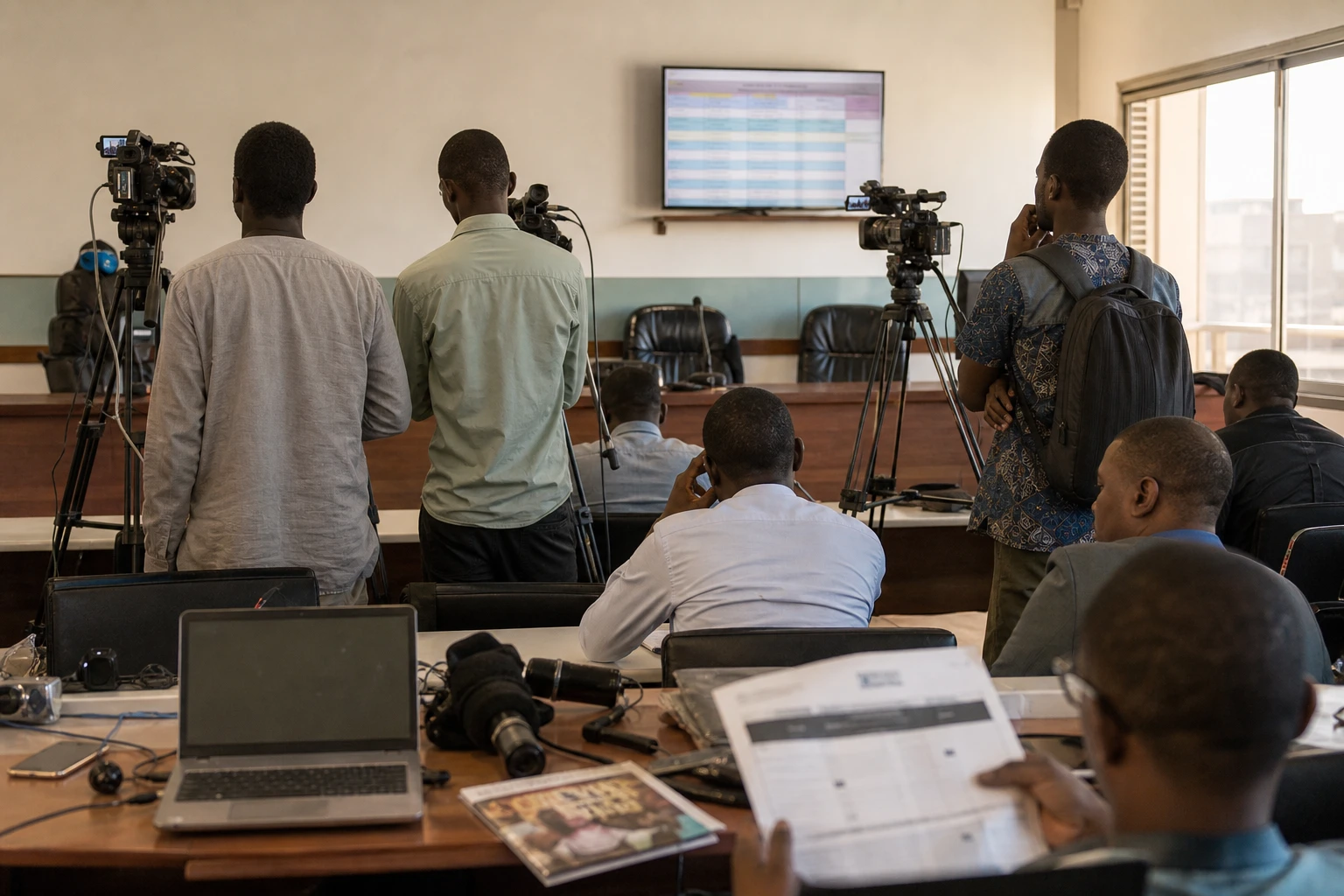
A parliamentary date that means more than a date
In Dakar, a procedural deadline often says more than a long speech. When the executive and the National Assembly do not read the same calendar, it is not just a matter of protocol: it is a test of methods, power relations and institutional discipline in a Senegal where the new majority wants to project speed and control.
Clarification from the parliamentary bureau shows that the 1 September 2026 appointment will not, at this stage, be the general policy statement itself, but first the opening of an extraordinary session. The substantive sitting will have to be scheduled afterwards by the Conference of Presidents. In a country where recent political life has been marked by rapid changes at the head of the executive and a Parliament more attentive to its prerogatives, this is no minor detail.
What Senegalese parliamentary law says
The framework is clear on one essential point: after being appointed, the Prime Minister must deliver his general policy statement before the National Assembly. The rules of procedure also specify that the statement must be delivered no later than three months after the Government takes office and that MPs must be informed at least eight days before the date set. The same text recalls that the National Assembly oversees the Government’s action and evaluates public policies.
Another useful clarification: the National Assembly may be convened in an extraordinary session by decision of the President of the Republic, either on his own initiative or on a proposal from the Prime Minister. This session has a defined agenda and may not last more than 15 days. According to the Assembly bureau, 1 September 2026 therefore marks the opening of a session, not the moment when the head of Government will present his programme to MPs.
The substance of the issue: procedure, then political debate
The Government had announced a general policy statement for Tuesday 1 September 2026 at 9am. The National Assembly then said the eight-day notice period could run only from the opening of the extraordinary session, pushing back the policy debate. In other words, the first stage will be ceremonial and organisational; the second will be political, with the Prime Minister speaking and the possibility of substantial exchanges between the executive and MPs.
This sequencing matters because the general policy statement is not a communications exercise. It is a moment of institutional truth. The Prime Minister sets out his position, budget priorities, social trade-offs and governance choices. The rules of procedure even provide that, at the Prime Minister’s request, the debate may lead to a confidence vote, requiring an absolute majority of the members of the National Assembly.
In the current Senegalese context, the dispute over the date is therefore about more than a matter of convening a sitting. It raises questions about how the new head of Government, Ahmadou Al Aminou Mohamed Lo, fits into an institutional landscape that has become more demanding since the latest parliamentary reforms. His appointment, on 25 May 2026, opened a new phase at the Prime Minister’s Office. His general policy statement was to be its first major public expression.
What this reveals about relations between Dakar, Parliament and the executive
Senegal is not in an institutional vacuum. The National Assembly has emerged from a reform of its rules of procedure adopted in 2025, which strengthened several oversight tools and clarified certain procedures. In this context, a scheduling error can quickly take on political significance. It can be seen as a simple administrative blunder. It can also be interpreted as a sign of vigilance from a Parliament intent on ensuring its rules are respected. Both interpretations coexist.
For citizens, the stakes are more concrete. A delay to the general policy statement also postpones the moment when the Government sets out its priorities and responds to concerns over prices, jobs, transport, food security and preparations for major national events. In Dakar and across the regions, markets, local authorities and businesses need visibility. A postponed statement does not halt public action, but it prolongs a period of political uncertainty.
The underlying tension is also institutional. Since the office of Prime Minister was reinstated in 2021, the position of the head of Government in relation to the head of state, the president of the National Assembly and the parliamentary majority has remained a sensitive issue in Senegalese political life. The general policy statement is intended precisely to clarify this architecture: who decides, who arbitrates, who oversees, and according to what timetable.
Significance beyond Senegal
Across West Africa, this kind of episode attracts interest beyond Senegal. ECOWAS has for several years observed growing demand for institutional stability, budget predictability and respect for checks and balances. When a parliament reminds the executive of the letter of its rules, it points to a broader question: how can institutions capable of balancing government effectiveness with democratic oversight be consolidated?
Senegal is also seeking to project an image of institutional continuity at a time when several projects are under way in parallel, from economic reforms to preparations for the Dakar 2026 Youth Olympic Games. In this context, a procedural error may seem minor, but it quickly becomes symbolic. It is a reminder that major announcements carry weight only when underpinned by well-managed formalities.
The next step will now depend on the Conference of Presidents, which must set a new date for the plenary sitting on general policy. The real challenge for both the Assembly and the Prime Minister’s Office will be to turn this setback into a well-managed sequence rather than a dispute over jurisdiction. In Senegal, the strength of public statements is often measured by the precision of the procedures behind them.