Algeria
 Egypt
 Libya
 Morocco
 Sudan
 Tunisia
 Benin
 Burkina Faso
 Cabo Verde
 Côte d'Ivoire
 Ghana
 Guinea
 Guinea-Bissau
 Liberia
 Mali
 Mauritania
 Niger
 Nigeria
 Sierra Leone
 The Gambia
 Togo
 Cameroon
 Central African Republic
 Chad
 DR Congo
 Equatorial Guinea
 Gabon
 Republic of the Congo
 São Tomé and Príncipe
 Burundi
 Comoros
 Djibouti
 Eritrea
 Ethiopia
 Kenya
 Madagascar
 Malawi
 Mauritius
 Mozambique
 Rwanda
 Seychelles
 Somalia
 South Sudan
 Tanzania
 Uganda
 Angola
 Botswana
 Eswatini
 Lesotho
 Namibia
 South Africa
 Zambia
 Zimbabwe
A parliamentary push that changes the tone
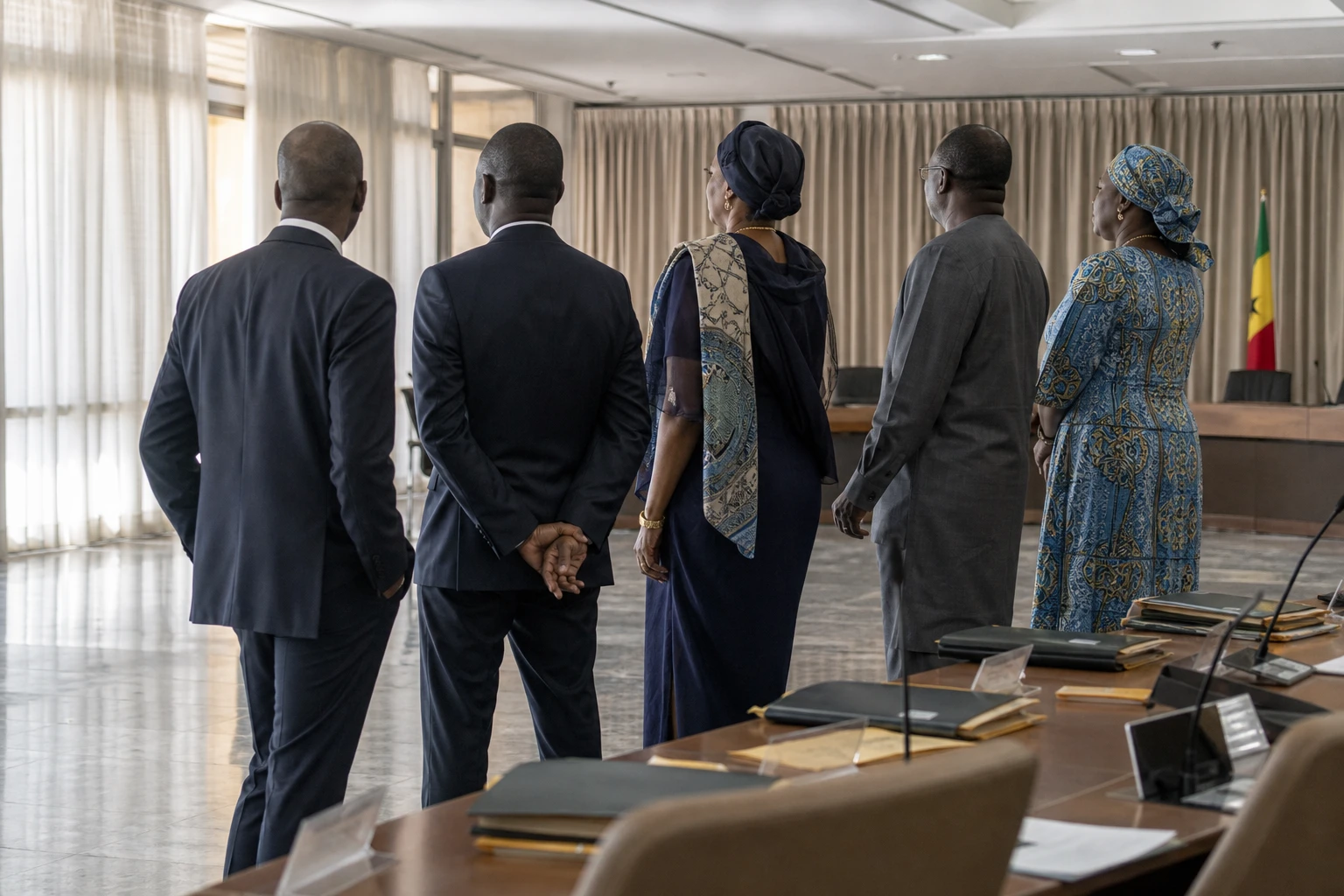
In Dakar, the debate on public integrity is no longer confined to slogans. It is taking shape in legislation. Senegal’s National Assembly has deemed admissible several initiatives that directly concern the highest levels of state, including the president’s declaration of assets and rules governing special credits and other secret funds. The issue is sensitive because it touches on public trust, institutional security and the use of public resources that are difficult to monitor.
This comes at a particular political moment. The government that came to power in 2024 built part of its legitimacy on breaking with old practices, but internal balances have become strained over the months. Transparency, rather than remaining a campaign hallmark, has become a concrete test of governance.
Senegal’s framework and the weight of West Africa
Senegal is not acting in a vacuum. Across West Africa, pressure for greater accountability is growing, although the pace varies from country to country. In Senegal, this movement draws on existing tools. Declarations of assets were established by Law No. 2014-17, then strengthened by Law No. 2025-13 on declarations of assets and its implementing texts. OFNAC, the national anti-corruption body, has also reminded officials of the requirement to regularise certain declarations before 31 July 2026.
In other words, the parliamentary initiative is not starting from scratch. It is part of a legal framework that is already more extensive than it was ten years ago. But it seeks to go further, opening a debate on spending that has until now been shrouded in discretion. In a country where the central state remains highly visible, this question has immediate national significance, as well as regional importance. It touches on an expectation shared across ECOWAS: to know how public resources are authorised, used and monitored.
What MPs have put on the table
The Bureau of the National Assembly met on 17 and 23 July 2026 to consider several matters. According to the statement released on 24 July, it deemed admissible a bill to amend Article 37 of the Constitution, in order to clarify the president’s declaration of assets. It also deemed admissible another bill on rules governing special credits and other secret funds. The Assembly also announced the creation of parliamentary committees of inquiry, including one into alleged irregularities in the “One Student, One Computer” programme.
The bill does not yet abolish special funds. Rather, it seeks to place limits on them and subject them to oversight or clearer rules. This is an essential point. In Senegal, as in many countries in the region, so-called sensitive funds are often justified on security or diplomatic grounds. Yet their opacity fuels mistrust, especially when they are beyond detailed parliamentary scrutiny. The debate has been revived in recent months by several political figures and civil society actors calling for greater traceability.
On the question of assets, Senegalese lawmakers are tackling another sensitive issue: the credibility of exemplary conduct at the highest levels of state. In the public mind, a declaration of assets is not just a form. It is a political signal. The clearer it is, the less room there is for suspicion. The vaguer it is, the more it fuels accusations of bad faith.
A reform about power as much as oversight
The issue goes beyond legal technicalities. It concerns the actual hierarchy of power. When Parliament takes up special funds and presidential assets, it is not discussing compliance alone. It is also reshaping the relationship between the executive and the National Assembly. This dynamic is all the more visible as the Assembly’s president, Ousmane Sonko, has just left the post of prime minister, amid an internal reshuffle within the governing camp.
In this context, every initiative is viewed on several levels. For the government, it can demonstrate a willingness to break with old practices. For MPs, it is a way to assert that Parliament is not merely a conduit. For citizens, it offers the chance to demand accountability for arrangements long seen as opaque. The difference between a political promise and the institutional machinery is clear. It is this machinery that the bills now seek to address.
The inquiry into the “One Student, One Computer” programme adds another dimension: that of concrete public policy. A programme presented as socially beneficial can also become a source of dispute if it is suspected of irregularities in public procurement. For families, students and suppliers, the issue is simple: to know whether budgets are actually serving education and digital equipment, or are being lost in poorly documented channels.
What Senegal is signalling to the rest of the continent
On a continent where budget transparency remains unfinished business, Senegal is seeking to show that governance reform can come from Parliament, not only the executive. This is an important message for West Africa, where institutional credibility is often judged by the ability to oversee public resources without political deadlock. The country is thus reminding others that democracy is also measured by its ability to open up areas of darkness, including those at the heart of the state.
The next steps remain to be seen. The president and the justice minister have been asked to give their views on the bills and committees of inquiry within the legal deadlines. The initiative’s real significance will now be determined by what follows: adoption, amendments, delays or shelving. For now, the National Assembly has shifted the debate. It has turned transparency from campaign rhetoric into a specific, dated and observable institutional question.