
 Algeria
 Egypt
 Libya
 Morocco
 Sudan
 Tunisia
 Benin
 Burkina Faso
 Cabo Verde
 Côte d'Ivoire
 Ghana
 Guinea
 Guinea-Bissau
 Liberia
 Mali
 Mauritania
 Niger
 Nigeria
 Sierra Leone
 The Gambia
 Togo
 Cameroon
 Central African Republic
 Chad
 DR Congo
 Equatorial Guinea
 Gabon
 Republic of the Congo
 São Tomé and Príncipe
 Burundi
 Comoros
 Djibouti
 Eritrea
 Ethiopia
 Kenya
 Madagascar
 Malawi
 Mauritius
 Mozambique
 Rwanda
 Seychelles
 Somalia
 South Sudan
 Tanzania
 Uganda
 Angola
 Botswana
 Eswatini
 Lesotho
 Namibia
 South Africa
 Zambia
 Zimbabwe
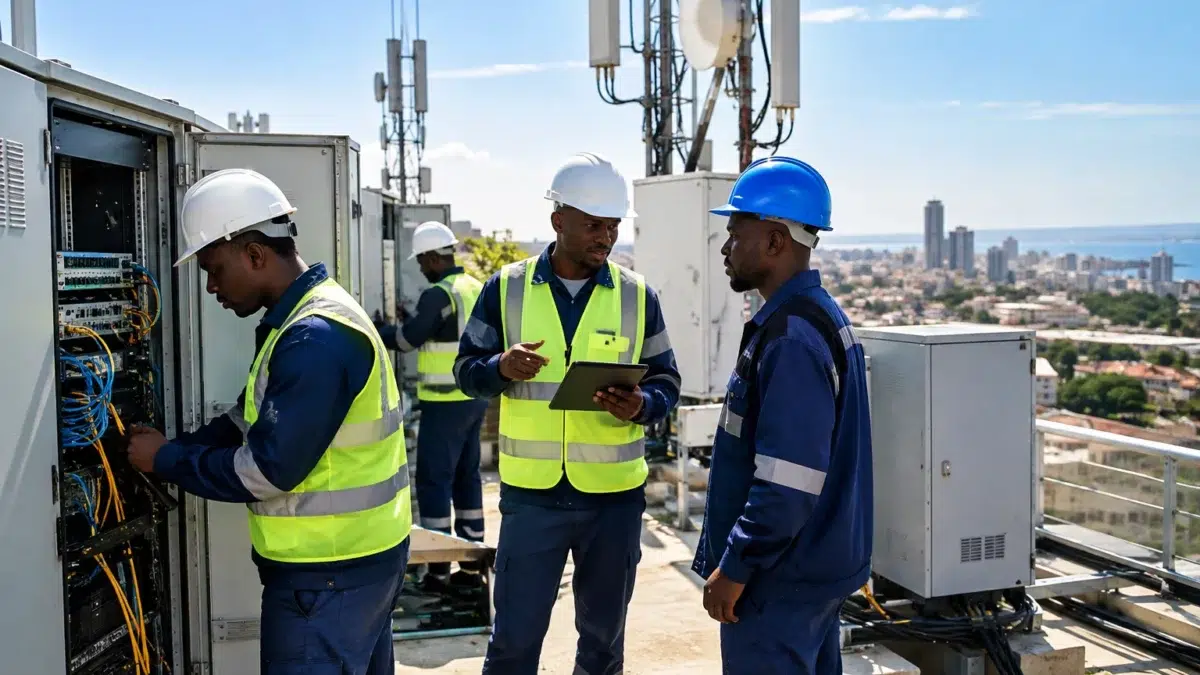
For Senegal, forging technology partnerships is not simply about attracting suppliers. The challenge is also to develop skills, infrastructure and useful services in the country. Engagement with Finland is part of this ambition, but diplomatic announcements will still need to translate into defined and funded projects.
A closer relationship aligned with Dakar’s priorities
On 18 November 2026 in Helsinki, Senegal’s Minister of African Integration and Foreign Affairs, Cheikh Niang, met his Finnish counterpart, Elina Valtonen. The two officials discussed investment, digital technology, energy, education, artificial intelligence, agriculture and water management. They agreed to work on a cooperation framework focused on concrete projects. Senegal’s foreign ministry and the Finnish government confirmed the meeting and its main themes.
This meeting follows exchanges that began earlier in the year. Senegalese-Finnish political consultations were held in Dakar on 26 March. A Finnish delegation discussed digital transformation and infrastructure with Senegalese officials. Then, on 30 September, Senegal’s Ministry of Telecommunications and Digital Technology signed a partnership agreement with Nokia. It provides a framework for collaboration, but is not in itself a deployment contract: operational priorities and their terms still need to be specified.
The national context matters. Launched in February 2025, the New Deal Technologique is Senegal’s strategy to strengthen its digital sovereignty, modernise public services and develop the digital economy. The strategy is part of Senegal 2050. For Dakar, the value of an external partnership will therefore depend on its ability to support these goals without reducing the country to a market for imported solutions.
From digital technology to power plants
The areas discussed in March concern essential infrastructure: data centres, connectivity for public administrations, undersea cables and cybersecurity. A data centre ready to support artificial intelligence-related uses was also discussed. Such facilities can improve service continuity and the flow of data. They also raise questions about cost, security, data control and the training of local teams. The announcements available so far do not specify investment, timelines or the division of responsibilities.
The agreement signed with Nokia covers connectivity, network resilience, cybersecurity, digital public services, innovation and skills, among other areas. The agreement signals a willingness to co-operate, but benefits are not automatic. They will depend, among other things, on which contracts are awarded, which Senegalese companies are involved and what training is planned. For users, tangible results will be measured by the quality and accessibility of services, including outside Dakar.
Energy is another point of contact between Finnish companies and the Senegalese economy. On 27 August, Wärtsilä announced an order for five engines for a 14-megawatt power plant intended for the Diamba Sud gold project in the country’s south-east. Africa Power Services, the French company responsible for building the plant, placed the order on behalf of Fortuna Mining, a Canadian company. Wärtsilä says the equipment is due to be delivered in March 2027 and the plant is expected to be operational before the end of that year.
The facility is intended to supply the mining site, which is far from the electricity grid. Fortuna plans to consider adding renewable energy to the microgrid, but the share and timing of this integration have yet to be specified. The initial reliance on a dedicated power plant highlights a broader challenge: major industrial projects need a reliable power supply, while their benefits for local communities also depend on employment, local economic gains and the management of their energy footprint.
Benefits to be measured beyond the announcements
Wärtsilä is not a newcomer to the sector. In 2025, the group signed a five-year contract to operate and maintain a 23-megawatt power plant associated with the Boto gold project, led by Boto SA, a subsidiary of Moroccan group Managem. These two projects illustrate specific commercial contracts. They should not, however, be confused with the broader diplomatic framework, which still needs to be translated into detailed commitments.
Several questions will be crucial for Senegalese authorities: which activities will take place in the country, what skills will be transferred and which local stakeholders will take part in the projects? In the digital sector, it will also be necessary to establish where data will be hosted and how infrastructure will be protected. In energy, technical choices will need to be assessed against the site’s requirements, costs and the actual role given to renewable sources.
This closer relationship is also part of a policy to diversify partnerships. Senegal is a member of ECOWAS, the Economic Community of West African States, and its digital and energy infrastructure could have regional significance. Discussions on cables, networks and digital services are therefore also relevant to cross-border exchange. But regional benefits will depend on infrastructure compatibility, governance and access.
The next step will be to see whether the cooperation framework announced in Helsinki leads to projects with funding, timelines and verifiable objectives. The agreement with Nokia and the energy contracts show that collaboration is already under way. The question is whether these partnerships will contribute sustainably to Senegal’s industrial and digital priorities, and what place they will make for Senegalese skills and companies.



