Algeria
 Egypt
 Libya
 Morocco
 Sudan
 Tunisia
 Benin
 Burkina Faso
 Cabo Verde
 Côte d'Ivoire
 Ghana
 Guinea
 Guinea-Bissau
 Liberia
 Mali
 Mauritania
 Niger
 Nigeria
 Senegal
 Sierra Leone
 The Gambia
 Togo
 Cameroon
 Chad
 DR Congo
 Equatorial Guinea
 Gabon
 Republic of the Congo
 São Tomé and Príncipe
 Burundi
 Comoros
 Djibouti
 Eritrea
 Ethiopia
 Kenya
 Madagascar
 Malawi
 Mauritius
 Mozambique
 Rwanda
 Seychelles
 Somalia
 South Sudan
 Tanzania
 Uganda
 Angola
 Botswana
 Eswatini
 Lesotho
 Namibia
 South Africa
 Zambia
 Zimbabwe
In Senegal, the battle for information is no longer fought only in newsrooms
In Dakar, an article does not travel alone. It can be shared, republished, paid for and then fed back into the public sphere with an air of normality. In a country where online news outlets depend heavily on advertising and fragile revenue streams, this vulnerability has become a political as well as an editorial issue.
Senegal is not alone. In West Africa, foreign influence campaigns circulate in an environment already strained by military transitions, security tensions and competition between geopolitical narratives. ECOWAS, which says it is closely monitoring democratic and security stability in the region, itself noted in late 2024 that the area remains exposed to terrorism, threats to the democratic process and the effects of external conflicts, notably in Ukraine.
What the leaked documents reveal
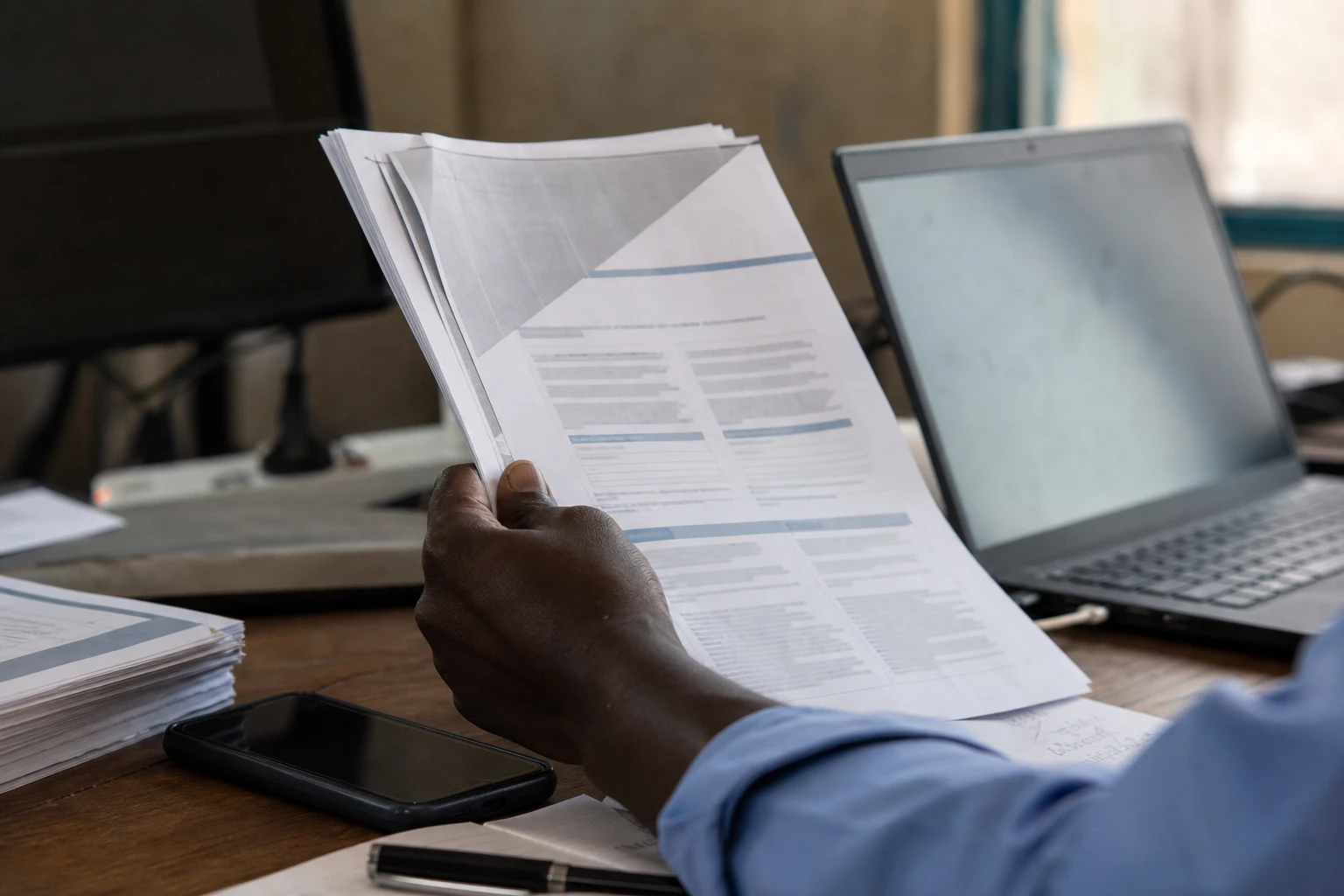
Documents analysed by several newsrooms show the existence of a Russian operation referred to internally as “Company”, linked to Africa Politology. According to these documents, the operation distributed 644 propaganda or disinformation articles in at least 35 media outlets in West and Central Africa between June and November 2024, at a cost of more than $300,000. These figures have been cited by several independent sources that accessed the dossier.
In Dakar, the case of PressAfrik drew attention. Its editor, Ibrahima Lissa Faye, said he had learned that fourteen—or rather thirteen—pro-Russian articles had been published on the site. The distinction matters: in cases of this kind, factual details must be handled carefully, as manipulation campaigns often exploit imprecision and the rapid spread of content. PressAfrik is also among the Senegalese media outlets certified by JTI, a label for transparency and editorial responsibility.
The case says something not only about Moscow, but also about Senegal’s media market. A report on the online market in Senegal notes that most media outlets rely on limited resources, sales do not cover costs and advertising is unevenly distributed. News websites often depend on programmatic advertising and sponsored content. When cash flow is tight, the boundary between news, advertorials and commissioned content can become more porous.
Why Dakar matters in this geography of influence
Senegal occupies a particular place in West Africa. Dakar remains a regional centre for the press, diplomacy and the circulation of ideas. It is also a country where public debate is closely followed, particularly since recent electoral cycles and controversies over disinformation. In 2024, Africa Check launched the #SaytuSEN2024 alliance with several media outlets and journalism schools to curb the spread of false information around the presidential election. In Wolof, “saytu” refers to the idea of monitoring and verifying.
This local mobilisation shows that a purely security-based response is not enough. The problem is also technical, economic and professional. A fragile media outlet with limited fact-checking tools can become an entry point for networks that buy volume, visibility or silence. Better-structured media outlets, by contrast, with transparency rules in place, are more resilient. The JTI certification awarded to PressAfrik and Financial Afrik points in this direction: it signals that several Senegalese newsrooms are seeking to make their standards visible at a time when public trust is hard to build.
The issue goes beyond the Russia-West rivalry alone. Pro-Russian narratives can sometimes find fertile ground when they tap into genuine frustrations: colonial memory, rejection of interference, disappointment with certain foreign partners, or the pursuit of sovereignty. The risk for readers is to confuse legitimate criticism with calibrated propaganda. For newsrooms, the risk is losing their role as a filter.
A test for the media, and for African information sovereignty
The dossier resonates beyond Senegal. In the Sahel, the battle of narratives is unfolding alongside a reshaping of alliances. Across the ECOWAS region, where democratic trajectories and military transitions still coexist, control of information has become a matter of public security. Disinformation campaigns do not seek only to persuade. They seek to exhaust, confuse, divide and delegitimise.
For Senegal, the immediate challenge is twofold. On the one hand, newsrooms must be protected from opaque chains of intermediaries. On the other, the material conditions for independent journalism must be strengthened. As long as the online press remains exposed to economic precarity, influence operations will find conduits, sometimes without even needing genuine ideological recruitment.
At continental level, the case is a reminder that digital and information sovereignty cannot simply be declared. It is built through verification, transparent funding, journalist training and the consolidation of African media ecosystems capable of withstanding foreign influence operations. The issue is not confined to one country or a single power. It concerns how Africa produces, protects and defends its own narratives.