
 Algeria
 Egypt
 Libya
 Morocco
 Sudan
 Tunisia
 Benin
 Burkina Faso
 Cabo Verde
 Côte d'Ivoire
 Ghana
 Guinea
 Guinea-Bissau
 Liberia
 Mali
 Mauritania
 Niger
 Nigeria
 Sierra Leone
 The Gambia
 Togo
 Cameroon
 Central African Republic
 Chad
 DR Congo
 Equatorial Guinea
 Gabon
 Republic of the Congo
 São Tomé and Príncipe
 Burundi
 Comoros
 Djibouti
 Eritrea
 Ethiopia
 Kenya
 Madagascar
 Malawi
 Mauritius
 Mozambique
 Rwanda
 Seychelles
 Somalia
 South Sudan
 Tanzania
 Uganda
 Angola
 Botswana
 Eswatini
 Lesotho
 Namibia
 South Africa
 Zambia
 Zimbabwe
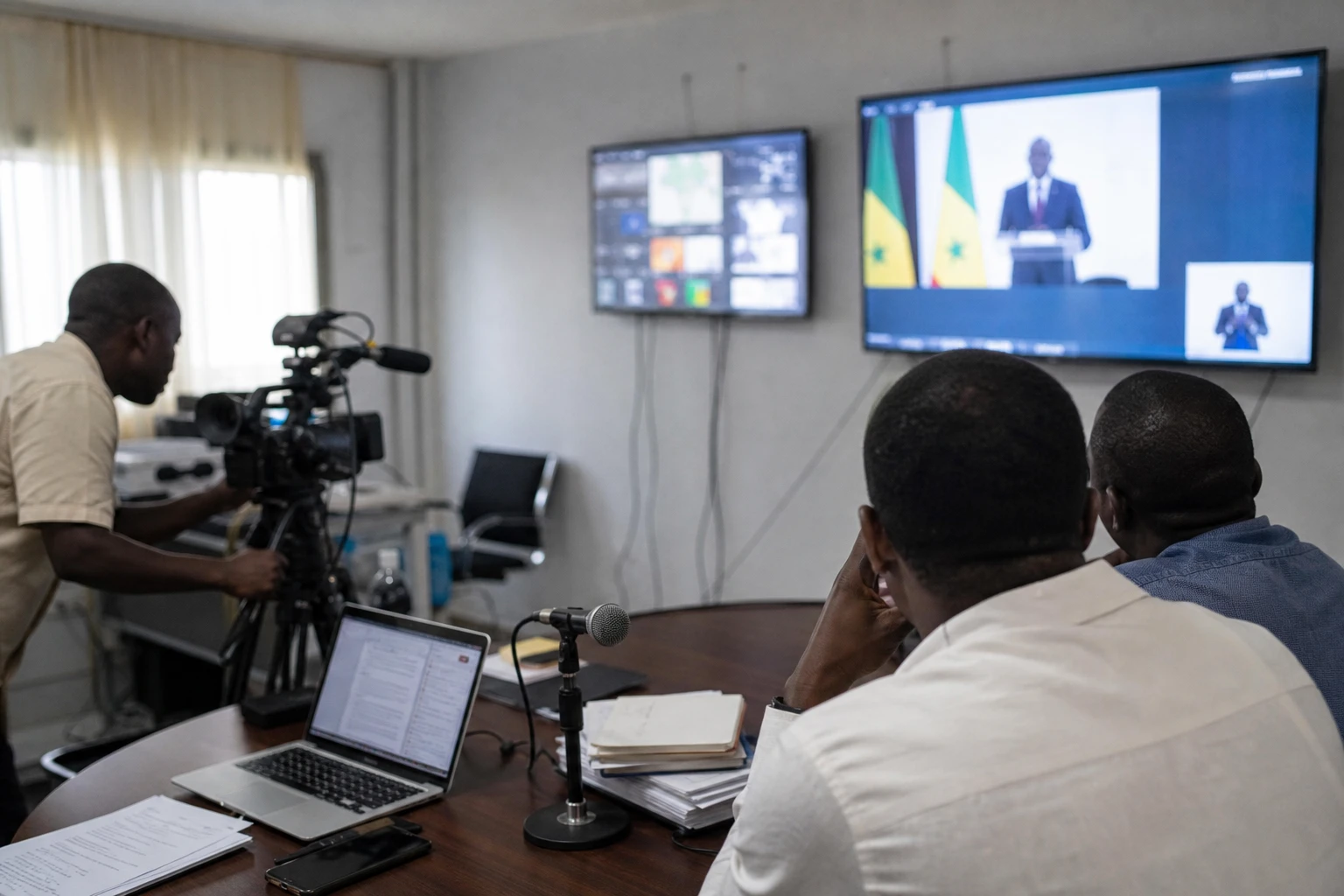
In Dakar, political stability also plays out in offices
In Senegal, power is not exercised only in the National Assembly or through major announcements from the Presidential Palace. It is also reflected in appointments, departures and shifting balances within the administration, as the executive seeks to implement its programme without leaving room for influence by allies who have become unwelcome.
This is all the more sensitive because Bassirou Diomaye Faye is president of a country undergoing a phase of institutional recalibration. From Dakar, Senegal also carries weight in West Africa: it is a member of ECOWAS, the Economic Community of West African States, and its head of state took the helm of the regional organisation in July 2026. In other words, the changes under way within Senegal’s state apparatus extend beyond domestic politics alone.
A wave of replacements openly backed by the executive
On 10 September 2026, a cabinet meeting held in Dakar approved a series of individual measures affecting several director-generals, public agencies and board chairs. The presidency notably announced the appointment of Cheikh Tidiane Sarr as head of the ARTP, following a call for applications, as well as other changes at SOGEPA SN, the General Delegation for the Urban Centres of Diamniadio and Lac Rose, ANRAC and other public bodies.
Senegalese media have described the episode as a broad reshuffle affecting officials close to Pastef, the ruling party, and its former leader, now Prime Minister, Ousmane Sonko. APS reported that “almost all the DGs and board chairs who identified with Pastef or Sonko have been dismissed”, while several newspapers spoke of the “de-Pastefication” of the administration and the installation of a new political team around the president.
The message from the authorities is clear: the administration must no longer operate as a collection of partisan fiefdoms. The presidency says it wants teams capable of delivering government priorities, with recruitment based on more open procedures in some cases, such as at the ARTP. This choice does not resolve everything, but it shows a willingness to take back control of decision-making chains, which are often slower than political announcements.
What this reshuffle means for the state and for Pastef
In a centralised presidential system such as Senegal’s, director-general posts are not merely administrative positions. They oversee budgets, contracts, regulation and sometimes strategic sectors such as telecommunications, public land, housing and regional planning. Changing who holds these posts therefore affects how the state allocates resources, sets priorities and prepares for what lies ahead.
For Pastef, the episode clearly carries political weight. The party that brought Bassirou Diomaye Faye to power remains central to public life in Senegal, but it can no longer regard the state apparatus as a natural extension of its electoral victory. The authorities appear keen to distinguish partisan loyalty from institutional loyalty. This is a familiar turning point in the early days of a term in office, but here it takes on particular significance because it affects figures many associated with the inner circle of the political project that came to power in 2024.
For civil servants, technical officials and service users, the stakes are more tangible. If appointments are genuinely based on qualifications and calls for applications, they could make public action more transparent. If, on the other hand, they merely shift allegiances, the risk is that the same delays will be reproduced under new faces. The ARTP case illustrates this tension: telecommunications and postal regulation require continuity, expertise and independence, especially in a country where digital technology, services and connectivity are playing an increasingly important role in the economy.
A signal to watch across West Africa
The reshuffle’s significance can also be measured at regional level. Senegal occupies a distinctive place in West Africa: as an active ECOWAS member, it hosts sensitive discussions on security, economic integration and infrastructure. As several countries in the region have left the organisation, Dakar is seeking to preserve an image of institutional stability and administrative continuity.
The context is significant. In 2026, Bassirou Diomaye Faye also called for closer monitoring of border areas and the programme for Casamance, a southern region long affected by a low-intensity armed conflict. Here too, the issue is not solely one of security. It concerns territorial administration, economic recovery, local public services and the state’s ability to deliver on its promises beyond Dakar.
Across Africa, developments in Senegal speak to a broader debate: how can new African majorities transform the state without weakening it? The answer will depend less on slogans than on visible results in public services, state-owned enterprises, regulation and local communities. In the coming weeks, the key question will be whether this wave of appointments improves governance or opens a new phase of internal competition between activists, technocrats and allies of the government.



