
 Algeria
 Egypt
 Libya
 Morocco
 Sudan
 Tunisia
 Benin
 Burkina Faso
 Cabo Verde
 Côte d'Ivoire
 Ghana
 Guinea
 Guinea-Bissau
 Liberia
 Mali
 Mauritania
 Niger
 Nigeria
 Sierra Leone
 The Gambia
 Togo
 Cameroon
 Central African Republic
 Chad
 DR Congo
 Equatorial Guinea
 Gabon
 Republic of the Congo
 São Tomé and Príncipe
 Burundi
 Comoros
 Djibouti
 Eritrea
 Ethiopia
 Kenya
 Madagascar
 Malawi
 Mauritius
 Mozambique
 Rwanda
 Seychelles
 Somalia
 South Sudan
 Tanzania
 Uganda
 Angola
 Botswana
 Eswatini
 Lesotho
 Namibia
 South Africa
 Zambia
 Zimbabwe
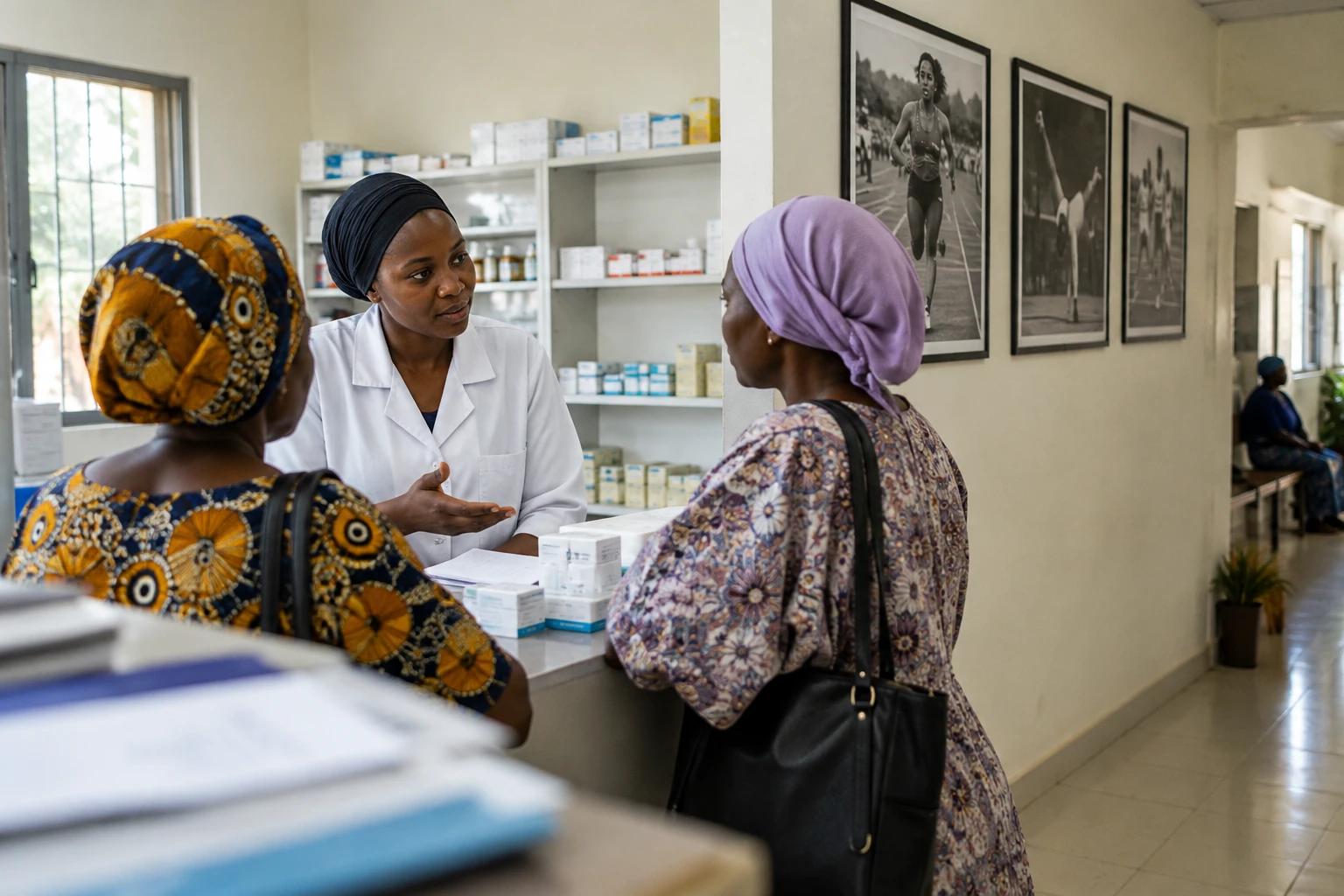
In Dakar, images of African athletes tell a story that goes beyond the podium. They also show what is still missing if the continent’s sportswomen are to be visible, recognised and included in the archives.
Victories that paved the way
At the Henriette-Bathily Women’s Museum on Dakar’s Corniche, the exhibition “African Olympians” brings together photographs documenting the careers of champions from across the continent. Shown from 2 to 13 November as part of the Youth Olympic Games (YOG), it draws on images from the archives of the Olympic Museum in Lausanne. The Senegalese Press Agency also announced the exhibition during the Games.
Among the moments depicted are Ethiopian Derartu Tulu’s victory in the 10,000 metres at the Barcelona Games in 1992, and Algerian Kaylia Nemour’s triumph in the uneven bars in Paris in 2024. These achievements are not interchangeable: they belong to different eras, disciplines and national trajectories. Together, they bring visibility to sportswomen who have long been less prominent in popular accounts of sport.
Moroccan Nawal El Moutawakel is a reminder of a major milestone in this history. In 1984, in Los Angeles, she became the first African and Arab woman to win an Olympic title, taking gold in the 400 metres hurdles. Her victory came when she was the only woman in the Moroccan delegation, a contrast that highlights how far things have come, but also the gap between pioneering athletes and girls’ access to sport.
In Dakar, sporting memory remains incomplete
The exhibition is not limited to images of victory. It also highlights a gap: archives devoted to Senegalese sportswomen are sparse. Participants in the Olympic Games sometimes have no photograph preserved or readily accessible. To ensure their careers are not left out of the picture, the names of Senegalese women who have taken part in the Games have been inscribed on a wall in the exhibition.
This choice gives a public place to athletes whose visual record is missing. It is a reminder that sporting history is built on results, but also on documents, testimonies and institutions capable of preserving them. Without organised efforts to collect material, women’s achievements risk disappearing from the stories passed on to future generations.
The challenge concerns federations, clubs, families, the media and public institutions. Photographs taken at a competition do not automatically become archives: they must be identified and dated, rights must be secured, and the material made available for consultation. For sportswomen, visibility can also affect their chances of finding sponsors, gaining recognition in their discipline and inspiring young girls.
The YOG are a showcase, not a sports policy in themselves
Senegal is hosting the YOG from 31 October to 13 November 2026 in Dakar, Diamniadio and Saly. It is the first Olympic sporting event to be held on African soil. The International Olympic Committee and Senegalese organisers have presented the Games as a sporting and educational gathering for young people.
In this context, the exhibition links competition to a more lasting question: who is represented in sport, and who preserves the memory of athletic achievements? Young female visitors interviewed as part of the event said they were discovering disciplines such as skateboarding and swimming, and seeing new possibilities in them. This testimony illustrates one possible effect of visibility, but cannot by itself measure the Games’ impact on girls’ participation in sport.
A temporary exhibition is no substitute for accessible facilities, coaching or funding for clubs. Conditions also vary by location: opportunities in the capital are not necessarily the same as those in smaller cities or rural areas. The cost of travel, access to equipment and the availability of women coaches can all affect whether participation continues long after a major event has ended.
Coaching and leadership also matter. Progress in women’s participation in the Games does not guarantee equal representation among coaches and sports officials. In an analysis published by the IOC, Nawal El Moutawakel noted that women remained a minority in Olympic coaching roles. Visible role models are therefore not enough: women must also be represented in positions where sporting decisions are made.
A legacy to pass on in Senegal and across the continent
For Senegal, host of an unprecedented Olympic event in Africa, the challenge is to sustain attention on women’s sport after 13 November. Promoting athletes can go hand in hand with practical archival work: collecting images, documenting results and preserving sportswomen’s stories, including those of athletes who have not won a medal.
The significance extends beyond Senegal’s borders. The careers of Tulu, El Moutawakel and Nemour show that African successes are rooted in distinct national histories, yet can resonate across the continent. Passing them on, however, depends on local networks: the media, federations, schools and cultural institutions. Coverage across the continent should not merely celebrate records; it can also document athletes’ journeys and the conditions that make these achievements possible.
With the YOG due to close on 13 November, the exhibition raises a long-term question: what traces of Dakar 2026 will remain accessible to younger generations? Sporting results will be recorded. The challenge will be to preserve the images, names and experiences that make up a fuller memory of African sport.



