Algeria
 Egypt
 Libya
 Morocco
 Sudan
 Tunisia
 Benin
 Burkina Faso
 Cabo Verde
 Côte d'Ivoire
 Ghana
 Guinea
 Guinea-Bissau
 Liberia
 Mali
 Mauritania
 Niger
 Nigeria
 Sierra Leone
 The Gambia
 Togo
 Cameroon
 Central African Republic
 Chad
 DR Congo
 Equatorial Guinea
 Gabon
 Republic of the Congo
 São Tomé and Príncipe
 Burundi
 Comoros
 Djibouti
 Eritrea
 Ethiopia
 Kenya
 Madagascar
 Malawi
 Mauritius
 Mozambique
 Rwanda
 Seychelles
 Somalia
 South Sudan
 Tanzania
 Uganda
 Angola
 Botswana
 Eswatini
 Lesotho
 Namibia
 South Africa
 Zambia
 Zimbabwe
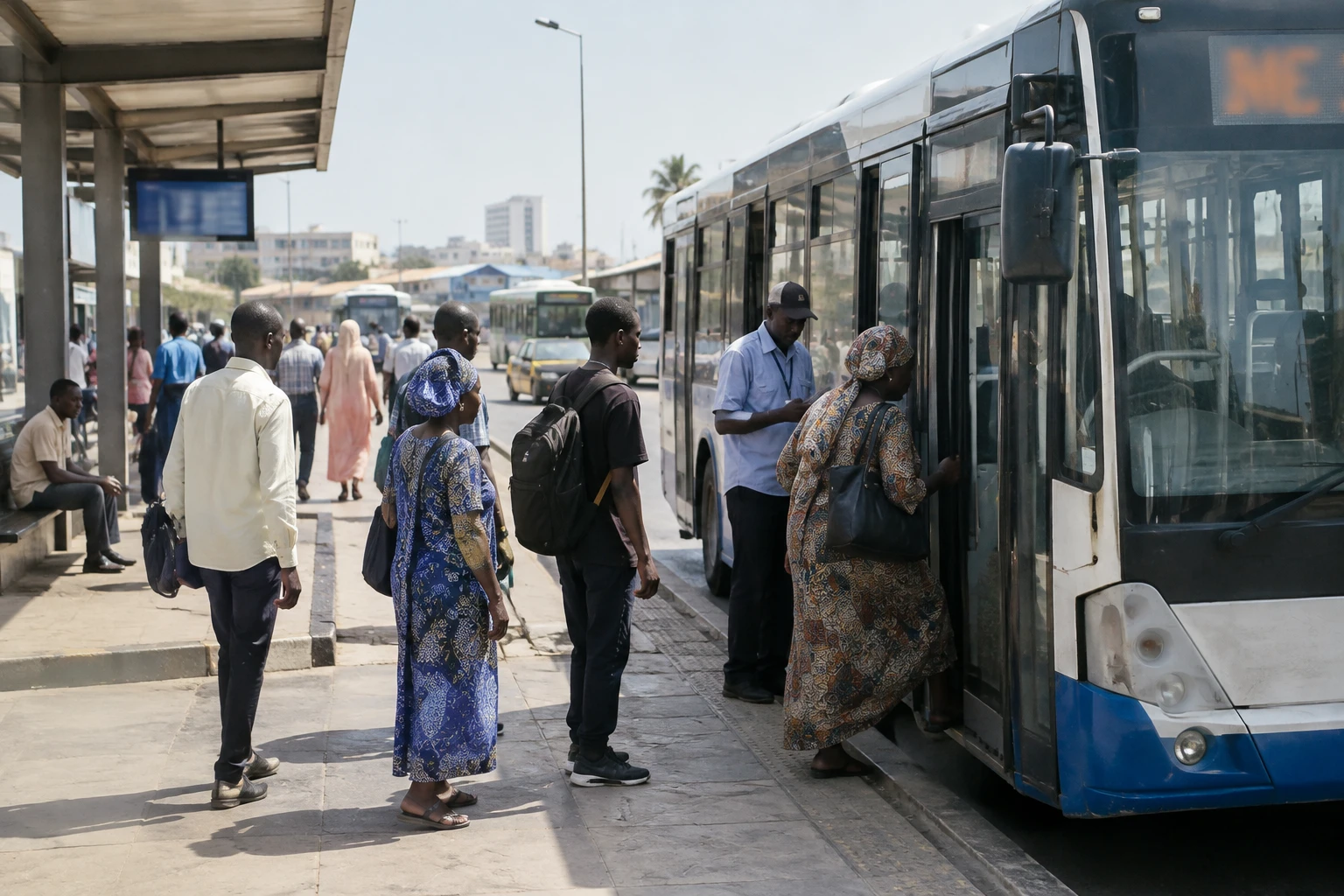
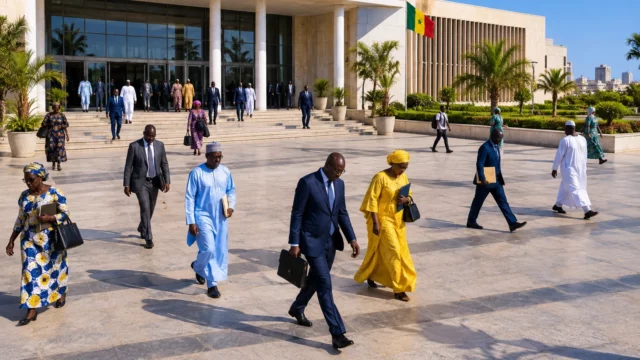
In Dakar, the debt question is not being played out solely in negotiation rooms. It also affects the state’s ability to pay its suppliers, invest in public services and protect households from price rises. The plan announced by the authorities opens a new phase, but its effects will depend on the terms negotiated with creditors.
A shift after two years of deadlock
Senegal operates within a distinctive regional financial framework. As a member of the West African Economic and Monetary Union (WAEMU), it shares the CFA franc and a regional market where states borrow from investors in several countries. The government says that obligations denominated in CFA francs will remain outside the scope of its plan. This choice is intended, in particular, to avoid destabilising this common market.
Current pressure intensified after the public accounts were revised. In 2024, Senegalese authorities disclosed obligations that had not appeared in the data previously reported. The IMF subsequently suspended the financial programme then under way, pending clarification and corrective measures. This rupture reduced Senegal’s access to external financing and increased its reliance on the regional market.
The debate is also political. Some in the government had long rejected a restructuring, viewing it as likely to reduce the scope for national decision-making. The government of President Bassirou Diomaye Faye has now entered discussions with the IMF. Ousmane Sonko, who has taken a more sceptical line, has publicly called for details of the obligations and the conditions attached to them. The differences show that debt management has become an issue of sovereignty as much as public finances.
A treatment plan, not an agreement already reached
On 1st September 2026, Senegal’s finance ministry announced the launch of the Senegal Debt Treatment Plan. It said it intended to consult international creditors under the G20’s Common Framework, a mechanism designed to co-ordinate negotiations between debtor states, public creditors and private lenders. The government describes the initiative as sovereign and as an improved version of this framework.
The ministry says debt denominated in CFA francs would not be affected. Other parameters, including the timetable, the allocation of the burden among creditors and any possible rescheduling of payments, still need to be clarified. A virtual meeting with creditors, reported in information published on 8 October, forms part of this consultation phase. On its own, it is not enough to establish that a final agreement has been reached.
Also on 1st September, the IMF confirmed a staff-level agreement for a new 36-month programme worth about $2.2bn. This technical agreement remains subject to approval by the Fund’s executive board. It also depends on corrective measures and financing assurances from Senegal’s partners. In other words, the announcement of an agreement between staff teams does not mean that funding is already available.
Figures for the debt stock vary according to the scope used: central government debt, obligations of public entities or payment arrears. A single estimate should therefore not be confused with the amount of external debt that would be covered by the plan. The ministry has announced that CFA franc debt is excluded, but the precise scope of the treatment and the amounts involved have yet to be specified.
Possible consequences beyond the government accounts
For the state, the aim is to reduce the burden of debt service, meaning the sums spent each year on interest and repayments. The ministry says the resulting fiscal headroom could support social investment and enable the settlement of arrears owed to companies. These are stated objectives, not yet achieved results.
The effects will be unevenly distributed. Companies awaiting public payments could benefit from improved cash flow if arrears are in fact cleared. Smaller businesses, which are often less able to absorb lengthy delays, are particularly exposed. Conversely, if negotiations are accompanied by spending cuts or subsidy reform, households and businesses could feel the effects in energy and transport prices or in the cost of some services.
The IMF has referred to energy subsidy reform under the new agreement. The authorities will need to explain how they intend to reconcile budget savings with protection for vulnerable households. The distinction between general support and targeted assistance is crucial: it can reduce the cost to the state, but requires reliable mechanisms for identifying and reaching beneficiaries, including outside Dakar.
Investors will also be watching how Senegal deals with external creditors without disrupting the regional market. Excluding CFA franc-denominated securities could preserve an important source of financing for Dakar and limit the repercussions for other WAEMU economies. But this constraint makes negotiations more complex: adjustment will have to cover only part of the obligations and take account of creditors with differing interests.
Next steps to watch
For West Africa, the Senegalese case matters beyond national borders. WAEMU banks and investors finance several states in the region. A poorly co-ordinated restructuring could therefore alter their perception of risk and the cost of regional borrowing. Conversely, a transparent process with predictable rules could offer guidance to governments facing high debt levels.
Senegal will now need to specify the scope of the claims concerned, the measures selected and the timetable for consultations. Approval of the programme by the IMF’s executive board is another important milestone. The budgetary and social choices that accompany the plan will also need to be monitored, as will the role given to Senegalese stakeholders in tracking commitments.
Recent growth, driven in part by hydrocarbons, offers leverage but does not automatically resolve the repayment question. The challenge is to turn this activity into lasting public revenues and useful investment. For Senegalese people, the practical test will be less the terminology used — treatment or restructuring — than the course of payments to companies, social spending and the cost of living.