Algeria
 Egypt
 Libya
 Morocco
 Sudan
 Tunisia
 Benin
 Burkina Faso
 Cabo Verde
 Côte d'Ivoire
 Ghana
 Guinea
 Guinea-Bissau
 Liberia
 Mali
 Mauritania
 Niger
 Nigeria
 Sierra Leone
 The Gambia
 Togo
 Cameroon
 Central African Republic
 Chad
 DR Congo
 Equatorial Guinea
 Gabon
 Republic of the Congo
 São Tomé and Príncipe
 Burundi
 Comoros
 Djibouti
 Eritrea
 Ethiopia
 Kenya
 Madagascar
 Malawi
 Mauritius
 Mozambique
 Rwanda
 Seychelles
 Somalia
 South Sudan
 Tanzania
 Uganda
 Angola
 Botswana
 Eswatini
 Lesotho
 Namibia
 South Africa
 Zambia
 Zimbabwe
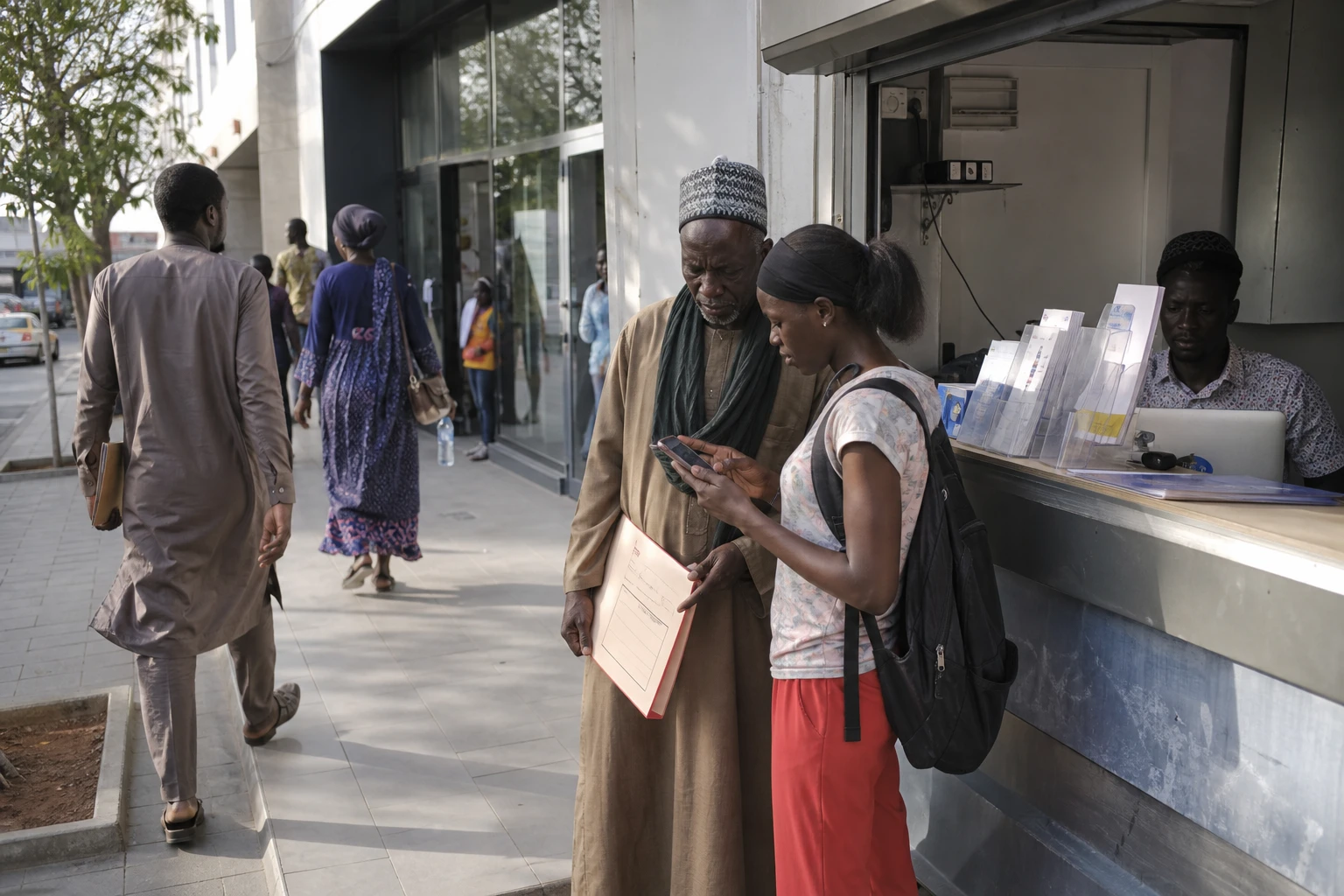
In Dakar, the question is no longer simply how to produce data. Senegal is now seeking to organise it, secure it and turn it into useful services, economic activity and decision-making tools. This approach puts data governance at the heart of the country’s digital transformation.
A roadmap to move from collection to value
A national workshop scheduled for 21 and 22 September 2026 is expected to validate a roadmap for unlocking the value of data. The document, called the “Blueprint”, sets out the priorities, responsibilities and monitoring mechanisms needed for its implementation.
The work was prepared with support from Smart Africa and GIZ, the German agency for international co-operation. It is part of the “Data Governance in Africa” programme, which focuses on how African countries can better regulate and harness their digital resources.
The principle is simple. Data produced by government bodies, businesses and citizens should not remain scattered across systems that communicate little with one another. It should be able to support public policy, research, innovation and business creation.
Consultations held on 1 and 2 July 2026 identified several use cases for data and artificial intelligence. They also helped map Senegal’s ecosystem. This initial snapshot is intended to help identify the players, available infrastructure and sectors that remain underserved.
The roadmap must also set out rules for sharing data, performance indicators and safeguards for personal information. Without such protections, opening up data can build trust, but it can also expose citizens to misuse or data breaches.
An ambition linked to the national digital strategy
This initiative builds on several policies already announced by Senegal. It aligns with Vision Senegal 2050, the New Deal Technologique, the National Data Strategy and the National Artificial Intelligence Strategy.
Smart Africa had already presented Senegal’s National Data Strategy as a tool to support innovation, value creation and digital sovereignty. In this context, sovereignty does not mean isolation. Rather, it means gaining greater control over the infrastructure, rules and uses associated with data produced in the country.
This approach also aligns with African Union frameworks on digital transformation and data policy. It could facilitate co-operation between countries, particularly on cross-border digital services, cybersecurity and data hosting.
Senegal is a member of the Economic Community of West African States, or ECOWAS. The regional organisation brings West African countries together around economic priorities and the freer movement of goods, people and services. In time, common data standards could reduce barriers for businesses operating in multiple markets.
Major investment, but results still to be proven
The government plans to mobilise 1,105bn CFA francs, or about $1.9bn, to make Senegal a technology hub by 2034. The goal covers several areas: digital infrastructure, data centres, skills, public services and private-sector innovation.
The 2026 budget of the Ministry of Communication, Telecommunications and Digital Affairs stands at 81.06bn CFA francs, according to the draft finance law published by Senegal’s finance ministry. About 60% of this allocation is earmarked for investment. This split shows that the state wants to fund equipment and major programmes, beyond day-to-day operating costs.
The private sector is also expected to contribute. US company Cybastion has announced an investment project worth about $300m in cybersecurity, data centres, technology transfer and training. The delivery of this commitment, its timetable and the jobs actually created will be important to monitor.
For Senegalese businesses, the challenge is twofold. They can access new markets through better-structured data. They must also comply with more demanding rules on the security, confidentiality and quality of the information they use.
For government bodies, success will depend on their ability to share reliable data. Incomplete records, an unstable connection or a lack of qualified staff can limit the effectiveness of a digital service, even when the platform is technically available.
The challenge of access and skills
Senegal’s digital foundations are improving, but significant gaps remain between national ambitions and observed performance. In the 2024 edition of the United Nations E-Government Development Index, the country ranked 135th out of 193, with a score of 0.5162 out of 1.
The indicator measures online public services, telecommunications infrastructure and human capital, among other factors. The result does not capture the entirety of Senegal’s digital transformation. It does, however, highlight the need to improve networks, skills and the quality of services available to users at the same time.
The strategy’s effects will not be the same for everyone. Formal businesses will find it easier to invest in analytics and cybersecurity tools. Small businesses and the informal economy, by contrast, will need solutions that are simple, affordable and accessible by phone.
The capital, Dakar, is home to a large share of the infrastructure, start-ups and digital government bodies. But the regions will need to benefit from the same momentum. Agriculture, health, education and local government can all benefit from data, provided that equipment and skills are also available beyond major urban centres.
A test for West African digital governance
The next challenge will be to move from strategy to implementation. This will require a public timetable, clearly assigned responsibilities and measurable results. Personal data protection must advance at the same pace as the opening up and circulation of information.
Senegal will also have to balance several priorities: attracting investment, developing national infrastructure, protecting citizens’ rights and avoiding excessive dependence on external solutions. These choices will have regional implications, as digital services increasingly disregard borders.
Across ECOWAS and the African Union, Senegal’s experience could serve as a reference, provided it delivers tangible services. Success will therefore not be measured by the number of strategic documents published, but by the ability of government bodies, businesses and citizens to use data that is reliable, secure and genuinely accessible.