Algeria
 Egypt
 Libya
 Morocco
 Sudan
 Tunisia
 Benin
 Burkina Faso
 Cabo Verde
 Côte d'Ivoire
 Ghana
 Guinea
 Guinea-Bissau
 Liberia
 Mali
 Mauritania
 Niger
 Nigeria
 Sierra Leone
 The Gambia
 Togo
 Cameroon
 Central African Republic
 Chad
 DR Congo
 Equatorial Guinea
 Gabon
 Republic of the Congo
 São Tomé and Príncipe
 Burundi
 Comoros
 Djibouti
 Eritrea
 Ethiopia
 Kenya
 Madagascar
 Malawi
 Mauritius
 Mozambique
 Rwanda
 Seychelles
 Somalia
 South Sudan
 Tanzania
 Uganda
 Angola
 Botswana
 Eswatini
 Lesotho
 Namibia
 South Africa
 Zambia
 Zimbabwe
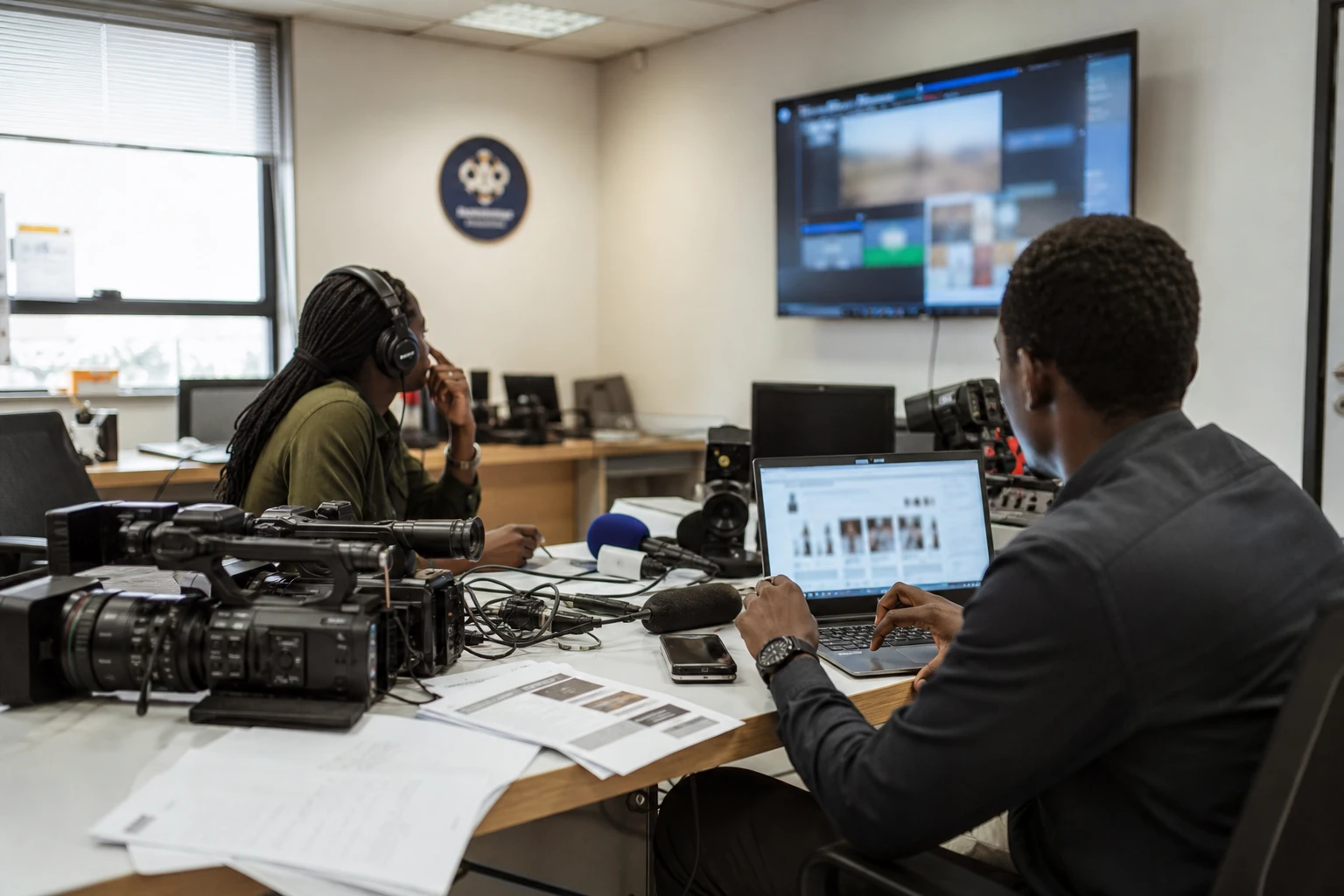
With 100 days to go, Senegal enters the phase when everything is on display
With three months and a few days until the opening, the Youth Olympic Games are no longer an abstract promise. In Dakar, Diamniadio and Saly, the question is no longer simply whether the venues exist, but whether they are ready to welcome young athletes, spectators and technical teams in good conditions. For Senegal, the stakes go beyond sport. They concern the country’s image, its organisational capacity and the lasting legacy left behind after the celebrations.
The Youth Olympic Games, scheduled to take place from 31 October to 13 November 2026, will be the first Olympic event held on the African continent. This fact alone gives the project continental significance. It puts host country Senegal at the centre of a demonstration of logistical expertise in West Africa, where ECOWAS, the country’s regional bloc, is also watching the impact on infrastructure, mobility and youth engagement.
Construction is well advanced, but the schedule remains under pressure
On 19 June, Infrastructure Minister Déthié Fall said that work on the Youth Olympic Games would be handed over by 31 July at the latest, before being transferred to the International Olympic Committee. He added that the competition centre at Iba Mar Diop Stadium, the Olympic swimming pool and the accommodation centre were complete, with only a few adjustments left at the Olympic Village. His statement confirmed a position already set out by the Senegalese authorities at the Council of Ministers meeting on 4 March, following the president’s inspection visit to the Dakar 2026 construction sites.
At the end of March, the organising committee had already said construction and renovation work at the venues was 97% complete, with delivery expected by the end of April. An update in early July gave a more nuanced but still positive picture: six new buildings at the Olympic Village were 85% complete, the Tour de l’Œuf complex 96%, Iba Mar Diop Stadium 98%, and the Diamniadio equestrian centre needed only minor finishing work. Competition and accommodation venues are therefore well advanced, but July remains crucial to avoid any last-minute delays.
The venues involved are now clearly identified. Events will be held at the Tour de l’Œuf complex, the Iba Mar Diop complex, the Corniche Ouest, the equestrian centre, Dakar Arena, Abdoulaye Wade Stadium, the Dakar Exhibition Centre and Saly Plage Ouest, among other sites. This spread shows that the event is not concentrated in a single hub. It links the capital, the new city of Diamniadio and the seaside resort of Saly, as part of a broader approach to territorial development.
The real challenge: welcoming visitors, training people and leaving a legacy
Beyond the concrete, Dakar 2026 is testing an entire chain of operations. Buildings must be completed, but volunteers must also be recruited and trained, accommodation secured, partnerships finalised and the movement of people organised. In early July, the organising committee said 672 people were already working for it, with a target of 755 in the following weeks, while the selection of 6,000 volunteers was nearing completion. The dedicated platform had received 23,456 applications from 129 countries, including 44 African nations. This matters: it shows that the event relies not only on the public authorities, but also on broader social and international participation.
For Senegalese people, the legacy matters almost as much as the competitions. After the Games, the Diamniadio equestrian centre is to be used for an introductory programme for children. The Olympic Village and other facilities are not intended to be temporary structures. They are meant to become part of the country’s urban and sporting fabric. This is where the project takes on a political and social dimension: a major competition is valuable only if it generates lasting uses, in a capital already facing pressure on land, transport needs and young people’s expectations of access to sport.
Financial security is another closely watched indicator. In early July, the organising committee said 97% of commercial revenue had been secured and that new partnerships were in the final stages. This matters in a context where the budgetary stability of major events often determines their success. For Dakar 2026, the challenge is twofold: to reassure people that deadlines will be met and to prove that the economic model does not rely solely on the state, but also on private-sector support and targeted partnerships.
An African showcase, with very real expectations
The International Olympic Committee describes Dakar 2026 as a historic milestone, as the first Olympic event to be held in Africa. Its symbolic significance is considerable, but it also brings particular demands. If the Games succeed, they will give the continent a concrete reference point for bids, the delivery of facilities and popular engagement with sport. If they go off track, by contrast, they will fuel scepticism about Africa’s ability to host events on this scale.
For ECOWAS and, more broadly, the African Union, the issue is therefore much bigger than a sporting timetable. Dakar 2026 will be watched as a test of institutional capacity at a time when African states are seeking to combine international visibility, budgetary prudence and youth policies. Senegal, which has already made Dakar, Diamniadio and Saly the project’s three anchors, is also playing a regional hand: showing that an international event can be conceived from an African territory, with its own priorities, pace and future uses.
With 100 days to go until the opening, this is no longer just a construction project. It is a test of finishing, coordination and credibility. The coming weeks will show whether Senegal can turn a continental ambition into a well-managed delivery, with venues ready, teams trained and a sporting legacy that lasts beyond the closing ceremony.