Algeria
 Egypt
 Libya
 Morocco
 Sudan
 Tunisia
 Benin
 Burkina Faso
 Cabo Verde
 Côte d'Ivoire
 Ghana
 Guinea
 Guinea-Bissau
 Liberia
 Mali
 Mauritania
 Niger
 Nigeria
 Sierra Leone
 The Gambia
 Togo
 Cameroon
 Central African Republic
 Chad
 DR Congo
 Equatorial Guinea
 Gabon
 Republic of the Congo
 São Tomé and Príncipe
 Burundi
 Comoros
 Djibouti
 Eritrea
 Ethiopia
 Kenya
 Madagascar
 Malawi
 Mauritius
 Mozambique
 Rwanda
 Seychelles
 Somalia
 South Sudan
 Tanzania
 Uganda
 Angola
 Botswana
 Eswatini
 Lesotho
 Namibia
 South Africa
 Zambia
 Zimbabwe
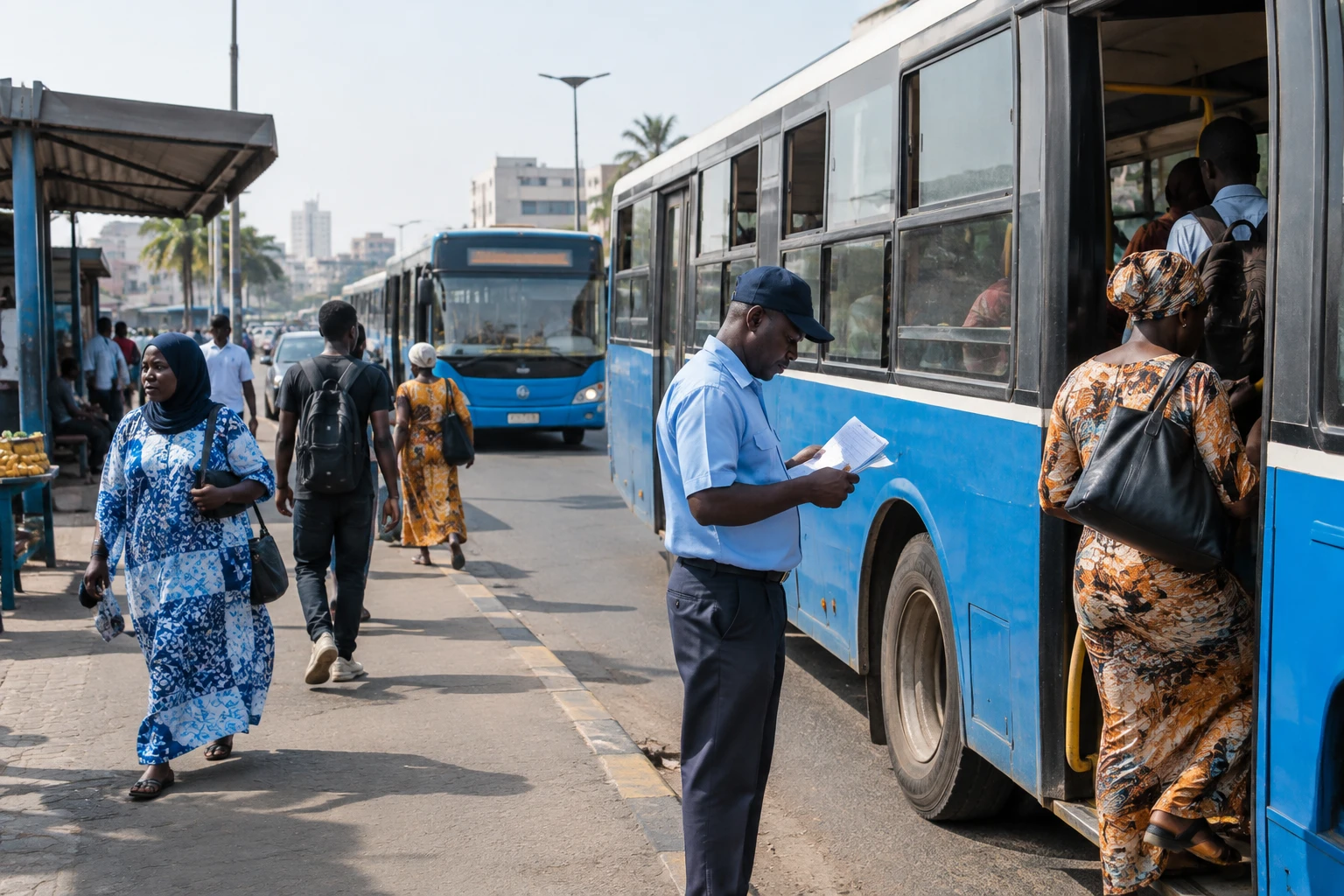
In Dakar, the debate over debt goes beyond the figures recorded in public accounts. It also concerns the terms of any possible relief, the cost of government borrowing and the room available to maintain services and investment. The optimism voiced by the International Monetary Fund (IMF) offers a prospect, but guarantees neither a swift agreement with creditors nor the immediate disbursement of funding.
Programme announced, but decisive steps remain
On 1 September 2026, Senegalese authorities and IMF staff reached a preliminary agreement on a three-year programme worth about $2.2bn. This is a staff-level agreement: it must still clear the necessary steps before formal approval by the Fund’s executive board. The Senegalese government presents the programme as support for restoring public finances and links it to its debt treatment plan.
On 14 October in Bangkok, IMF managing director Kristalina Georgieva said she believed an agreement between Senegal and its creditors was possible. She described the case as a test for international debt treatment mechanisms. Her remarks signal a willingness to support Dakar. They do not, however, set a timetable for programme approval or specify the terms of a restructuring.
The distinction matters. IMF financing and debt negotiations are linked, but they are not the same process. The agreement with Fund staff does not amount to board approval. And the managing director’s optimism does not mean creditors have already accepted the terms proposed by Senegal.
Debt reassessed after incomplete data
The current situation stems in part from the discovery in 2024 of public borrowing that had not been properly reported. An audit of the accounts led to a sharp revision of the debt assessment. In June 2026, the IMF estimated total public-sector debt at about 132% of gross domestic product at the end of 2024. This figure covers a broader scope than central government debt alone.
The revelation undermined confidence in budget data and halted the previous IMF programme. Since then, Dakar and the Fund have been working to correct financial information and establish a framework deemed robust enough for new support. This step also matters to creditors: before negotiating a rearrangement, they must agree on the amount and composition of the liabilities concerned.
Senegal is now seeking to reorganise its external repayments. According to the government, the proposed arrangement divides exchanges among several categories of creditors, including bilateral lenders, bondholders and banks. Dakar also wants to protect the regional financial market and borrowing in CFA francs contracted there. This issue extends beyond government finances: banks and investors in the West African Economic and Monetary Union (WAEMU), which shares a currency and financial market, are also affected.
Private creditors set out their conditions
Early public information suggests that the negotiations will not be purely technical. A group of sovereign bondholders has appointed Alvarez & Marsal as financial adviser. Reuters reports that the group represents about $2.2bn of the $5.2bn in outstanding bonds. Investors are said to have warned Dakar that a reduction in principal — the original amount to be repaid — could slow discussions. This position is attributed to sources close to the matter and does not constitute a collective agreement by all bondholders.
Creditors want to know what share of the burden they would be asked to bear and how Senegal intends to treat the different categories of debt. The government, for its part, wants to preserve a solution that eases repayment obligations without destabilising domestic financing. These objectives are not automatically aligned. Negotiations may concern the repayment schedule, interest rates, the amount owed or a combination of these levers.
The regional market is a particular concern. A restructuring that heavily affects CFA franc lenders could have an impact on financial actors in WAEMU, not just Senegal’s budget. Conversely, protecting certain categories of borrowing while asking external creditors to shoulder some of the burden may prompt debate about fair treatment. The precise terms remain to be negotiated.
A test for the debt treatment framework
Senegal is part of the G20 Common Framework, launched in 2020 to co-ordinate the restructuring of countries seeking debt treatment. Delays in previous cases, notably those of Zambia and Ghana, have fuelled criticism of the mechanism’s slowness. The Global Sovereign Debt Roundtable, which brings together debtors, creditors and financial institutions, aims in particular to improve dialogue and co-ordination.
The IMF managing director argues that improved procedures could make it possible to reach an agreement more quickly. But the speed of the process will depend first on the parties’ ability to agree on the figures, the allocation of the burden and financing assurances. At this stage, hopes of an agreement do not allow a disbursement date to be announced or the conclusion to be drawn that creditors have accepted a restructuring.
For Senegalese people, the stakes will be measured by the budget choices that accompany the process: debt payments, public spending and investment will all have to fit within a sustainable trajectory. The effects may vary between groups. Businesses dependent on public contracts, households affected by social spending and banks exposed to sovereign debt will not experience the adjustments in the same way.
Across West Africa, the outcome will be closely watched because it will also affect confidence in the regional market and relations between states, their creditors and multilateral institutions. The next milestone is therefore not simply a statement of optimism: it is the terms that Dakar and its creditors can actually accept, as well as the IMF executive board’s decision on the programme announced in September.