Algeria
 Egypt
 Libya
 Morocco
 Sudan
 Tunisia
 Benin
 Burkina Faso
 Cabo Verde
 Côte d'Ivoire
 Ghana
 Guinea
 Guinea-Bissau
 Liberia
 Mali
 Mauritania
 Niger
 Nigeria
 Sierra Leone
 The Gambia
 Togo
 Cameroon
 Central African Republic
 Chad
 DR Congo
 Equatorial Guinea
 Gabon
 Republic of the Congo
 São Tomé and Príncipe
 Burundi
 Comoros
 Djibouti
 Eritrea
 Ethiopia
 Kenya
 Madagascar
 Malawi
 Mauritius
 Mozambique
 Rwanda
 Seychelles
 Somalia
 South Sudan
 Tanzania
 Uganda
 Angola
 Botswana
 Eswatini
 Lesotho
 Namibia
 South Africa
 Zambia
 Zimbabwe
When restructuring threatens everyday financing
In Dakar, public debt is more than a matter of spreadsheets. It affects the state’s ability to pay, but also banks’ capacity to lend to businesses, traders and households. That is the crux of the plan announced by Senegal: ease pressure on public finances without disrupting the regional CFA franc market, which has become one of the country’s main sources of financing.
The Senegalese government launched a Senegal Debt Treatment Plan on 1 September 2026, just as discussions with the IMF resulted in a technical agreement on a new 36-month, $2.2 billion programme. The Ministry of Economy, Finance and Planning confirmed a central decision: debt denominated in CFA francs will remain outside the scope of the restructuring.
The CFA franc protects the system, but limits room for manoeuvre
This decision is not a politically convenient gesture. It reflects a very real constraint. In 2025 and 2026, Senegal relied heavily on the WAEMU regional market — the West African Economic and Monetary Union — to finance its needs. The IMF notes that the country made sustained use of this market, with maturities shortened in 2026 because access to external financing was not readily available.
The Senegalese ministry also explains that this local debt must remain outside the treatment because it plays a major role in financing the state and the economy. In practice, touching this segment would undermine a still-active source of budget refinancing. For a Treasury that continues to issue debt, this is a major constraint.
This caution is also explained by the structure of the regional banking system. An analysis cited by the West African business press, based on Fitch research, estimates that Senegalese government securities account for between 25% and 35% of WAEMU banks’ assets, or nearly three times their capital. In Senegal itself, banks’ exposure to government debt is considered very high. Restructuring local-currency debt would therefore pose a direct risk to bank capital.
In other words, the government is seeking to avoid a systemic shock. If public securities denominated in CFA francs were to lose value sharply, the impact would not remain confined to the Treasury. It would quickly spread to banks’ balance sheets, and then to lending to the real economy. This is where the issue takes on a social dimension: trade finance, advances on harvests, loans to SMEs and importers’ cash flow.
Creditors targeted are mostly outside the regional bloc
Senegal’s plan does not make the debt disappear. It reallocates it. In practice, multilateral creditors such as the IMF, the World Bank, the AfDB and the BOAD remain senior by nature. Any restructuring effort would therefore fall mainly on bilateral creditors and eurobond holders. The official statement refers to an active debt management strategy, not a general write-off.
The budgetary context explains this approach. The AfDB recalls that the IMF programme was suspended in September 2024 over the false debt declaration case, and that a new fiscal adjustment is now expected. The African institution also says Senegal has adopted a new 2026-2028 debt strategy focused on reducing the deficit, mobilising tax revenue and securing less sovereign financing.
Rating agencies see the same fragility. Moody’s downgraded Senegal’s sovereign rating to Caa2 on 28 August 2026, with a negative outlook, citing an increased risk of default. RTS reported that the agency also linked greater reliance on regional financing to higher refinancing risk and debt-servicing costs. Fitch, for its part, has already brought the local-currency rating closer to the foreign-currency rating, showing just how narrow the distinction between the two segments has become.
A Senegalese trade-off with West African repercussions
Senegal is in a particular position. Unlike Zambia or Ghana, it belongs to a monetary union where the CFA franc is pegged to the euro. This stability limits the risk of a sharp depreciation, and therefore of a spiral in external debt. But it does not remove the liquidity constraint. The country still has to find money every month and every quarter to roll over its debt and execute its budget.
This is where the balance of power shifts. The WAEMU regional market is both a lifeline and a source of dependence. The BCEAO organises auctions of Treasury bills and bonds, and the central bank’s statistical bulletin shows the huge share of public securities from the sub-region traded there, including Senegalese debt. The country must therefore avoid putting pressure on its local banks while negotiating with external creditors, who can afford to wait longer than it can.
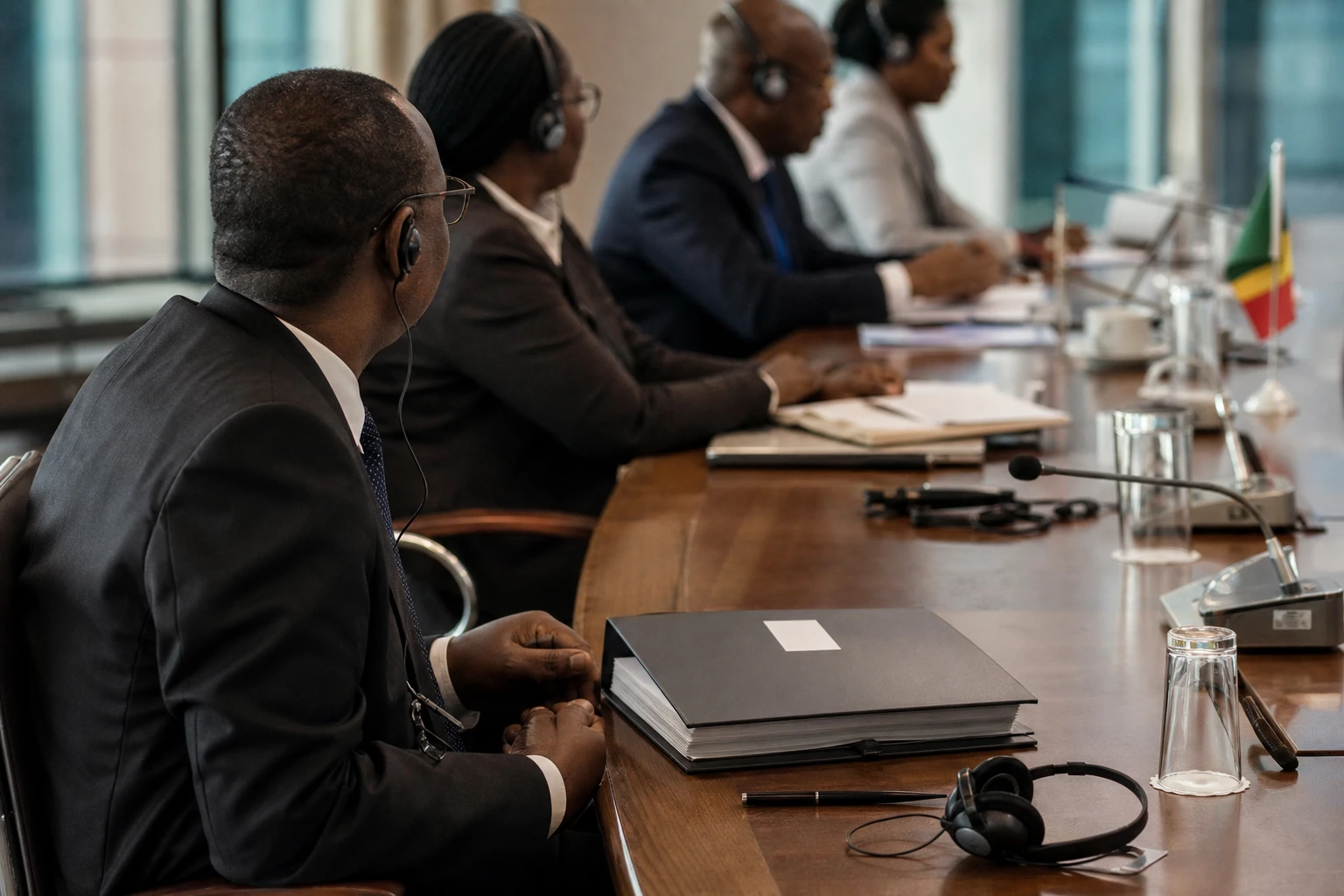
Politically, the issue is also emerging at a delicate moment. National Assembly President Ousmane Sonko has publicly called for the actual terms of the agreement with the IMF to be disclosed to MPs, along with the commitments made on debt treatment and the ongoing audits. The parliamentary timetable therefore matters, even though the executive has constitutional leeway to advance the budget.
For West Africa, Senegal’s case is a test. It shows that local-currency debt can protect a regional banking system while complicating an indebted state’s exit from crisis. It also serves as a reminder that in WAEMU, fiscal discipline, banking stability and market access are now intertwined. What happens next will depend on the 2027 budget trade-offs, relations with the IMF and Dakar’s ability to regain confidence without disrupting its own financing network.