Algeria
 Egypt
 Morocco
 Sudan
 Tunisia
 Benin
 Burkina Faso
 Cabo Verde
 Côte d'Ivoire
 Ghana
 Guinea
 Guinea-Bissau
 Liberia
 Mali
 Mauritania
 Niger
 Nigeria
 Senegal
 Sierra Leone
 The Gambia
 Togo
 Cameroon
 Central African Republic
 Chad
 DR Congo
 Equatorial Guinea
 Gabon
 Republic of the Congo
 São Tomé and Príncipe
 Burundi
 Comoros
 Djibouti
 Eritrea
 Ethiopia
 Kenya
 Madagascar
 Malawi
 Mauritius
 Mozambique
 Rwanda
 Seychelles
 Somalia
 South Sudan
 Tanzania
 Uganda
 Angola
 Botswana
 Eswatini
 Lesotho
 Namibia
 South Africa
 Zambia
 Zimbabwe
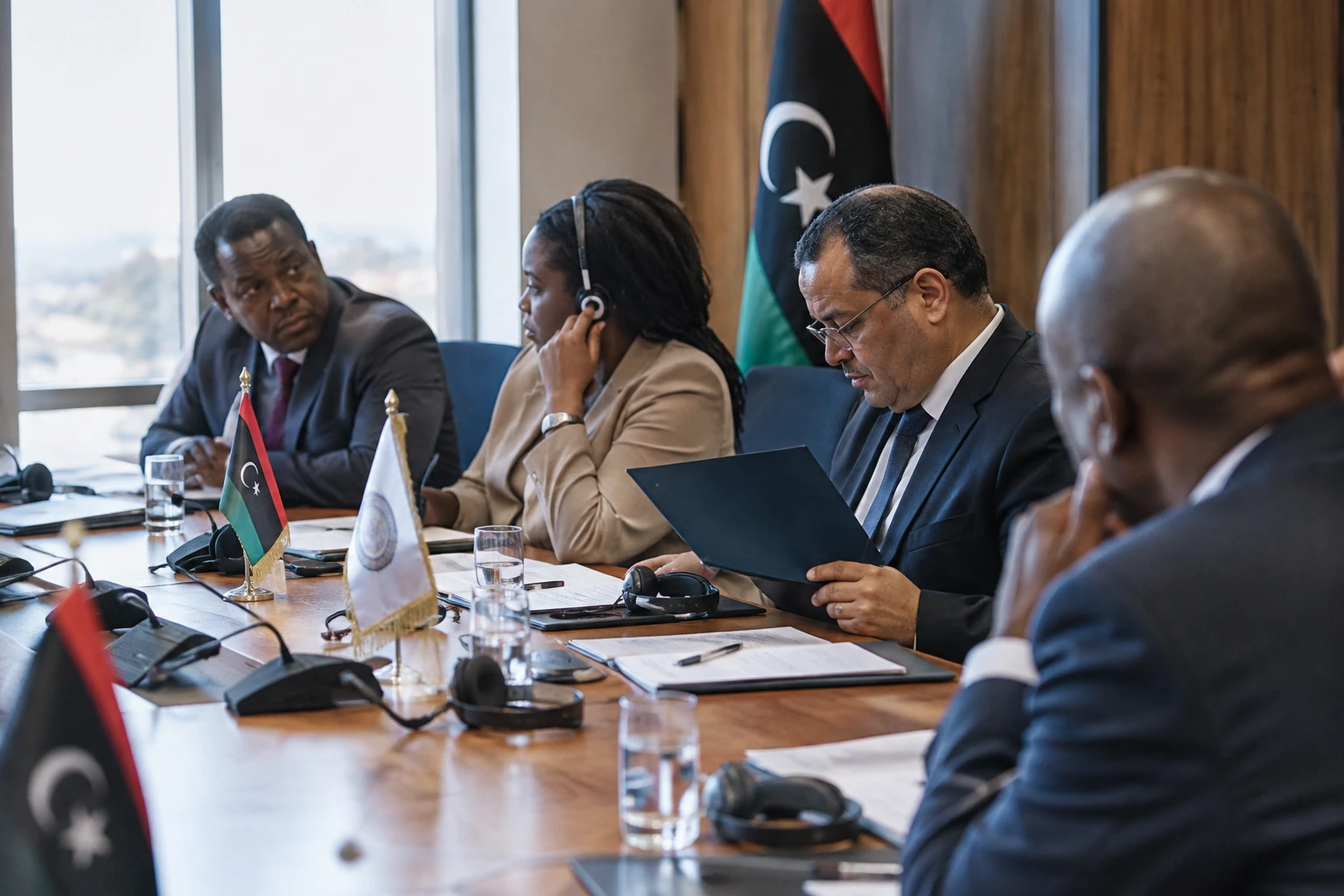
In Libya, the change at the head of the eastern parliament does not resolve the central question: who can speak on behalf of the institutions of a country that remains divided? The contested ousting of Aguila Saleh opens a new battle for influence in Benghazi, as discussions seek to prepare national elections.
A change of leadership after two votes
Timing matters. On Monday 5 October 2026, 98 of the 102 members of parliament present approved an amendment to the rules governing the speakership of the House of Representatives. The following day, Tuesday 6 October, a session in Benghazi elected Al-Salihin Abdelnabi al-Obeidi as head of the assembly, according to its spokesperson and several consistent accounts.
The vote took place under the chairmanship of second deputy speaker Misbah Douma. Al-Obeidi represents the constituency of Tobruk, a city in eastern Libya. His succession ends Aguila Saleh’s 12 years as speaker, a position he has held since 2014.
Saleh contests the legality of the procedure. He described the 5 October session as “unofficial” and said it had no legal effect, according to the Libyan outlet The Libya Observer. The dispute is therefore as much about the person called on to lead the House as about the rules governing their replacement.
A parliament at the heart of divided institutions
The House of Representatives is based in the east of the country, where it sits in Benghazi. It backs authorities opposed to those established in Tripoli, the capital, around the Government of National Unity. This political duality, in place for years, complicates the running of institutions and delays national elections.
The 2021 vote, which was meant to renew the executive and legislative branches, did not take place. Since then, disagreements over electoral rules, the institutions responsible and the distribution of power have hindered attempts to resolve the crisis. The UN mission in Libya is seeking to advance a political roadmap, including on the legal framework for elections and the unification of institutions.
An agreement concluded on 30 August 2026 in Tripoli between representatives of rival camps covers steps related to the electoral process. It provides, in particular, for the reorganisation of the electoral commission and for addressing points of disagreement in the constitutional and legal framework. But agreement on preparatory steps guarantees neither a date for a vote nor acceptance of its results by the parties concerned.
A reshuffle that does not yet amount to victory
Saleh’s departure is a setback for a figure long considered close to the camp of Field Marshal Khalifa Haftar, who wields strong influence in the east of the country. It comes as Saddam Haftar, Khalifa Haftar’s son, seeks to consolidate his political role. Several analysts see it as a sign of shifting power dynamics in the eastern camp.
However, a change of speaker must be distinguished from a complete transfer of power. Al-Obeidi’s election alone does not allow us to conclude that Saddam Haftar now controls the assembly or that the eastern institutions have changed course. The new speaker will have to work with MPs and other centres of power, while Saleh challenges the validity of the process.
The vote also reveals disagreements over how the House operates. An MP quoted by Reuters criticised the former leadership for taking certain decisions without consulting elected members. This criticism, reported by a news agency, sheds light on some of the reasons given by parliamentarians, but does not on its own establish the reasons behind each vote.
The immediate effects for Libyans therefore remain institutional and indirect. A contested speakership can complicate the adoption of parliamentary decisions and discussions with other institutions. In cities and rural areas alike, people are chiefly waiting for reliable public services, a coherent administration and political rules that do not change with rivalries between leaders.
Consequences that extend beyond Benghazi
Libya is a North African country outside the regional economic communities of sub-Saharan Africa, such as ECOWAS or CEMAC. Its main regional framework is the Arab Maghreb Union, while the African Union and the UN are involved in mediation and stabilisation efforts. The Libyan crisis also affects its neighbours, particularly through security and cross-border movement concerns.
For the diplomatic efforts now under way, the question is whether the new parliamentary leadership will be recognised by the different parties and be able to contribute to a shared electoral framework. The UN mission has made the unification of institutions and preparations for elections priorities in its roadmap. The rupture in Benghazi may alter negotiations, but it does not replace the agreement needed between rival institutions.
What happens next will depend on two concrete tests: whether the new leadership can carry out its duties despite Saleh’s challenge, and whether it takes part in discussions on electoral rules. Without a broader legal and political agreement, replacing one leader risks shifting the rivalry rather than bringing Libyans closer to a national vote.