Algeria
 Egypt
 Libya
 Morocco
 Sudan
 Tunisia
 Benin
 Burkina Faso
 Cabo Verde
 Côte d'Ivoire
 Ghana
 Guinea
 Guinea-Bissau
 Liberia
 Mali
 Mauritania
 Niger
 Nigeria
 Sierra Leone
 The Gambia
 Togo
 Cameroon
 Central African Republic
 Chad
 DR Congo
 Equatorial Guinea
 Gabon
 Republic of the Congo
 São Tomé and Príncipe
 Burundi
 Comoros
 Djibouti
 Eritrea
 Ethiopia
 Kenya
 Madagascar
 Malawi
 Mauritius
 Mozambique
 Rwanda
 Seychelles
 Somalia
 South Sudan
 Tanzania
 Uganda
 Angola
 Botswana
 Eswatini
 Lesotho
 Namibia
 South Africa
 Zambia
 Zimbabwe
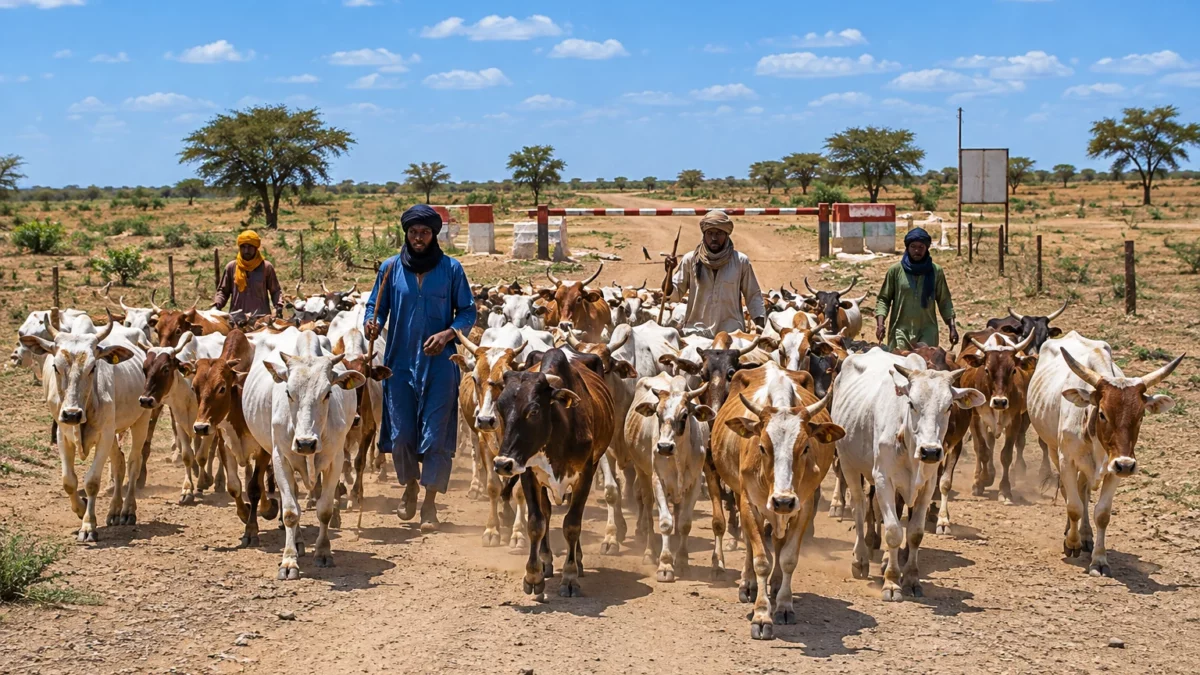
When pastures become scarce in one part of a region, herds do not stop at borders. But routes, access to water and rules on movement remain largely national. This tension lies at the heart of the 2026-2027 pastoral season in the Sahel and West Africa.
Warnings vary from one territory to another
Initial regional analyses describe a mixed situation, not a uniform shortage. In Sahelian and Saharan areas, vegetation growth has been delayed and fodder resources are very limited. By contrast, several Sudanian and Guinean regions have more abundant biomass, which could accommodate herds on the move.
A September 2026 report by the AGRHYMET Regional Centre, which specialises in monitoring climate, water and agriculture, notes marked deficits, particularly in northern Senegal, northern and eastern Mauritania, northern Mali, several regions of Niger and Chad, and parts of Burkina Faso and Nigeria. Other areas to the south are better supplied. Regional maps therefore identify both potential departure points and areas of refuge that need protecting.
Pastoral mobility—the seasonal movement of herds towards water and pasture—has traditionally helped people adapt to these variations. It supports herders’ livelihoods and supplies markets with livestock and animal products. However, insecurity, movement restrictions, encroachment on routes and pressure on land can make routes impassable or concentrate animals in certain areas.
Dakar at the centre of a cross-border response
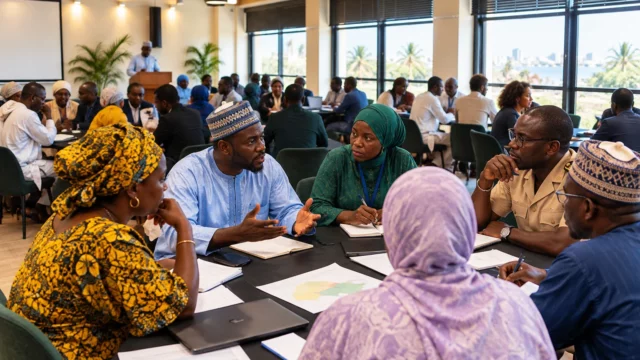
From 24 to 26 November, the Permanent Interstate Committee for Drought Control in the Sahel (CILSS) and the Billital Maroobé Network, a regional organisation of herders, are bringing together public officials, regional institutions and pastoral stakeholders in Dakar. The meeting, organised with Senegal, focuses on the 2026-2027 season and cross-border cooperation.
CILSS describes rainfall as below average and unevenly distributed, with fodder shortages in several areas, as well as ponds drying up early and water levels falling in some rivers. According to data presented in Dakar, fodder deficits could reach 25 to 90 per cent in several pastoral areas. The figure varies by territory and should be read as a regional estimate, not as a uniform measure for every country.
In the western basin linking Mali, Mauritania and Senegal, a regional study estimates that mobility restrictions affect up to 2.9 million head of livestock and 40,000 herders and accompanying people. These estimates, produced by the Billital Maroobé Network under CILSS coordination, were reported separately by the Pan-African News Agency. They indicate the potential scale of the problem, without establishing that all the animals or people are affected in the same way.
Consequences beyond the camps
When a herd cannot reach grazing land, the effects go beyond the loss of food resources. The concentration of animals increases competition around water points and infrastructure. It can also complicate relations between mobile herders and resident communities. The risk of tensions is real, but it is neither automatic nor the same in every territory.
Local economies are also affected. Livestock markets, transporters and animal-product supply chains depend on regular movement. Disrupted travel can reduce herding families’ incomes and traders’ business, while communities in receiving areas must manage increased demand for water and services. Urban populations may also feel the indirect effects if supplies of animal products are disrupted.
The constraints are not limited to climate conditions. AGRHYMET identifies areas in deficit and surplus areas, but the existence of available pasture does not guarantee that a herd can reach it. National rules, security, the condition of routes and agreements between local authorities also determine what movement is possible. The response therefore requires shared information and coordination across borders.
Regional impact will depend on follow-up
The Dakar talks bring together stakeholders from several institutional groupings, including the Economic Community of West African States (ECOWAS), the West African Economic and Monetary Union (WAEMU) and the Alliance of Sahel States (AES). States do not all share the same priorities or movement arrangements. The challenge is to build compatible mechanisms while taking account of the realities facing herders and host communities.
CILSS and its partners expect the meeting to produce a roadmap, political and financial commitments, and a monitoring mechanism. Implementation will matter more than announcing a joint response: it will be necessary to check whether information on pasture and water is shared in time, whether routes remain accessible and whether host areas have effective local dialogue.
The next dry season will put these commitments to the test. Monitoring will need to distinguish regions facing deficits from better-supplied areas, document actual movements and keep track of tensions without automatically attributing them solely to herders. Across the Sahel and neighbouring coastal countries, the ability to organise this mobility will be a major factor in the resilience of livestock value chains.