Algeria
 Egypt
 Libya
 Morocco
 Sudan
 Tunisia
 Benin
 Burkina Faso
 Cabo Verde
 Côte d'Ivoire
 Ghana
 Guinea
 Guinea-Bissau
 Liberia
 Mali
 Mauritania
 Niger
 Nigeria
 Sierra Leone
 The Gambia
 Togo
 Cameroon
 Central African Republic
 Chad
 DR Congo
 Equatorial Guinea
 Gabon
 Republic of the Congo
 São Tomé and Príncipe
 Burundi
 Comoros
 Djibouti
 Eritrea
 Ethiopia
 Kenya
 Madagascar
 Malawi
 Mauritius
 Mozambique
 Rwanda
 Seychelles
 Somalia
 South Sudan
 Tanzania
 Uganda
 Angola
 Botswana
 Eswatini
 Lesotho
 Namibia
 South Africa
 Zambia
 Zimbabwe
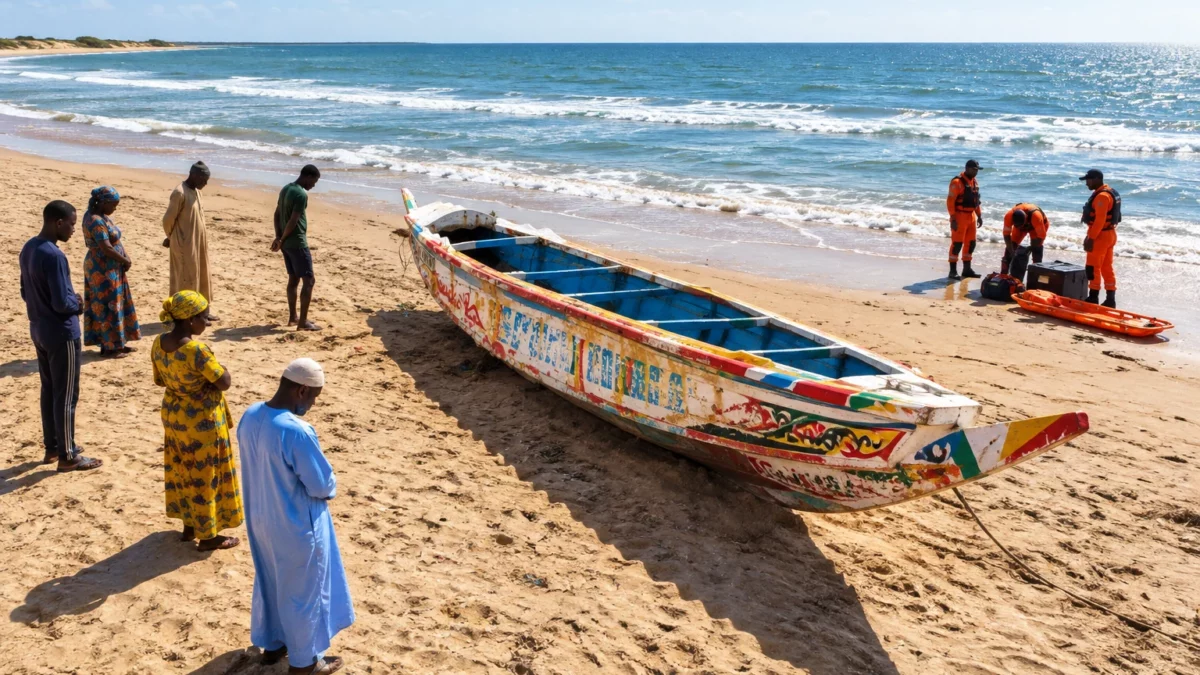
On TikTok, an Atlantic crossing can be captured in just a few images: a pirogue at sea, songs, then a landing at night. This success story is circulating in Senegal as departures for the Canary Islands remain fraught with shipwrecks and disappearances.
Images of success that obscure the risk
The videos described in the account show passengers filming their journey and arrival. Comments sometimes ask for contacts to help them leave. Some accounts list prices, including one figure of 300,000 CFA francs, or about €450, in the material cited. This price could not be confirmed by an independent source and should therefore not be treated as an established fare.
The mechanism is simple. A filmed arrival provides visible proof of success. A shipwreck, by contrast, rarely produces images that are celebrated in the same way. Digital marketing specialist Mamadou Diouf says, in the account collected, that arrival videos generate more engagement than footage of tragedies at sea. This observation is attributed to his analysis of 91 videos; his method and detailed findings are not available for independent verification.
This selection of images matters. It shows neither the uncertain length of the journey nor the exhaustion, breakdowns or passengers who never reach the islands. The published sequence can thus turn an operation to survive into a story of achievement. For young people already weighing up whether to leave, seeing others arrive may carry more weight than general warnings.
An old route, shifting departure points
Departures from Senegal for the Canary Islands by pirogue did not begin with social media. They are part of a migration history dating back to the 2000s. TikTok has mainly changed their visibility and the speed at which they spread: anyone can document their journey, share a story with thousands of people and create the impression that an exceptional trip is commonplace.
The Atlantic route involves several West African countries. Departure points and itineraries shift with coastal controls, smuggling networks and sailing conditions. The International Organization for Migration says 17,788 people reached the Canary Islands by boat in 2025, compared with 46,843 in 2024. It also recorded 54 shipwrecks in 2025 that resulted in the deaths or disappearance of 1,214 people. These figures cover a regional route, not departures from Senegal alone.
The data do not, by themselves, explain why a person leaves. In the original account, a teacher in Kaffrine describes the gap between the work people put in and their income, as well as the hope of a better life in Spain. Sociologist Djiby Diakhaté, meanwhile, highlights the importance of family and social success: reaching Europe may be seen as proof of achievement, including by relatives who remain at home. These explanations shed light on possible motivations; they do not sum up the choices of everyone considering departure.
The human cost behind the viral story
In Senegal, the shipwreck off Lompoul on 7 November 2026 is a reminder of the reality of this route. The Senegalese Press Agency reported that at least 42 bodies had been found and one survivor recorded as of 11 November, according to an update from the fire service. The toll was provisional at the time, while searches continued. It should therefore not be confused with a final count.
Such a tragedy affects far more than those on board. Families may lose a loved one, be left without news or have to deal with expenses incurred to finance the departure. In coastal communities, the consequences intersect with maritime safety and fishing livelihoods. In Dakar and inland cities alike, the same videos may circulate among young people facing different economic prospects.
Efforts to curb irregular departures are not the responsibility of Senegal alone. They also involve neighbouring countries, Spain and regional co-operation, including through ECOWAS, the organisation bringing together West African states. Controlling boats can prevent some departures, but it does not, by itself, address the social and economic factors described by those concerned. Prevention also depends on access to credible prospects in Senegal and information that does not reduce the crossing to a few seconds of video.
Informing without romanticising or stigmatising
The editorial challenge is to show the risks without portraying those considering departure as naïve or irresponsible. The videos are personal accounts, content designed to attract attention and, at times, potential showcases for networks organising the journeys. But the existence of viral images alone does not make it possible to measure their influence on the number of departures or identify the people who post them.
Caution is also warranted when it comes to audience figures. The account cites about four million TikTok users in Senegal, but that estimate has not been confirmed here by independent public data. Moreover, the number of active social media identities does not necessarily correspond to the number of unique people or the number of users on a particular platform.
The next data to monitor are those from maritime rescue services, Senegalese and Spanish authorities, and the IOM on arrivals and disappearances. They will help distinguish changes in crossings from how they are represented online. The gap between the image of a celebrated landing and the reality of a route on which people disappear remains central to the story.