Algeria
 Egypt
 Libya
 Morocco
 Sudan
 Tunisia
 Benin
 Burkina Faso
 Cabo Verde
 Côte d'Ivoire
 Ghana
 Guinea
 Guinea-Bissau
 Liberia
 Mali
 Mauritania
 Niger
 Nigeria
 Sierra Leone
 The Gambia
 Togo
 Cameroon
 Central African Republic
 Chad
 DR Congo
 Equatorial Guinea
 Gabon
 Republic of the Congo
 São Tomé and Príncipe
 Burundi
 Comoros
 Djibouti
 Eritrea
 Ethiopia
 Kenya
 Madagascar
 Malawi
 Mauritius
 Mozambique
 Rwanda
 Seychelles
 Somalia
 South Sudan
 Tanzania
 Uganda
 Angola
 Botswana
 Eswatini
 Lesotho
 Namibia
 South Africa
 Zambia
 Zimbabwe
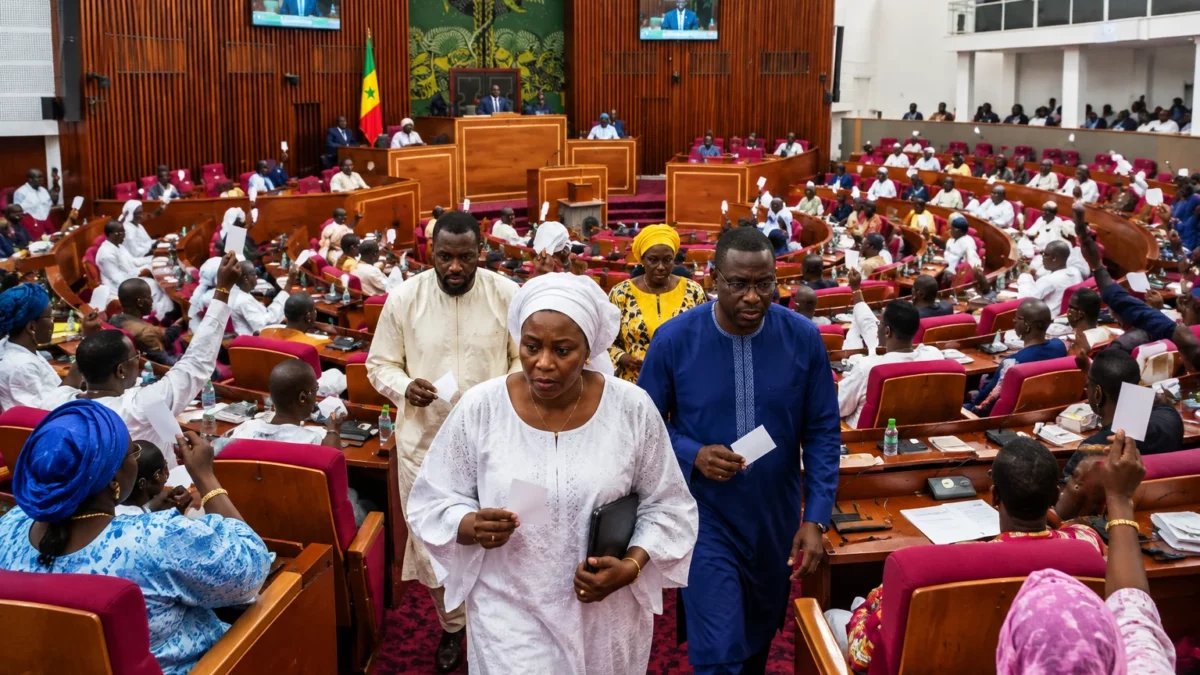
In Senegal, the dispute over the revised budget puts a concrete question to the test: how far can the executive go when a financial bill is rejected by the National Assembly? The disagreement goes beyond budget lines. It also concerns the balance of power and how to restore confidence in public finances.
Parliamentary rejection followed by enactment by decree
On 3 November 2026, the National Assembly rejected the revised finance bill (LFR) for the year. An LFR adjusts the budget during the financial year to take account of new revenue, spending or commitments. The rejection came after the adoption of a preliminary question, a parliamentary procedure that halted consideration of the bill. The Senegalese Press Agency (APS) reports that MPs from the majority cited, among other things, reservations about the reliability of budget forecasts.
On 19 November, President Bassirou Diomaye Faye signed Decree No. 2026-2416 bringing the bill into force. The statement from the Council of Ministers on 25 November confirmed the decision and instructed the government to take the necessary measures to implement it. For the executive, the aim is, in particular, to ensure the regular functioning of the state and implement public policies.
On Wednesday 25 November, MPs adopted a resolution challenging the bill’s enactment. APS and the Senegalese daily Le Soleil reported the vote, while the National Assembly said the text was on the agenda for the session. The majority group Pastef argues that the decree has brought back into force a bill explicitly rejected by elected representatives. This characterisation expresses the majority’s position; it is not a court ruling.
A resolution that reflects a balance of power, not a ruling
The resolution states that the rejection on 3 November brought consideration of the bill to an end and challenges the legal basis for the presidential decree. It also urges caution among officials in the budget process, from authorising officers to public accountants, referring to their potential liability in implementing the text. This warning is a political and institutional element of the standoff; it does not, in itself, determine individual responsibility.
Its legal force is nevertheless limited: a parliamentary resolution is not enough to annul a presidential decree. Opposition MPs, including Abdou Mbow, argued for recourse to the competent courts rather than a resolution. The pan-African agency APA also reported calls from MPs to refer the matter to the Supreme Court. The decree’s legality therefore cannot be presented as definitively established or invalidated without a court ruling.
The disagreement comes amid tensions between the president and the parliamentary majority drawn from Pastef, the African Patriots of Senegal for Work, Ethics and Fraternity party. These divisions should not obscure the immediate question: how can the budget be implemented without blurring institutional accountability or creating uncertainty for state services?
External financing adds economic pressure
The debate is taking place as Dakar seeks to conclude a new programme with the International Monetary Fund (IMF). On 1 September 2026, the Fund’s staff announced a preliminary staff-level agreement on envisaged financing of about $2.2 billion over 36 months. This is not yet final approval: the IMF’s executive board must take a decision.
Public finances remain at the heart of the discussions. The African Development Bank puts Senegal’s public debt at 132% of gross domestic product at the end of 2024, including state-owned enterprises. This figure stems from a reassessment of the accounts and helps explain why budget forecasts, spending controls and transparency have become central issues. On its own, it does not mean that the country can no longer fund its services or meet its obligations.
For the government, an enacted budget bill can facilitate financial management and support negotiations with partners. For the majority, the procedure chosen risks weakening parliamentary oversight and the consensus needed to give the programme credibility. These arguments are not institutionally equivalent: the disagreement is precisely about the rules governing the adoption and implementation of the budget.
The impact will be felt in implementation and legal challenges
For Senegalese people, the issue is not limited to relations between political leaders and lenders. Budget decisions can affect the timing of public spending, services delivered in the regions and payments to state suppliers. Small businesses that depend on public contracts may be exposed to payment delays; public-sector employees, meanwhile, need clear administrative instructions. At this stage, no corroborated evidence supports claims that salaries are at risk.
The regional framework also matters. Senegal is a member of the West African Economic and Monetary Union (WAEMU), which brings together eight countries that share, among other things, a currency and common economic convergence rules. Senegal’s debt and deficit trajectory is therefore of interest to the Union’s partners, but this does not make them judges of the national constitutional dispute.
What happens next will depend on the institutions’ actions: administrative implementation of the decree, any referral to the courts and a decision by the IMF’s executive board. The 25 November vote makes the Assembly’s opposition visible; it closes neither the legal debate nor the financial negotiations. Senegal’s challenge now is to preserve budgetary continuity while clarifying, through institutional channels, the respective scope of the parliamentary vote and the presidential decree.