Algeria
 Egypt
 Libya
 Morocco
 Sudan
 Tunisia
 Benin
 Burkina Faso
 Cabo Verde
 Côte d'Ivoire
 Ghana
 Guinea
 Guinea-Bissau
 Liberia
 Mali
 Mauritania
 Niger
 Nigeria
 Sierra Leone
 The Gambia
 Togo
 Cameroon
 Central African Republic
 Chad
 DR Congo
 Equatorial Guinea
 Gabon
 Republic of the Congo
 São Tomé and Príncipe
 Burundi
 Comoros
 Djibouti
 Eritrea
 Ethiopia
 Kenya
 Madagascar
 Malawi
 Mauritius
 Mozambique
 Rwanda
 Seychelles
 Somalia
 South Sudan
 Tanzania
 Uganda
 Angola
 Botswana
 Eswatini
 Lesotho
 Namibia
 South Africa
 Zambia
 Zimbabwe
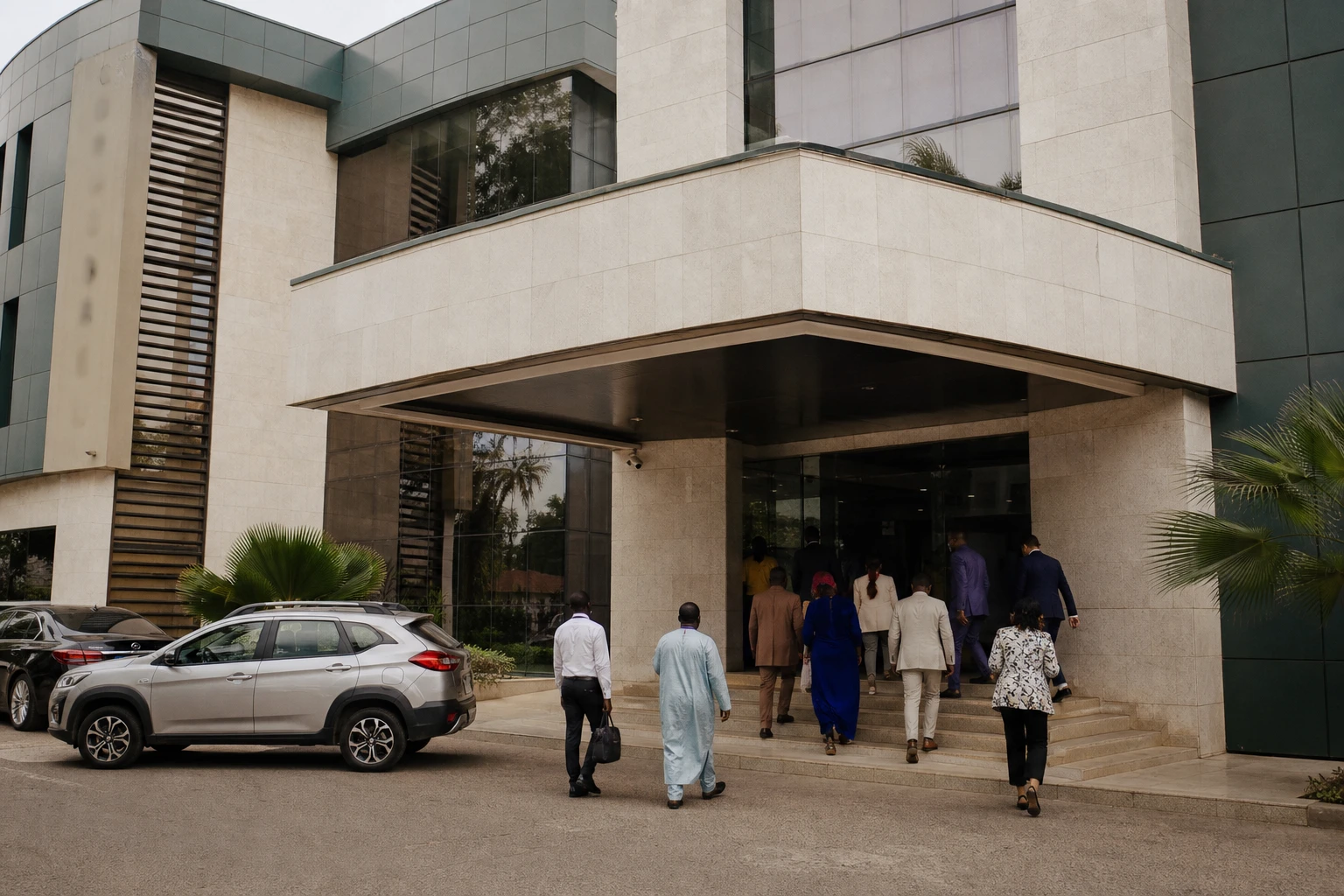
In Bambali, agriculture becomes an industrial project and a bid for local sovereignty
In southern Senegal, mangoes are more than a seasonal fruit. Production is abundant, but the fruit is too often sold unprocessed, leading to significant losses when markets are lacking or storage is inadequate. The project in Bambali aims to change this pattern: keeping more value in the region instead of letting the raw material leave almost unprocessed.
This choice is part of a broader trajectory. The Sédhiou region lies at the heart of natural Casamance, a strategic agricultural area for Senegal and West Africa. The state has already promoted value chains around mangoes and cashew nuts there, notably through Agropole Sud, which is designed to link production, processing and marketing.
An agro-industrial park, a tight schedule and a promise of jobs
The SM10 Agro project was unveiled in Dakar on Thursday. It plans an announced investment of 11.7 billion CFA francs to establish a mango-focused agro-industrial park in Bambali. The foundation stone is due to be laid on Saturday 19 September 2026 in Bambali, in the Sédhiou region. Several Senegalese and African media outlets have reported this figure, although some have cited different amounts, ranging from 11 to 14 billion CFA francs.
The core of the project is straightforward. A phased planting of 500 hectares of mango trees has been announced. The complex is also expected to include a treatment plant and several processing units. Products targeted include pulp, purée, dried mango and mango butter. The announced target processing capacity is 8,500 tonnes a year.
The project also promises a phased rollout. Construction and expansion are planned over several years. Those behind the project point to more than 1,000 direct jobs, alongside further effects on transport, supply, maintenance and local services. These figures should again be read as project targets, not results already achieved.
What local processing could change for Casamance
The most critical issue is not the tree, but the supply chain. Mangoes are already grown in the southern region. What is often missing is the equipment needed to sort, store, process and ship them on time. The Bambali project is designed to address this weakness. It aims to reduce post-harvest losses and keep more wealth circulating in the Sédhiou region, rather than exporting only raw materials or allowing part of the harvest to go to waste.
For producers, the stakes are tangible. A processing plant close to the orchards can stabilise market access, better absorb harvest peaks and give smallholders more bargaining power. For young people, women and local transport operators, the project could also generate indirect income. But this promise depends on genuine access to inputs, energy and roads, as well as clear procurement governance. Without these, the industrial facility risks being underused.
Support from APIX, Senegal’s investment promotion agency, gives the project institutional weight. Bakary Séga Bathily, its director-general, took part in the presentation held in Dakar. According to media reports, the agency highlighted five years of tax and customs exemptions for certain imported equipment under the new investment code. Such incentives are intended to attract capital to the regions, but they also raise a straightforward question: will tax incentives be enough to anchor activity locally over the long term?
The answer will depend on implementation. In a country where agriculture employs a large share of the working population and fruit value chains remain highly seasonal, local processing can make the difference between a subsistence economy and a value-chain economy. Available data also show that mangoes are already a key product in the south of the country, with production concentrated in the Casamance regions and their surroundings.
A project that reaches beyond Bambali and speaks to West Africa
The SM10 Agro project goes beyond the confines of a home village. It touches on an issue that has become central in several ECOWAS countries: how to process agricultural produce locally to create jobs, curb losses and reduce dependence on imports of finished products. Senegal is testing this approach in Bambali; other West African countries, also rich in tropical fruit, face the same equation.
The project also says something about the evolving role of public figures in Africa. Here, Sadio Mané is not limiting himself to a one-off philanthropic gesture. He is investing in a value chain, a place, a production organisation and a market. This approach brings sport, entrepreneurship and local development closer together, without removing the constraints on the ground. The final outcome will depend less on the announcement than on execution, the quality of infrastructure and the ability to keep the planned units operating over time.
In Senegal, the immediate milestone is clear: the foundation stone is to be laid in Bambali on Saturday 19 September 2026. Construction, planting and the first industrial trials will follow. It is then that it will become clear whether Bambali becomes just another symbol or a genuine hub for value creation in southern Senegal.