Algeria
 Egypt
 Libya
 Morocco
 Sudan
 Tunisia
 Benin
 Burkina Faso
 Cabo Verde
 Côte d'Ivoire
 Ghana
 Guinea
 Guinea-Bissau
 Liberia
 Mali
 Mauritania
 Niger
 Nigeria
 Senegal
 Sierra Leone
 The Gambia
 Togo
 Cameroon
 Central African Republic
 Chad
 DR Congo
 Equatorial Guinea
 Gabon
 Republic of the Congo
 São Tomé and Príncipe
 Burundi
 Comoros
 Djibouti
 Eritrea
 Ethiopia
 Kenya
 Madagascar
 Malawi
 Mauritius
 Mozambique
 Seychelles
 Somalia
 South Sudan
 Tanzania
 Uganda
 Angola
 Botswana
 Eswatini
 Lesotho
 Namibia
 South Africa
 Zambia
 Zimbabwe
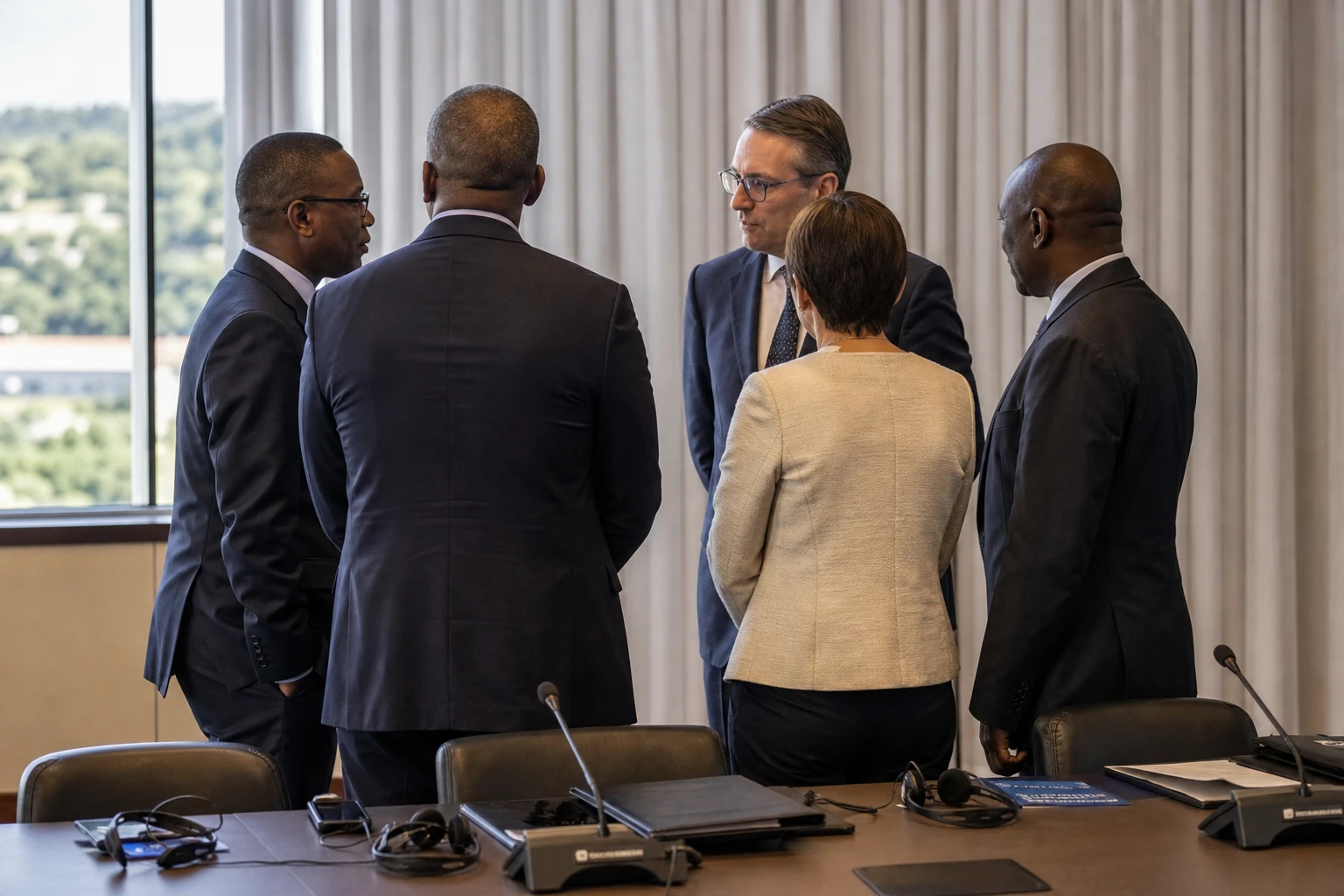
In Kigali and Brussels, restoring diplomatic relations does not close the file on their disagreements. Above all, it reopens official channels after an 18-month rupture marked by tensions over the situation in the east of the Democratic Republic of the Congo (DR Congo).
Dialogue resumes after abrupt rupture
Rwanda and Belgium announced on Tuesday 22 September 2026 that they had jointly decided to restore diplomatic relations. The announcement was made on the sidelines of the United Nations General Assembly in New York by the two countries’ foreign ministers, Olivier Nduhungirehe and Maxime Prévot.
The decision comes 18 months after Kigali announced the rupture on 17 March 2025. Rwanda had at that time asked Belgian diplomats to leave the country. Brussels subsequently took an equivalent measure against Rwandan representatives in Belgium.
The crisis centred on the war in eastern DR Congo. Belgium supported European measures targeting Rwandan officials accused of backing the M23 armed movement. Kigali, for its part, denounced Belgium’s position in favour of Kinshasa and disputed the European framing of the conflict.
The two capitals have now chosen to resume exchanges within a formal framework. This does not mean that their positions have become identical. Rather, it reflects a willingness to manage differences through negotiation instead of rupture.
Embassies to reopen in stages
The joint statement provides for the imminent reopening of the Rwandan and Belgian embassies. Initially, each will be headed by a chargé d’affaires ad interim. They will be supported by a diplomat or consular officer, as well as a small technical team.
Ambassadors will be appointed later, following the approval process. Rwanda’s future ambassador to Belgium is also expected to be accredited to the European Union. This dual role will give Kigali a direct interlocutor in Brussels at a time when relations with the EU remain sensitive.
The resumption of diplomatic activities will have practical significance. During the rupture, Belgian consular services for Rwandans had been transferred to Nairobi, the Kenyan capital. Applications for visas and administrative documents, as well as assistance for Belgian nationals, therefore depended on a regionalised system.
The reopening in Kigali should reduce the need for such travel and simplify some procedures. However, it will not bring immediate change in every area. Consular arrangements, business services and co-operation programmes will have to be reorganised gradually.
Conflict in eastern DR Congo remains central
The main disagreement remains how to interpret the conflict in eastern DR Congo. Belgium says it is defending Congo’s territorial integrity and sovereignty. It also wants to contribute to mediation efforts linked to the Doha and Washington processes.
Rwanda regularly disputes the accusations against it and highlights its security concerns along its western border. Kigali accuses the Congolese authorities in particular of failing to neutralise the Democratic Forces for the Liberation of Rwanda, an armed group active in eastern DR Congo.
These opposing positions have not disappeared with the resumption of diplomatic relations. Instead, the two ministers’ statement stresses the need for “open, frank and transparent” dialogue. The two countries say they want to be guided by non-interference, mutual respect and constructive engagement.
This wording sets out a method, but does not resolve the substance of the dispute. The next discussions will therefore have to address difficult issues: the role of regional forces, the movement of weapons, civilian protection and the implementation of peace commitments.
Quiet mediation and regional calculations
Qatar facilitated the first meeting between the Rwandan and Belgian foreign ministers in Doha in June 2025. Both governments praised its contribution in their joint statement. Further meetings and informal contacts subsequently helped reduce misunderstandings.
This sequence highlights the growing importance of mediation outside traditional frameworks. It also underlines the limits of diplomatic ruptures in a region where crises overlap. Security, trade, migration and development co-operation remain interconnected.
Rwanda belongs to the East African Community (EAC), a regional organisation bringing together several East African countries and co-ordinating, among other things, economic and security issues. DR Congo also joined the organisation in 2022. Tensions between Kigali and Kinshasa therefore have a direct bearing on the EAC’s balance.
Belgium, meanwhile, also acts through the European Union. The return of ambassadors will not end European debates on sanctions, strategic minerals, development aid or the responsibility of armed actors. It will, however, provide a bilateral channel for addressing these issues more regularly.
What normalisation means for those involved
For the Rwandan authorities, the resumption restores a direct relationship with a historically important European partner. It could facilitate political exchanges and limit public misunderstandings. It does not, however, amount to an endorsement of Belgium’s analysis of DR Congo.
For Belgium, returning to Kigali means regaining a diplomatic presence in a country central to the balance of the Great Lakes region. Brussels will be able to maintain its criticism over DR Congo while holding direct discussions with Rwandan officials.
For the public, the impact will be more tangible if the reopening of embassies improves access to consular services. Students, families, travellers, businesses and co-operation organisations could be among those affected first.
The benefits will nevertheless remain limited if regional tensions flare up again. A new crisis in eastern DR Congo could quickly undermine this normalisation. The durability of the rapprochement will therefore depend less on diplomatic ceremonies than on the two countries’ ability to maintain dialogue during periods of disagreement.
A test for Great Lakes diplomacy
The restoration announced on 22 September 2026 is an important signal for the region. It shows that a rupture can be followed by a return to dialogue, even when disputes concern security and sovereignty.
The next step will be the actual reopening of the embassies in Kigali and Brussels. The appointment of ambassadors, the resumption of consular services and the substance of the first official exchanges will then need to be watched.
The real test will take place in eastern DR Congo. If Kigali and Brussels manage to keep channels open despite their disagreements, this normalisation could strengthen regional diplomatic efforts. Otherwise, the reopened embassies risk becoming witnesses to a fragile truce rather than instruments of lasting dialogue.