Algeria
 Egypt
 Libya
 Morocco
 Sudan
 Tunisia
 Benin
 Burkina Faso
 Cabo Verde
 Côte d'Ivoire
 Ghana
 Guinea
 Guinea-Bissau
 Liberia
 Mali
 Mauritania
 Niger
 Nigeria
 Senegal
 Sierra Leone
 The Gambia
 Togo
 Cameroon
 Central African Republic
 Chad
 DR Congo
 Equatorial Guinea
 Gabon
 Republic of the Congo
 São Tomé and Príncipe
 Burundi
 Comoros
 Djibouti
 Eritrea
 Ethiopia
 Kenya
 Madagascar
 Malawi
 Mauritius
 Mozambique
 Seychelles
 Somalia
 South Sudan
 Tanzania
 Uganda
 Angola
 Botswana
 Eswatini
 Lesotho
 Namibia
 South Africa
 Zambia
 Zimbabwe
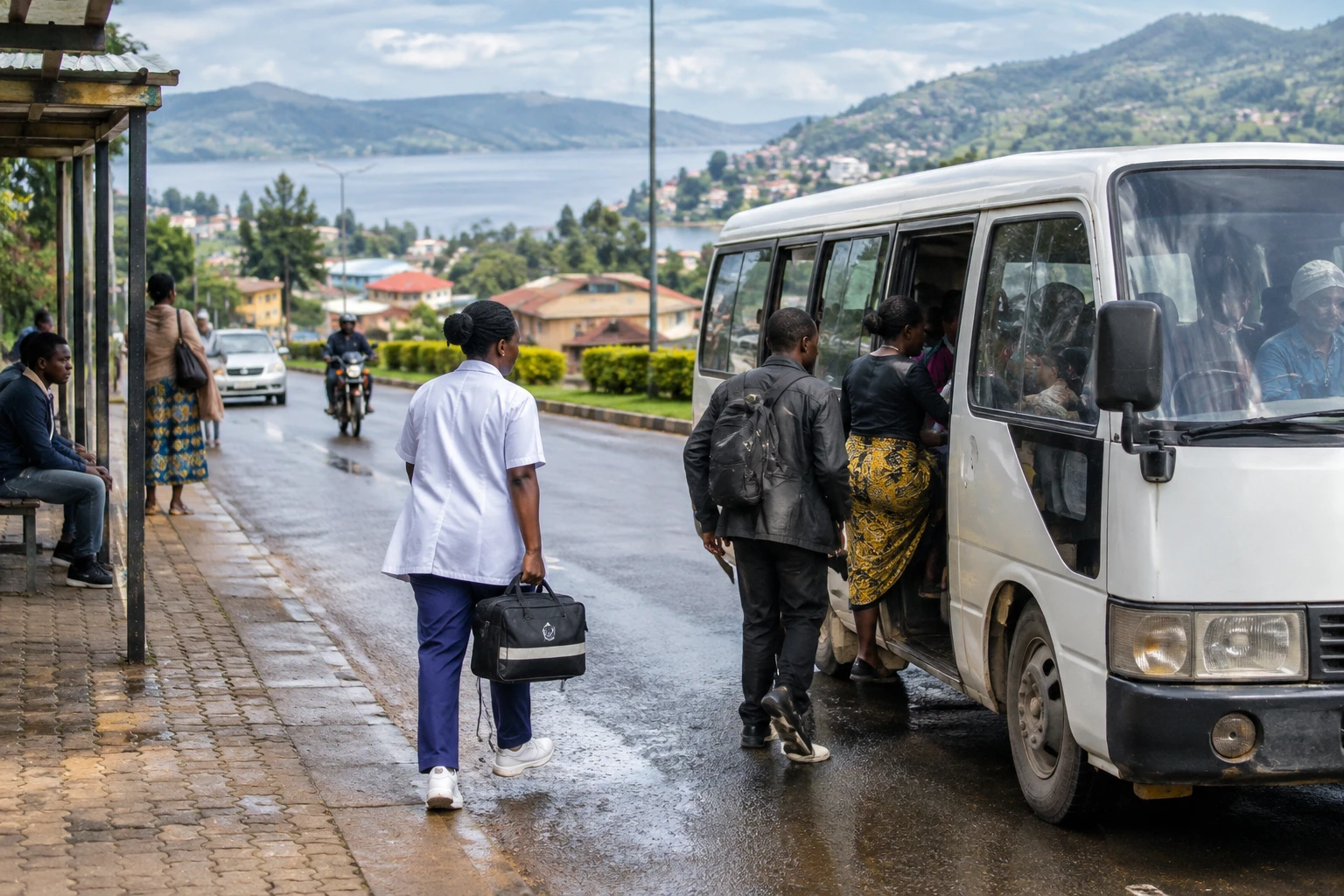
When heavy rain cuts off a road or drought takes hold, the stakes go beyond crops and infrastructure: healthcare, drinking water and families’ health can also be affected. In Rwanda, the health ministry has documented these risks to better prepare the health system for climate shocks.
Different risks across regions
On 23 October 2026, the ministry published a national assessment of vulnerability and adaptation in the health sector. It examines the links between climate, disease and continuity of care. According to the summary of the ministry’s report, it is the first analysis of this scale devoted to health in the country.
Exposure is not uniform. In the west and south, mountainous districts near Lake Kivu face floods and landslides. In the east, dry periods are a greater concern. This geography matters: the same warning calls for different responses in hilly areas and drier regions.
Rising temperatures can worsen heat stress and affect people with cardiovascular disease. Changes in rainfall can also alter the risks associated with malaria, cholera and diarrhoeal diseases. Heat and air pollution add pressure on respiratory health.
These links do not mean that a climate event automatically causes an outbreak of disease. Rather, they point to conditions that may increase certain risks, depending on location, season and access to prevention. Health surveillance and weather data must therefore be interpreted together.
Warnings all the way to health centres
The assessment is now intended to guide a national adaptation plan for the sector. The ministry plans to set out the measures to be implemented over the next five years. Three priorities stand out: improving early warnings, strengthening health infrastructure and training staff on the links between climate and health.
A warning is useful only if it reaches local teams and residents in time, and then triggers an appropriate response. For malaria, this means linking information on rainfall and temperatures to case surveillance. For cholera and diarrhoeal diseases, risks related to water and sanitation must also be taken into account.
Infrastructure resilience also affects routine services. A health centre that loses electricity or becomes difficult to reach during a flood may face delays to consultations, the storage of medical supplies or emergency care. More self-sufficient equipment and sustainable energy systems can limit these disruptions. The report does not, however, present these priorities as results already achieved: their impact will depend on funding, timing and implementation in the districts.
The effects will vary. Patients with chronic illnesses may be particularly exposed to extreme heat. In rural areas, blocked roads or long distances to a facility can delay access to care. In cities, heat and air quality can affect health, while medical teams will need to maintain services during extreme events.
A plan to fit Rwanda’s development path
This initiative forms part of health and climate planning already under way. In 2024, the health ministry established a technical working group on climate and health. Climate resilience is also among the priorities in the fifth strategic plan for the health sector, covering 2024-2029.
Rwanda, an East African country, is a member of the East African Community (EAC), a regional organisation bringing states together for economic and political co-operation. Health risks do not stop at borders: disease, extreme weather events and population movements can affect several neighbouring countries. Early-warning systems and regional co-operation therefore have a role in preparedness, without replacing national responses.
Cholera illustrates the importance of local surveillance. In 2025, an outbreak began on Bugarura Island, in Rutsiro district, before reaching other Rwandan districts along Lake Kivu. This episode alone does not prove a direct link with climate change. It nevertheless serves as a reminder that access to water, prevention and response capacity must remain central to health policies in the region.
The next step will be securing resources
Publishing an assessment provides a basis for action, not a guarantee of protection. The future plan will need to turn priorities into clear responsibilities, budgets, deadlines and monitoring indicators. It will also be necessary to ensure that climate and health data are shared between national services and local facilities.
For Rwandans, the stakes will be measured in concrete action: clear warnings, centres able to operate during crises and health workers prepared to adapt their response. Across East Africa, monitoring this plan will also show how a country translates climate adaptation into continuity of care, beyond announced commitments.
The Rwandan health ministry published the assessment on 23 October 2026. The regional health context is documented in the UNICEF situation report for Eastern and Southern Africa. The health planning trajectory is also described in an analysis published by Nature Health.