
 Algeria
 Egypt
 Libya
 Sudan
 Tunisia
 Benin
 Burkina Faso
 Cabo Verde
 Côte d'Ivoire
 Ghana
 Guinea
 Guinea-Bissau
 Liberia
 Mali
 Mauritania
 Niger
 Nigeria
 Senegal
 Sierra Leone
 The Gambia
 Togo
 Cameroon
 Central African Republic
 Chad
 DR Congo
 Equatorial Guinea
 Gabon
 Republic of the Congo
 São Tomé and Príncipe
 Burundi
 Comoros
 Djibouti
 Eritrea
 Ethiopia
 Kenya
 Madagascar
 Malawi
 Mauritius
 Mozambique
 Rwanda
 Seychelles
 Somalia
 South Sudan
 Tanzania
 Uganda
 Angola
 Botswana
 Eswatini
 Lesotho
 Namibia
 South Africa
 Zambia
 Zimbabwe
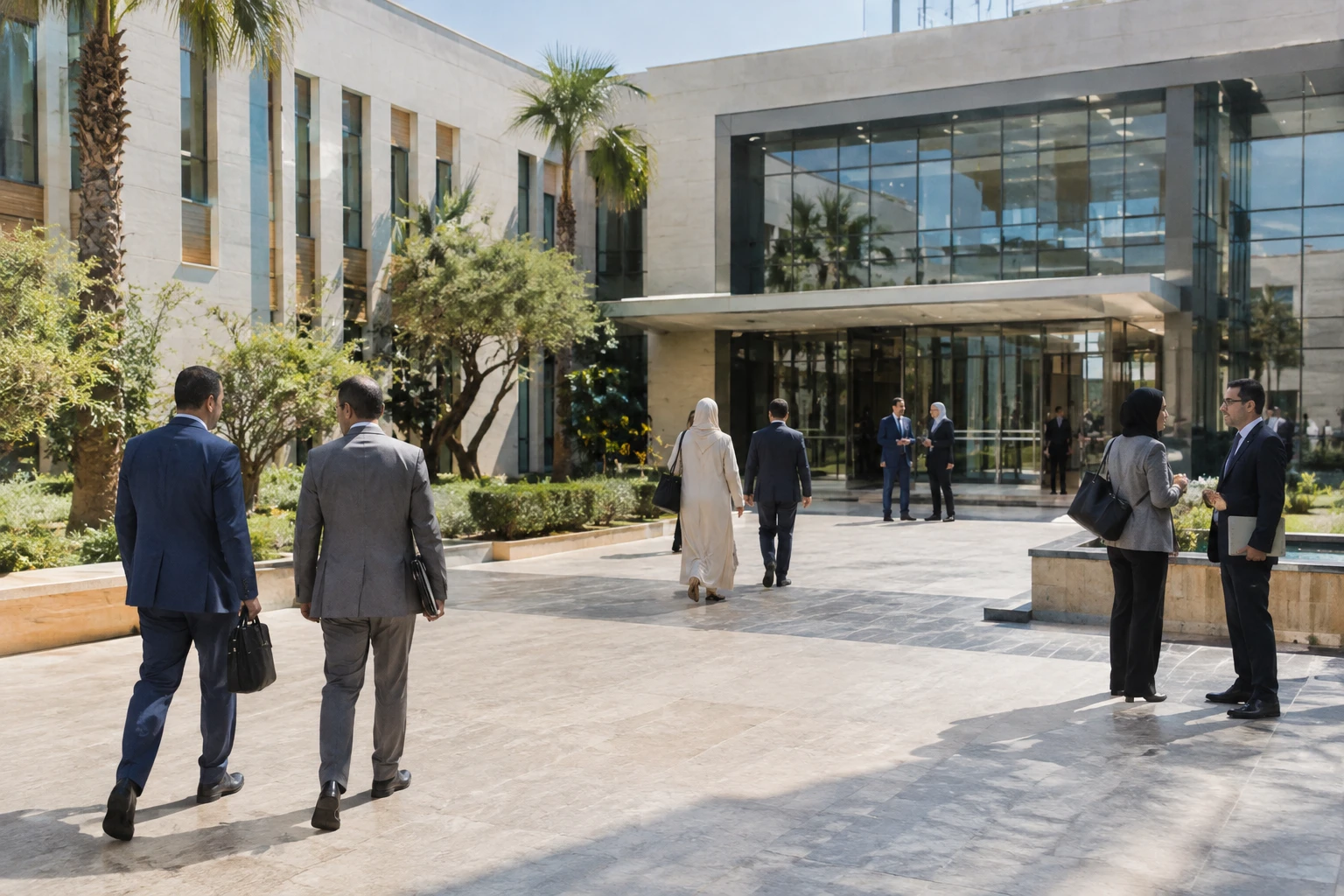
In Rabat, the authorities’ silence contrasts with reactions heard in Casablanca. Felipe VI’s visit to Ceuta and Melilla touches on a longstanding dispute, but comes as Madrid and Rabat have an interest in preserving their cooperation.
Two cities at the heart of a lasting dispute
Ceuta, known as Sebta in Morocco, and Melilla are administered by Spain on the North African coast. Morocco claims both cities; Spain considers them part of its territory. This difference over sovereignty regularly fuels tensions between the neighbours, without preventing exchanges or cooperation on practical issues.
The region has no common economic organisation comparable to ECOWAS in West Africa. Relations between Rabat and Madrid are mainly conducted bilaterally, with a European dimension: Spain is a member of the European Union, while Morocco is a major EU partner in the southern Mediterranean.
The most directly comparable precedent dates back to November 2007. Juan Carlos, then king of Spain, visited Ceuta and Melilla. Rabat recalled its ambassador for consultations. The episode left a lasting impression, even though relations subsequently went through periods of rapprochement.
Royal visit rekindles sensitivities
Felipe VI and Queen Letizia are due to visit Ceuta on 13 October 2026, followed by Melilla on 14 October. The Casa del Rey and the Spanish government announced these dates on 1st October. In Spain, the visit is presented as a sign of the monarchy’s support for the two cities. For some in Moroccan public opinion, by contrast, it reasserts a contested sovereignty.
In Casablanca, several people interviewed expressed irritation. One sees the visit as a message intended to remind people that Sebta is Spanish. Another considers it a provocation and fears that the press will heighten tensions. These accounts convey local reactions; on their own, they do not make it possible to gauge the views of Moroccans as a whole.
On the eve of the visit, no official Moroccan reaction is reported in the information available. This silence may avoid verbal escalation, but it is neither approval nor an abandonment of Morocco’s claim. In 2007, the diplomatic response was explicit; this time, public restraint sets the two episodes apart.
The 2022 partnership put to the test
The visit comes amid a delicate climate. The summer migration crisis in Ceuta has weighed on bilateral relations. According to the Spanish authorities, around 72,000 people entered the city on 30 and 31 July; the figure varied over the course of successive estimates. Thousands are said to have remained after returns to Morocco. The overall toll and the individual circumstances of those concerned are a separate issue and should not be reduced to an instrument of diplomatic pressure.
On 11 October, the Spanish authorities dismantled the last major migrant camp mentioned in the information available, ahead of the king’s arrival. The timing gives the visit an additional dimension, but does not prove that the camp was dismantled solely because of it. The crisis has mobilised Ceuta’s public services and made visible the local impact of a border where security, mobility and the protection of people intersect.
Since 2022, the two governments have sought to stabilise their relationship. Madrid then described Morocco’s autonomy plan for Western Sahara as the « most serious, realistic and credible » basis for resolving the dispute. This shift in Spain’s position helped bring it closer to Rabat, without removing disagreements over Ceuta and Melilla. It instead shows that the two capitals can cooperate on some issues while maintaining opposing positions on others.
Between political symbolism and everyday interdependence
For the Spanish monarchy and local officials, the king’s presence affirms the institutional link with the residents of the two cities. For Moroccans who claim Ceuta and Melilla, the same gesture rekindles a question of sovereignty and political memory. The narratives do not overlap: the Spanish state defends its territorial integrity, while Morocco maintains its claim.
The consequences are not limited to official statements. Renewed tensions could complicate cooperation on border crossings, trade or the management of mobility. Residents, traders and cross-border workers would feel the effects more directly than leaders. Conversely, continued diplomatic contacts can contain disagreements without resolving them.
The issue also resonates beyond Morocco and Spain. It is a reminder of how North African borders can link local concerns to balances between Europe and the African continent. The African Union, which upholds the principle of respecting borders inherited at independence, is not at the centre of this visit; Morocco’s claim does not, however, turn the visit into a continental arbitration process.
The immediate test will be Rabat’s response after the stops on 13 and 14 October: continued silence, an official statement or a diplomatic gesture. The 2007 precedent fuels concern, but does not dictate what happens next. Bilateral relations will depend on the two governments’ ability to contain this political symbol while continuing the cooperation that serves their respective interests.



