Algeria
 Egypt
 Libya
 Sudan
 Tunisia
 Benin
 Burkina Faso
 Cabo Verde
 Côte d'Ivoire
 Ghana
 Guinea
 Guinea-Bissau
 Liberia
 Mali
 Mauritania
 Niger
 Nigeria
 Senegal
 Sierra Leone
 The Gambia
 Togo
 Cameroon
 Central African Republic
 Chad
 DR Congo
 Equatorial Guinea
 Gabon
 Republic of the Congo
 São Tomé and Príncipe
 Burundi
 Comoros
 Djibouti
 Eritrea
 Ethiopia
 Kenya
 Madagascar
 Malawi
 Mauritius
 Mozambique
 Rwanda
 Seychelles
 Somalia
 South Sudan
 Tanzania
 Uganda
 Angola
 Botswana
 Eswatini
 Lesotho
 Namibia
 South Africa
 Zambia
 Zimbabwe
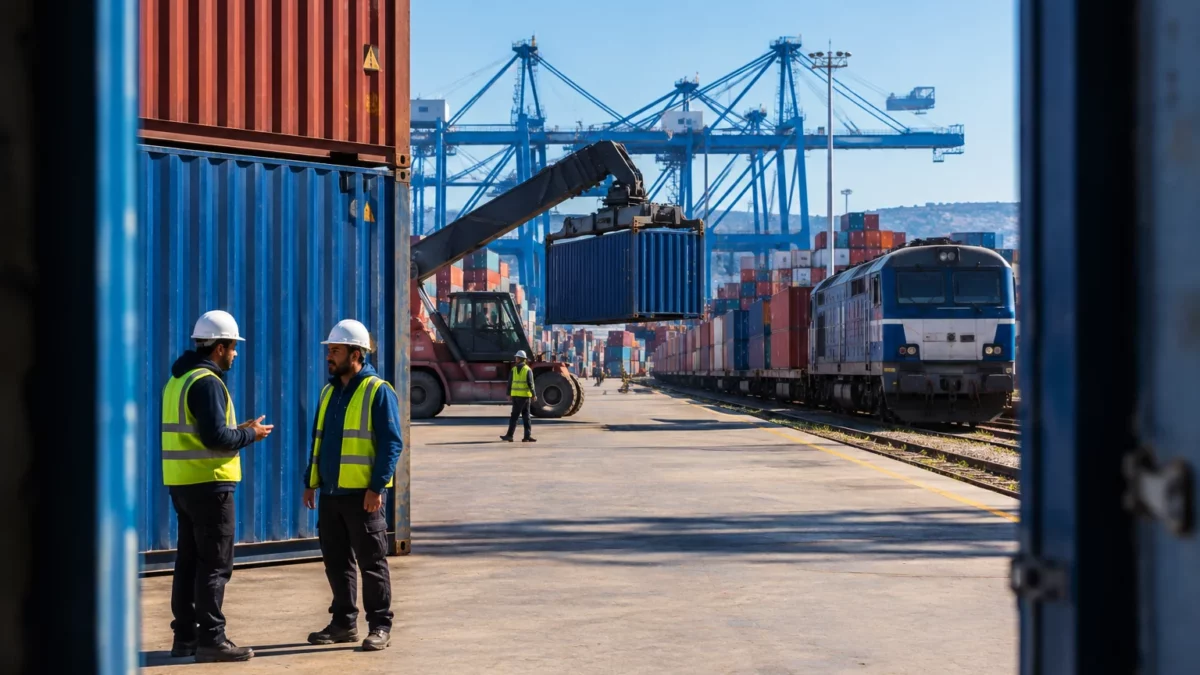
A high-performing port is not enough to keep goods moving. For Moroccan manufacturers, the challenge also lies in connecting quays with factories, production zones and domestic markets, without relying entirely on road transport.
This is the context for the announced partnership between the National Railways Office (ONCF) and Danish group A.P. Moller-Maersk. The two partners will examine the role rail could play in the kingdom’s logistics chains. The agreement opens an exploratory phase: in itself, it does not announce new lines or a construction timetable.
Connecting ports with production hubs
On 24 November 2026, ONCF and Maersk signed a memorandum of understanding to examine rail transport and integrated logistics solutions in Morocco. Their stated aim is to increase the use of trains to carry containers and improve connections between the main ports and industrial and economic regions. The partners will also study more efficient, lower-emission domestic transport.
The document does not yet specify which connections would be involved, what volumes could be transported or who would fund any equipment. These details will be decisive: a study protocol is not equivalent to an operating contract or an investment decision.
For Maersk, the opportunity would be to extend its existing maritime and port services inland. Its subsidiary APM Terminals operates two container terminals at Tanger Med, TC1 and TC4. Rail services could complement these activities by carrying goods to the port and distributing them after unloading. For ONCF, the challenge would be to make better use of its freight network and secure new sources of demand.
A rail strategy yet to be put into practice
The discussions come as Morocco’s economy is changing. The automotive and aerospace industries, agricultural exports and the growth of port hubs are generating diverse freight flows. Tanger Med already connects production chains in the north of the kingdom to international shipping routes. But competitiveness also depends on the time and cost of transporting goods between ports, business zones and markets.
The “Morocco Rail 2040” plan indicates the scale of the ambition. In its presentation, ONCF plans to increase the number of major cities served from 23 to 43, connect 12 ports, up from 6 currently, and extend network coverage to 87% of the population, from 51%. These targets require substantial investment. Published financial estimates vary: some documents refer to around 375 billion dirhams, while others put the figure at close to 400 billion. This is a long-term programme, not a budget that has already been fully committed.
The opening of the first container terminal at Nador West Med on 31 October 2026 makes the question of land access particularly tangible. The new port, in the Oriental region, is expected to develop its activities gradually. Its rail connection is included in projects linked to the national strategy; available information points to a target completion date in 2028. The timetable and arrangements remain to be seen.
Potential benefits, but also trade-offs
Shifting some freight from road to rail could ease pressure on roads and reduce emissions from domestic transport. These effects will materialise only if trains run frequently enough, terminals are suitable and connections are reliable. Businesses will need predictable costs and delivery times compatible with their supply chains. Potential gains will therefore depend as much on how services are organised as on rails and locomotives.
The benefits would not be the same for everyone. Major exporters and port operators could benefit from regular links between hubs and industrial sites. For smaller businesses, particularly in agricultural sectors, access to these services will depend on their proximity to freight stations and the possibility of consolidating loads. Inland regions could become better connected, but only if investment extends beyond the corridors that are already best served.
The partnership also raises the question of how roles will be divided between a public operator and an international logistics group. ONCF owns and operates the national rail network; Maersk brings experience in maritime flows and integrated supply chains. The memorandum does not yet indicate how responsibilities, costs or revenues would be shared if services are launched. These decisions will affect businesses’ access and the role of local operators.
A Moroccan issue with regional implications
Morocco is seeking to strengthen its position as a hub linking Africa, Europe and Mediterranean markets. In North Africa, the Arab Maghreb Union provides a regional framework, but economic cooperation between its members remains limited. The development of Morocco’s port and rail links is therefore primarily part of a national strategy, while potentially influencing the region’s trade routes and logistics choices.
Across the continent, the experience is relevant to countries seeking to improve connections between ports, industrial zones and hinterlands. But its potential reach will not be measured by the signing of an agreement alone. The next steps will be studies, route choices, financing and the actual launch of connections capable of meeting the needs of businesses and less-connected regions.
Details of the memorandum and rail objectives are set out by Maersk and corroborated by Moroccan media, including Médias24 and Le Desk. The network targets for 2040 are included in the ONCF presentation of the Morocco Rail plan. The start of operations at the Nador West Med terminal was reported by SNRT News.