Algeria
 Egypt
 Libya
 Morocco
 Sudan
 Tunisia
 Benin
 Burkina Faso
 Cabo Verde
 Côte d'Ivoire
 Ghana
 Guinea
 Guinea-Bissau
 Liberia
 Mali
 Mauritania
 Niger
 Nigeria
 Senegal
 Sierra Leone
 The Gambia
 Togo
 Cameroon
 Central African Republic
 Chad
 DR Congo
 Equatorial Guinea
 Gabon
 Republic of the Congo
 São Tomé and Príncipe
 Burundi
 Comoros
 Djibouti
 Eritrea
 Ethiopia
 Kenya
 Madagascar
 Malawi
 Mauritius
 Rwanda
 Seychelles
 Somalia
 South Sudan
 Tanzania
 Uganda
 Angola
 Botswana
 Eswatini
 Lesotho
 Namibia
 South Africa
 Zambia
 Zimbabwe
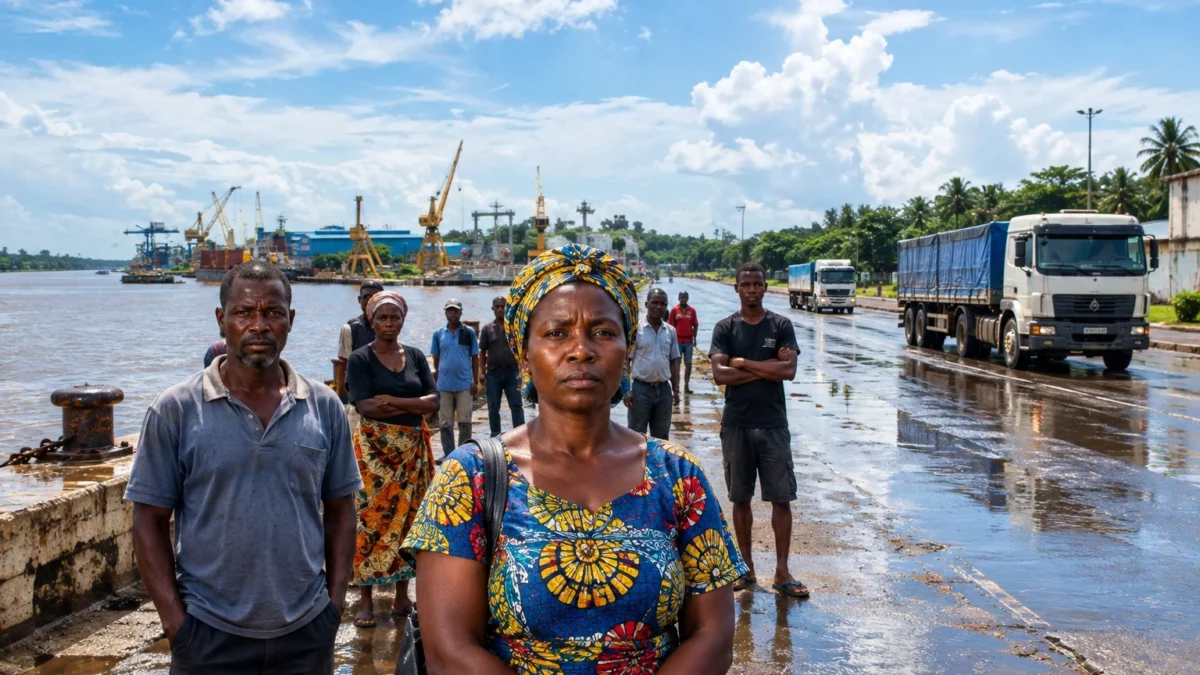
For businesses in Zambézia province, access to a nearby port is not enough: usable quays, a navigable channel and reliable land connections are also needed. Reopening Quelimane could add an option to Mozambique’s central maritime routes. But the announcement of a concession is not yet an operational port, nor proof that goods will use this route.
A new option in the southern African network
Mozambique already has several ports serving domestic and regional trade, notably Maputo, Beira and Nacala. Their hinterlands — the territories connected to a port by road or rail — extend beyond national borders. Landlocked Malawi, in particular, depends on corridors through its neighbours to access maritime markets.
These routes form part of the SADC area, the Southern African Development Community, which coordinates transport projects among its member states. Beira and Nacala are already among the maritime gateways considered for regional connections. Quelimane could complement this offer, provided its links within the country and to neighbouring countries are competitive. SADC’s regional transport plan places ports and corridors within this wider network.
Quelimane is the capital of Zambézia province in central Mozambique. Its port has been inactive since 2017, when the government and the former concessionaire ended their contract. The revival is therefore part of a trajectory already marked by an earlier concession, rather than the creation of entirely new infrastructure.
What the concession provides for
The Council of Ministers approved the terms of the concession at its 34th ordinary session on 24 November 2026. The agreement entrusts the port’s development and operation to a company formed by the state-owned Portos e Caminhos de Ferro de Moçambique (CFM) and its partners. The concession is a public-private partnership: the state involves private operators in delivering and managing a facility serving the public interest.
The concessionaire will be required, among other things, to finance and carry out the works, then manage, maintain and commercially operate the facilities. At the end of the contract, they must return to the state. The government said the investment programme would exceed $100 million, in two phases. The first is estimated at about $58 million, according to information reported by Portuguese news agency Lusa and Mozambican media outlet Ikweli.
The announced works include rehabilitating the quays, modernising equipment, and cleaning and deepening the access channel. These interventions are essential: without sufficient depth, ships cannot reach the port under commercially suitable conditions. The government presents the revival as a way to ease pressure on Beira, improve supplies to Zambézia and offer an additional route for the domestic market and Malawi.
One point remains important for investors and users: the official statement consulted confirms approval of the concession terms, but does not detail the amount, the timetable for the works or traffic targets. The figure of more than $100 million and the estimated cost of the first phase were reported separately by the press. The publication of the contract documents and confirmation of the financing will therefore need to be tracked before these sums can be considered committed.
The port’s value will depend on land connections
Refurbishing the quays alone does not guarantee sustainable activity. Operators will compare the costs, transit times and reliability of several routes, including those through Beira or Nacala. Quelimane will need to be connected to production and consumption areas, road or rail transport organised, and predictable port services ensured. Without these links, the refurbished port could remain underused despite the works.
The effects will not be the same for everyone. Import-export businesses could benefit from an alternative if it reduces delays or costs. Producers and traders in Zambézia could, in turn, gain easier access to markets, provided that logistics savings are actually passed on through prices and services. For local transport operators and port workers, a recovery will depend on the actual volume of goods and operating conditions, which have not yet been specified.
This ambition is also a reminder that regional connectivity is not just about ports. SADC describes the Beira and Nacala corridors as routes linking landlocked countries to Mozambique’s maritime infrastructure. Quelimane will become a credible alternative only if roads, border checks, cargo handling and coordination among public services keep pace with the port works.
Next steps to watch
The first test will be the move from political approval to implementation: finalising the financing, starting construction and setting a timetable for reopening. Questions of capacity, channel maintenance and ship frequency will follow. The information available does not yet confirm a reopening date or expected freight volumes.
For Maputo, the challenge is to strengthen the country’s position as a regional logistics hub while avoiding the concentration of flows on a handful of major routes. For neighbouring countries, particularly Malawi, an additional option could improve the resilience of supplies, without automatically replacing existing corridors. The project’s tangible measure will therefore not simply be the announced amount: it will be transport costs, the reliability of connections and the goods that actually pass through Quelimane.