Algeria
 Egypt
 Libya
 Morocco
 Sudan
 Tunisia
 Benin
 Burkina Faso
 Cabo Verde
 Côte d'Ivoire
 Ghana
 Guinea
 Guinea-Bissau
 Liberia
 Mali
 Mauritania
 Niger
 Nigeria
 Senegal
 Sierra Leone
 The Gambia
 Togo
 Cameroon
 Central African Republic
 Chad
 DR Congo
 Equatorial Guinea
 Gabon
 Republic of the Congo
 São Tomé and Príncipe
 Burundi
 Comoros
 Djibouti
 Eritrea
 Ethiopia
 Kenya
 Madagascar
 Malawi
 Mauritius
 Rwanda
 Seychelles
 Somalia
 South Sudan
 Tanzania
 Uganda
 Angola
 Botswana
 Eswatini
 Lesotho
 Namibia
 South Africa
 Zambia
 Zimbabwe
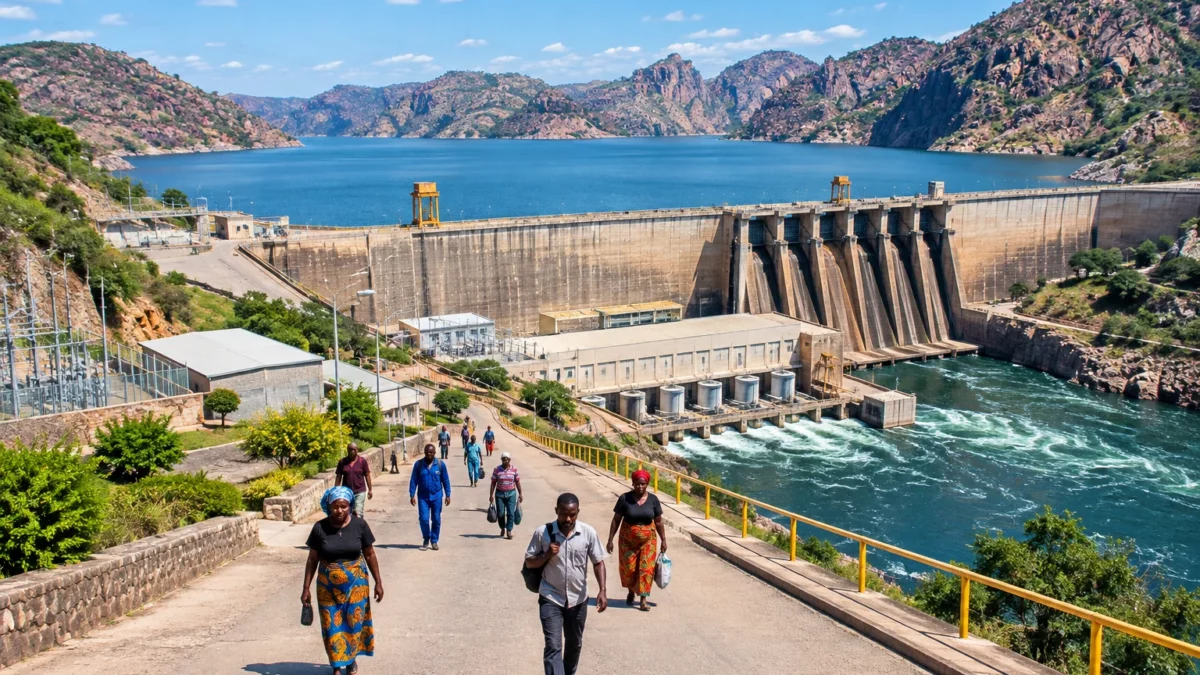
When water flows to major dams decline, the consequences extend beyond power stations. Households, businesses and export revenues can all feel the effects. In Mozambique, diversifying electricity supply has therefore become an issue of energy security as well as access to power.
A system highly exposed to Zambezi fluctuations
The country is the largest producer of hydropower in southern Africa. A large share of this output comes from Cahora Bassa on the Zambezi, while several smaller dams supplement the grid. This concentration makes supply sensitive to rainfall and reservoir water levels.
The Mozambican government’s 2025 annual report puts national electricity production at 14.4 million megawatt-hours, down 25.4% from 2024. Hydropower plants generated 11.2 million megawatt-hours, a decline of 30.7%. They still accounted for 77.8% of total output. The report attributes the fall in part to a lack of rain in the Zambezi basin, following a particularly dry 2024-2025 hydrological year.
The report also cites production restrictions to preserve reserves, as well as factors related to demand and economic activity. The decline is therefore not explained by drought alone. Electricity exports also fell in 2025, reducing a source of revenue for the country and supply for its neighbours.
Agreement announced, but no plants yet in operation
It was against this backdrop that Electricidade de Moçambique (EDM), the state-owned utility, and Infinity Power announced a memorandum of understanding to develop up to 160 megawatts of renewable capacity. Signed on 14 November in Abu Dhabi, at a Mozambique-United Arab Emirates business meeting, it provides for solar photovoltaic projects, batteries and facilities combining several technologies.
Mozambican media outlet Xonguila reported the announcement, which was also carried by Green Building Africa. The sites, timelines, financing and implementation terms have not yet been specified in the published information. The figure of 160 MW refers to planned capacity, not output already available to the grid. On its own, it does not make it possible to estimate how much electricity will be delivered to consumers.
Infinity Power is a joint venture between Egypt’s Infinity and UAE-based Masdar. The new agreement extends discussions launched in 2023 on renewable energy projects in Mozambique. It is not, however, a final investment decision or proof that the facilities will be built: those steps will depend in particular on studies, contracts and financing.
Generation is not enough: the grid and access matter too
Solar power can complement hydropower when water availability is low. But its output varies with sunlight and does not always coincide with peak demand. Batteries can store some of the electricity for later use, depending on their capacity and operating duration. The agreement refers to storage without detailing its specifications.
The energy will also need to be transmitted. New power plants do not automatically improve service in areas where the transmission or distribution grid remains limited. Connecting the sites, their location and their ability to serve less-electrified provinces will therefore be decisive. The Lusophone association ALER notes that access remains uneven between provinces: Maputo is approaching 97%, while some regions remain below 40%.
The needs are also very practical. For a household, a more regular supply makes lighting and food preservation easier. For a business, it can reduce reliance on costly backup solutions. Schools and health centres also need reliable electricity. Expanding connections, however, does not by itself guarantee continuous or affordable service.
Mozambique’s Ministry of Mineral Resources and Energy says that 70.3% of the population had access to electricity in the first half of 2026, combining the national grid, mini-grids and home solar systems. The public programme aims for universal access by 2030. This access figure measures the possibility of being connected or served; on its own, it does not describe the quality or continuity of service.
A national ambition with regional effects
Mozambique’s energy pathway combines several options: dams, gas, solar and off-grid solutions. The aim is not to replace hydropower overnight, but to limit vulnerability to a single resource and adapt supply to the country’s needs. The transition must also take account of project costs and EDM’s financial capacity.
The regional dimension is important. Mozambique is a member of the Southern African Development Community (SADC), which brings together the region’s states and supports energy cooperation. Mozambican exports contribute to regional trade; their decline in 2025 is a reminder that domestic shocks can have consequences beyond national borders. Conversely, diversified generation could strengthen security of supply, if infrastructure and trade agreements keep pace.
The test now will be to move from the memorandum to viable projects: selected sites, financing, timelines, grid connections and storage. At the same time, the universal access target requires ensuring that investment also benefits areas far from major urban centres. For Mozambicans, success will be measured not just by the announced capacity, but by more reliable and more evenly distributed electricity.