Algeria
 Egypt
 Libya
 Morocco
 Sudan
 Tunisia
 Benin
 Burkina Faso
 Cabo Verde
 Côte d'Ivoire
 Ghana
 Guinea
 Guinea-Bissau
 Liberia
 Mali
 Mauritania
 Niger
 Nigeria
 Senegal
 Sierra Leone
 The Gambia
 Togo
 Cameroon
 Central African Republic
 Chad
 DR Congo
 Equatorial Guinea
 Gabon
 Republic of the Congo
 São Tomé and Príncipe
 Burundi
 Comoros
 Djibouti
 Eritrea
 Ethiopia
 Kenya
 Madagascar
 Malawi
 Mauritius
 Rwanda
 Seychelles
 Somalia
 South Sudan
 Tanzania
 Uganda
 Angola
 Botswana
 Eswatini
 Lesotho
 Namibia
 South Africa
 Zambia
 Zimbabwe
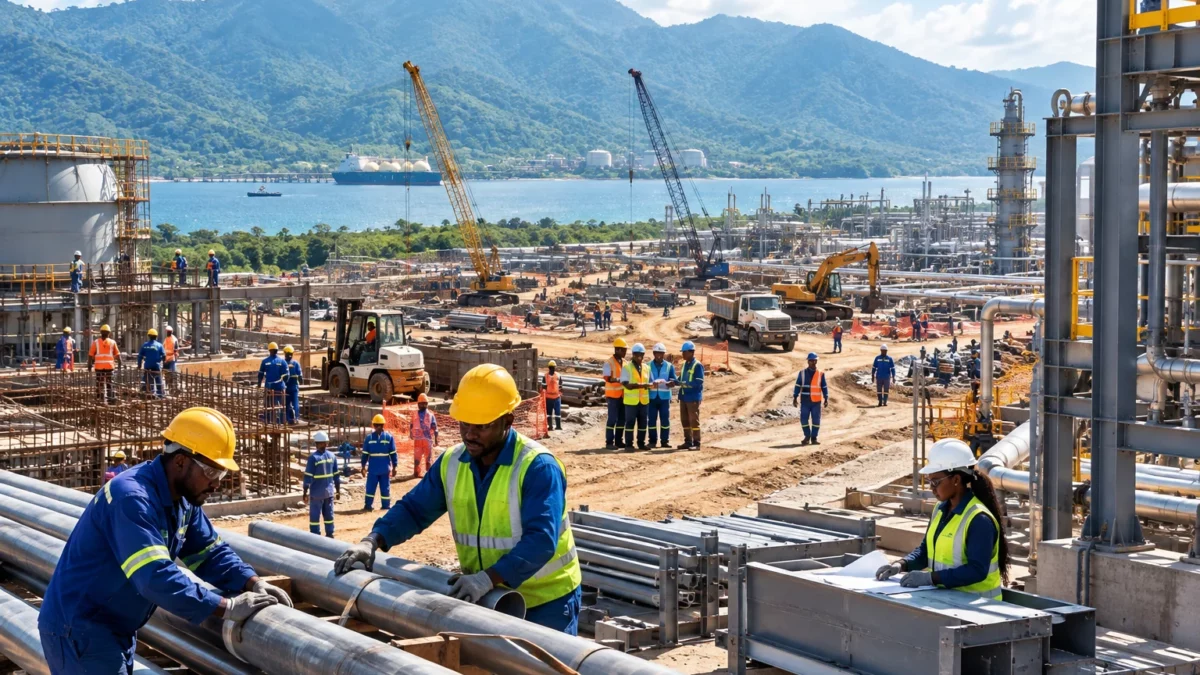
For Mozambican businesses, the stakes of major gas projects go beyond the volumes extracted or the revenues expected. They also lie in the contracts awarded, the jobs created and the skills that will remain in the country. A new public authority must now verify that commitments to national participation are put into practice.
From legal framework to contract oversight
In June 2026, Mozambique adopted its first law dedicated to local content in the oil and gas sector. The term refers to the role given to the country’s businesses, goods, services and workers in hydrocarbon-related activities. Decree No. 80/2026, published on 18 November, sets out the organisation and powers of the Local Content Authority, which is responsible for overseeing implementation of the law.
The new institution will be able to review and approve procurement and recruitment plans submitted by operators. It will then have to compare those commitments with contracts and actual practices. To do so, it can analyse companies’ reports, check deadlines, conduct audits and penalise breaches provided for by law.
Its remit also covers certification of goods and services presented as local. The Authority is to maintain a register of Mozambican suppliers and make the projects’ recruitment and procurement needs visible. The aim is to give national businesses more concrete information about the contracts for which they can compete.
The text applies to holders of petroleum rights, operators and companies working for them. The obligations must also be passed on to subcontractors. In theory, this chain extends the rule’s reach beyond the major consortia. In practice, its effectiveness will depend on oversight, the administration’s resources and local suppliers’ access to tenders.
A tangible stake in the Rovuma basin
The rules come as gas investment is concentrated in the north of the country, notably in the Rovuma basin, off Cabo Delgado province. Coral Sul, operated by Eni, has been producing gas since 2022. Coral Norte is expected to begin production in 2028, according to forecasts released for the project. Meanwhile, Mozambique LNG, led by TotalEnergies, resumed activities in January 2026 after a halt that began in 2021.
The resumption of work gives the debate over local benefits immediate significance. TotalEnergies said that more than 3,000 Mozambicans were among the roughly 4,000 workers mobilised when work restarted. The figure, provided by the company, describes a share of employment on site; on its own, it says nothing about how long jobs will last, their skill levels or which contracts are accessible to Mozambican firms.
Another recent development: on 17 November, the government approved a modification to the development plan for Rovuma LNG. The National Petroleum Institute describes the project in Area 4 as being led by the Mozambique Rovuma Venture consortium, which brings together Eni, ExxonMobil and CNPC. The revised plan includes contracts for local businesses and a share of gas for the domestic market. These announcements should be distinguished from results already achieved: approval of a plan does not mean that the promised contracts, jobs or revenues have materialised.
Suppliers face major companies’ requirements
For a small or medium-sized business in Maputo, Pemba or another city, publishing project requirements can make it easier to identify opportunities. But information alone is not enough. Suppliers must also be able to meet the quality, financing, volume and deadline requirements imposed by major operators. Certification procedures and subcontracting rules will therefore be crucial.
The law aims to do more than reserve a share of procurement. It also seeks to strengthen the skills and productive capacity of Mozambican businesses. Without access to credit, training and markets, a legal preference risks being difficult to put into practice. Conversely, regular contracts can help some suppliers invest, hire and work beyond the gas sector alone.
The effects will not be evenly distributed. Established businesses and skilled workers may be better placed to respond quickly to tenders. Companies in provinces far from decision-making centres may face greater difficulty accessing information and finance. In Cabo Delgado, benefits for residents will also depend on security, the continuity of operations and how jobs are distributed.
A new institution faces a credibility test
The establishment of the Authority adds a specialist body to the sector’s governance, alongside the National Petroleum Institute and the relevant government departments. Its status provides for oversight and enforcement powers. The government has also appointed Ilídio Xavier Malonguete Bambo as chair of its board, a decision approved at the Council of Ministers meeting on 24 November. The appointment marks a step in the institution’s organisation; it is not yet enough to assess its results.
The challenge will be to enforce the rules predictably, including for major operators and their subcontractors. Publishing requirements, certification decisions and oversight results could help businesses understand how commitments are assessed. It would also make it easier to distinguish announcements from verifiable achievements.
Within the Southern African Development Community (SADC), of which Mozambique is a member, the issue extends beyond any one project. Countries in the region are seeking to attract energy investment while developing national skills and businesses. For Maputo, the next measure of progress will be not the number of laws adopted but the share of contracts actually won by Mozambican suppliers, the quality of jobs created and public monitoring of commitments. That is the scale on which local content policy can be judged.