
 Algeria
 Egypt
 Libya
 Morocco
 Sudan
 Tunisia
 Benin
 Burkina Faso
 Cabo Verde
 Côte d'Ivoire
 Ghana
 Guinea
 Guinea-Bissau
 Liberia
 Mali
 Mauritania
 Niger
 Nigeria
 Senegal
 Sierra Leone
 The Gambia
 Togo
 Cameroon
 Central African Republic
 Chad
 Equatorial Guinea
 Gabon
 Republic of the Congo
 São Tomé and Príncipe
 Burundi
 Comoros
 Djibouti
 Eritrea
 Ethiopia
 Kenya
 Madagascar
 Malawi
 Mauritius
 Mozambique
 Rwanda
 Seychelles
 Somalia
 South Sudan
 Tanzania
 Uganda
 Angola
 Botswana
 Eswatini
 Lesotho
 Namibia
 South Africa
 Zambia
 Zimbabwe
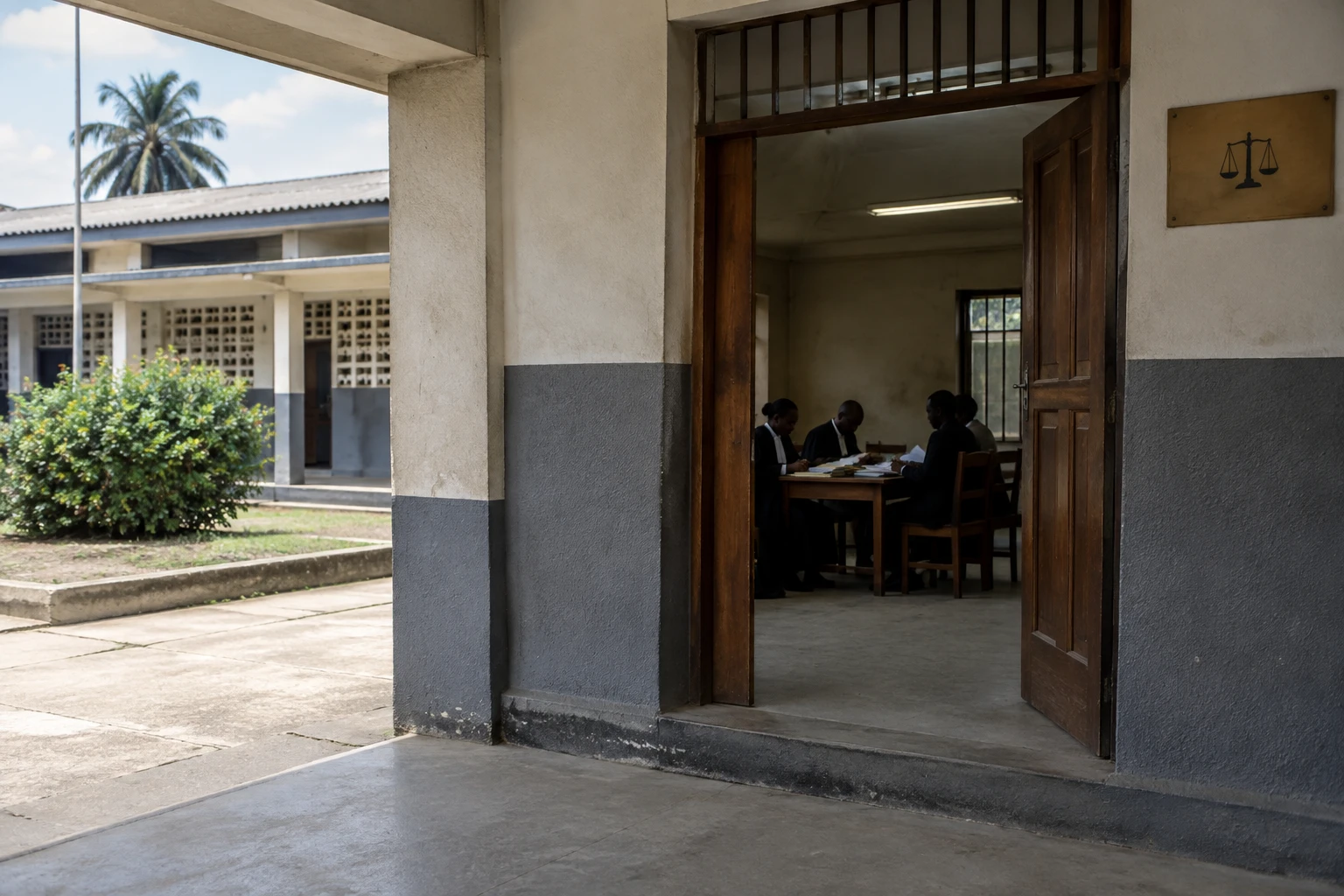
In Kinshasa, a question now goes beyond the judicial fate of an opposition figure: how can the courts rule on an accusation linked to an activist’s death when the circumstances remain disputed? The trial of Prince Epenge, which opens on Wednesday 11 November 2026, puts this requirement for evidence at the centre of proceedings.
A case arising from an opposition march
Manassé Lomboto, a member of Action for Democracy and Development in Congo (ADD Congo), died in Kinshasa on 15 September, after a march organised by the Coalition for the Defence of Article 64 (C64). The opposition says he was the victim of violence. The authorities maintain that he died as a result of an illness.
The case is politically sensitive. C64 brings together several opposition figures, including Martin Fayulu, Moïse Katumbi, Delly Sesanga, Augustin Matata Ponyo and Jean-Marc Kabund. It opposes the political course of the authorities and met in Rome in late October. Prince Epenge was due to take part in the meeting when he was detained at N’Djili airport.
On 25 October, the president of ADD Congo and Lamuka’s spokesperson was arrested as he was preparing to leave for Italy. After several periods in detention, he was transferred to Makala Central Prison on 31 October. His requests for provisional release were rejected, according to his lawyer. The hearing before the Kinshasa-Gombe magistrates’ court is due to take place inside the prison.
The cause of death remains at the heart of the dispute
Prince Epenge is being prosecuted for “spreading false rumours”. He is accused of describing Manassé Lomboto’s death as a killing and of attributing the violence to members of the Force of Progress, which the opposition presents as close to the UDPS. These allegations are disputed and will have to be examined by the courts.
The debate, however, does not simply come down to two political accounts. A medical report drawn up on 16 September and seen by Actualite.cd describes Manassé Lomboto’s admission to hospital in a serious condition, followed by his death after cardiopulmonary arrest. The document does not specify the initial cause of his condition. It mentions neither apparent skin injuries nor an autopsy. On its own, it therefore cannot confirm either the alleged killing or the illness theory.
The authorities have defended the latter explanation. The opposition rejects it and calls for the circumstances to be established. The activist’s death has also been the subject of a judicial inquiry, according to reports published by the Congolese press. The proceedings against Epenge and the inquiry into the death are linked in public debate, but they do not necessarily address the same questions: one concerns the opposition figure’s statements, the other the circumstances of the death.
A legal battle as well
The defence says it will challenge the charge. Lawyer Clément Muza says the prosecution is based on Article 199 of the Congolese Penal Code, which could expose his client to a prison sentence of up to three years. He contrasts this provision with Article 360 of the Digital Code, which carries a maximum sentence of six months. These are the lawyer’s interpretations; the court will have to rule on the applicable law and the facts.
The defence also says it is concerned about its client’s health and plans to request his release again. These concerns should be attributed to his representatives unless and until they are established by an independent assessment. They arise in a difficult prison context: Makala, Kinshasa’s main prison, has faced severe overcrowding for several years, and its detention conditions are regularly condemned.
Detention and the holding of a hearing in prison give the trial a tangible dimension for relatives, lawyers and political supporters. They also make safeguards for the defence, access to medical care and the court’s ability to examine conflicting evidence without prejudging the outcome all the more important.
A test of confidence in the justice system
The timing has fuelled controversy: Prince Epenge was arrested on the eve of his departure for an opposition meeting in Rome, then prosecuted over his statements about a death that occurred during a demonstration. This sequence is not enough to prove a political motive. It nonetheless explains why the opposition is following the case as a test of judicial independence. C64 called for his release after his arrest.
For Congolese people, the immediate stakes are twofold: finding out what happened to Manassé Lomboto and determining whether Prince Epenge’s statements constitute an offence. A credible judgment will depend on the examination of the evidence, the response to the defence’s arguments and the distinction between a disputed statement and an established fact. Otherwise, the proceedings risk adding another rift to an already polarised political debate.
At regional level, the case speaks more broadly to guarantees of freedom of expression and fair proceedings in Central Africa and the Great Lakes region. The DRC is a member of the Southern African Development Community (SADC), a regional organisation whose shared commitments regularly invoke democratic principles and the rule of law. For now, the next step is the 11 November hearing: it is due to clarify the charges, the evidence submitted to the court and what will happen next with the request for provisional release.



