Egypt
 Libya
 Morocco
 Sudan
 Tunisia
 Benin
 Burkina Faso
 Cabo Verde
 Côte d'Ivoire
 Ghana
 Guinea
 Guinea-Bissau
 Liberia
 Mali
 Mauritania
 Niger
 Nigeria
 Senegal
 Sierra Leone
 The Gambia
 Togo
 Cameroon
 Central African Republic
 Chad
 DR Congo
 Equatorial Guinea
 Gabon
 Republic of the Congo
 São Tomé and Príncipe
 Burundi
 Comoros
 Djibouti
 Eritrea
 Ethiopia
 Kenya
 Madagascar
 Malawi
 Mauritius
 Mozambique
 Rwanda
 Seychelles
 Somalia
 South Sudan
 Tanzania
 Uganda
 Angola
 Botswana
 Eswatini
 Lesotho
 Namibia
 South Africa
 Zambia
 Zimbabwe
In a security case involving nationals of two neighbouring countries, one question matters as much as the announcement itself: what can be established, and what remains to be verified? In Algeria, the reported arrest of 61 Moroccans in Oran quickly moved beyond the police sphere. Authentic images and others presented as fake became part of the debate, while judicial details remained limited.
An official announcement, with details still incomplete
On 11 October 2026, Algeria’s General Directorate of National Security announced the dismantling of a criminal network and the arrest of 61 Moroccan nationals in Oran. According to this account, the group had been preparing acts that could undermine security and public order. The state news agency APS relayed the statement. The authorities also said that a former Moroccan serviceman was among those arrested.
According to the account provided by the police, the individuals arrived by plane in Tunis, then crossed the Algerian border in the El Kala area, in El Tarf province, before travelling by road to Oran. This route, linking the east of the country to a major city in the west, is attributed to the Algerian authorities. The publicly available information consulted does not allow the route or the suspicions against those arrested to be independently confirmed.
Images broadcast by public media show people filmed from behind and passports laid out on a table. The account provided refers to 63 passports and nine women among those arrested. These details come from examination of the broadcast images, but have not all been confirmed by an independent source. At this stage, no specific target, detailed plan or material evidence establishing preparations for sabotage has been made public in the sources consulted.
The battle over images clouds the debate
After the official images were broadcast, other visuals circulated online. Some showed people kneeling with their hands tied, or added bundles of banknotes to a similar scene. The material provided with the case says these images were identified as AI-generated and points to inconsistencies in the positions of police officers. This analysis has not been cross-checked here by an independent digital forensics organisation. It is therefore necessary to distinguish between images reported as having been broadcast by public media and the technical assessments made about them.
A fake image can fuel doubt without proving that the arrest did not take place. Conversely, an official video cannot, on its own, verify the accusations or the circumstances of the arrest. The prudent approach is to separate these questions: the announcement was indeed relayed by APS and other media, but the available evidence is not sufficient to establish publicly the nature of the alleged acts.
Media coverage confirms that the announcement circulated widely, but does not necessarily amount to independent verification. Several articles repeat the initial statement without providing court documents, verifiable identities or direct testimony. The distinction matters: repeating official information is not the same as independently confirming the facts it contains.
A case caught up in Algerian-Moroccan tensions
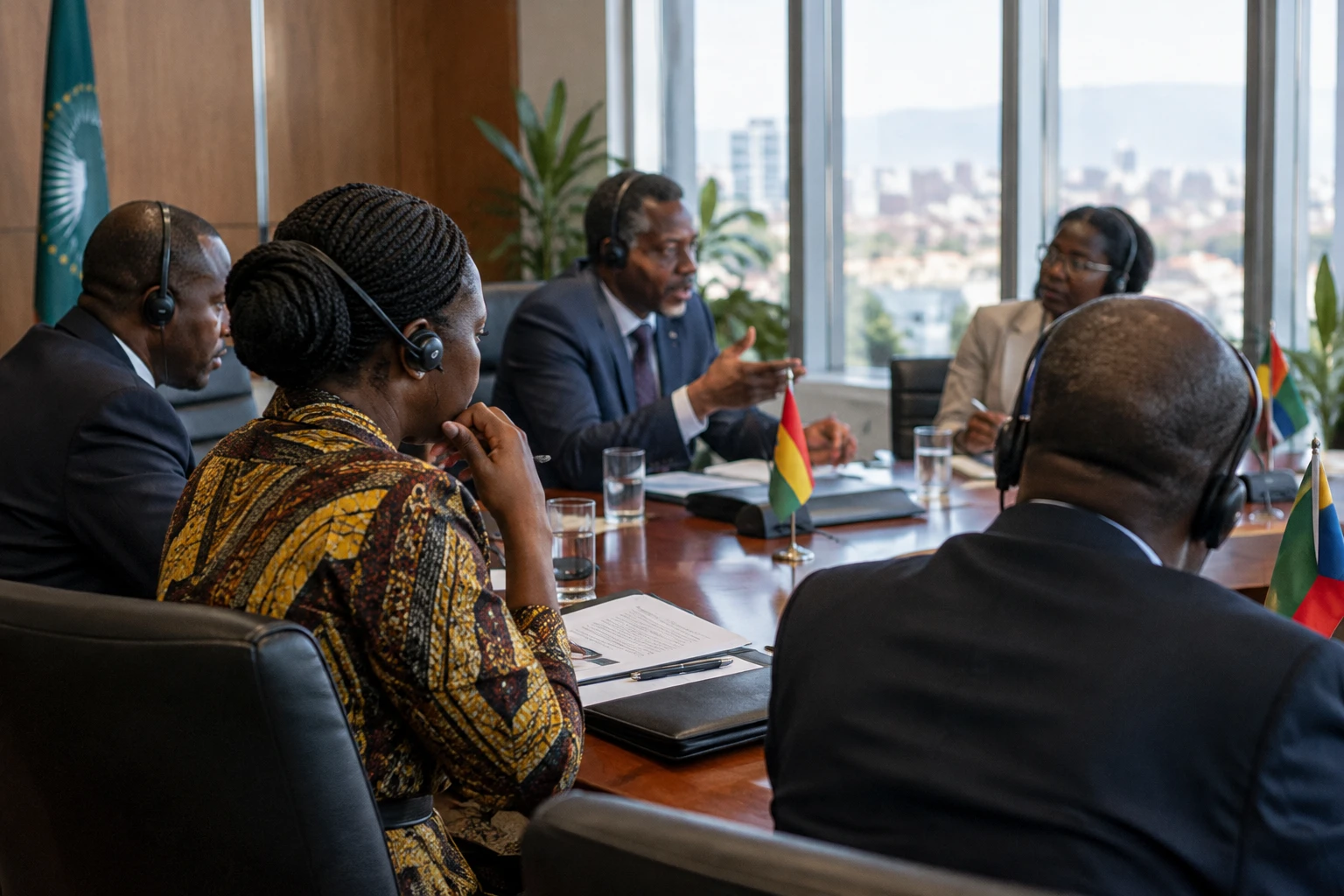
The diplomatic context gives the announcement particular weight. Algeria severed diplomatic relations with Morocco in August 2021, amid regional disagreements and political tensions. The land border between the two countries has been closed since 1994. The African Union had expressed regret at the time over the rupture and called for the prospects of peace and prosperity in the Maghreb to be preserved.
The strained relationship limits direct political channels that might quickly clarify a case involving nationals of both countries. It also increases the risk that police matters will be interpreted as an episode of national confrontation. However, the context neither confirms the Algerian accusations nor supports a conclusion that the authorities have manipulated events. Both claims require evidence of their own.
For the detainees and their families, the immediate issues are concrete: knowing the precise reasons for the arrest, the charges brought, access to a lawyer and arrangements for consular assistance. In the absence of verifiable information about their identities, legal status or representation, it is impossible to describe these safeguards as either granted or denied. The Algerian authorities have not publicly provided details on these matters in the information consulted.
Consequences extending beyond Oran
The case highlights the role of migration routes and border controls in a region where travel also passes through Tunisia. It does not, however, allow one to infer that those arrested were migrants or to attribute to them any plan other than the one alleged by the police. Caution is all the more necessary because the available information is based mainly on communications from a single state.
At the regional level, the case underlines the fragility of cooperation in the Maghreb. The Arab Maghreb Union, which brings together Algeria, Morocco, Tunisia, Libya and Mauritania, provides a regional framework, but tensions between Algiers and Rabat weigh on the prospects for consultation. The African Union has already highlighted the consequences of this rupture for regional stability and prosperity.
What happens next will depend above all on verifiable information: judicial details about the charges, whether those arrested can be represented by lawyers, details of items seized and any official Moroccan response. Until such information is available, the accusations should be reported as claims by the Algerian authorities, not presented as established facts. In a climate where images travel faster than evidence, judicial transparency will matter more than versions circulating on social media.