Algeria
 Egypt
 Libya
 Morocco
 Sudan
 Tunisia
 Benin
 Burkina Faso
 Cabo Verde
 Côte d'Ivoire
 Ghana
 Guinea
 Guinea-Bissau
 Liberia
 Mali
 Mauritania
 Niger
 Nigeria
 Senegal
 Sierra Leone
 The Gambia
 Togo
 Cameroon
 Chad
 DR Congo
 Equatorial Guinea
 Gabon
 Republic of the Congo
 São Tomé and Príncipe
 Burundi
 Comoros
 Djibouti
 Eritrea
 Ethiopia
 Kenya
 Madagascar
 Malawi
 Mauritius
 Mozambique
 Rwanda
 Seychelles
 Somalia
 South Sudan
 Tanzania
 Uganda
 Angola
 Botswana
 Eswatini
 Lesotho
 Namibia
 South Africa
 Zambia
 Zimbabwe
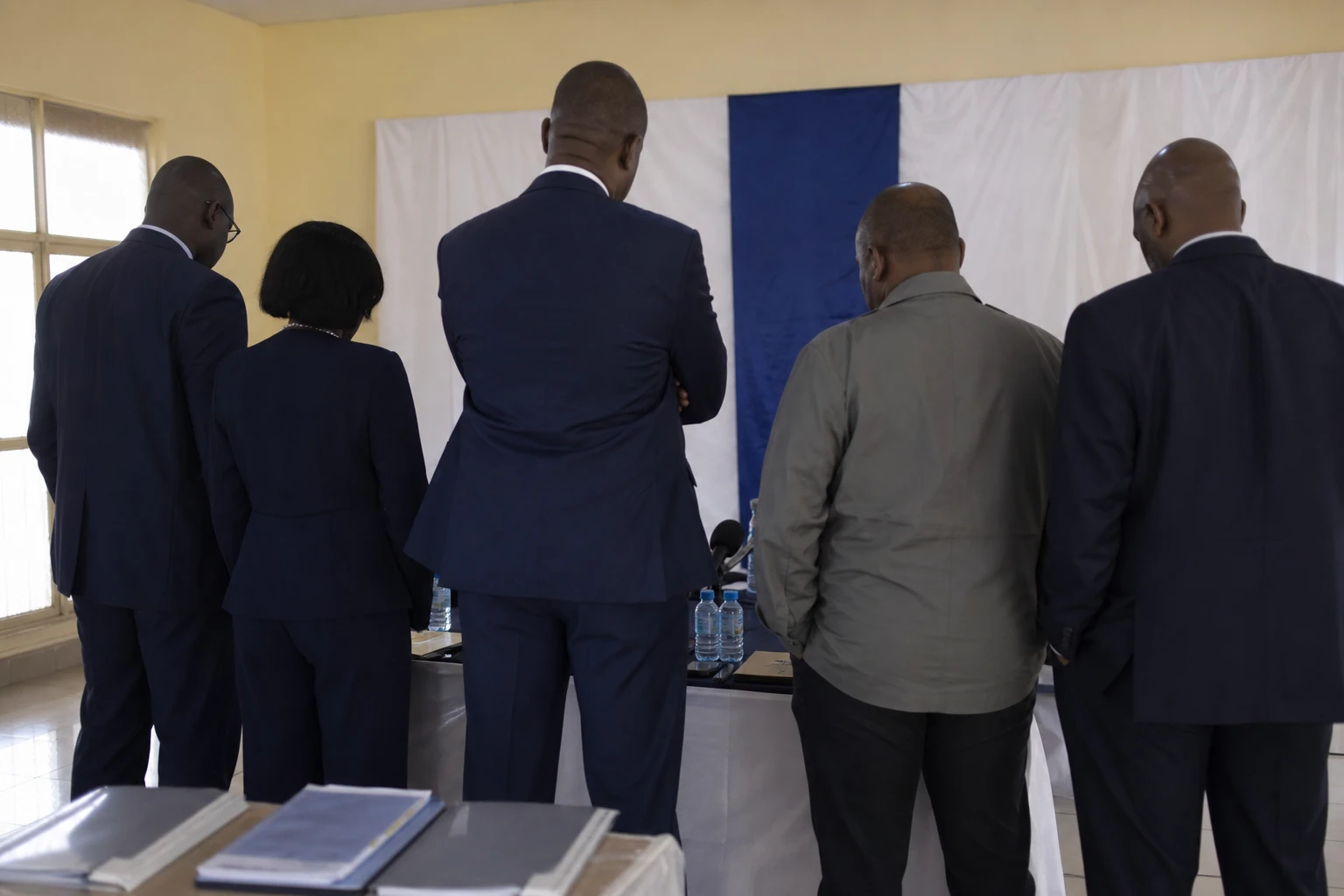
In Obo, health surveillance moves closer to areas at risk
When a serious disease is circulating across a porous border, time becomes a matter of security. In the Central African Republic, the response now also runs through Obo, in Haut-Mbomou, where the authorities have strengthened local diagnostic capacity to prevent a simple suspicion from turning into a critical delay.
The choice is no accident. Haut-Mbomou lies in the country’s far south-east, in an area of intense cross-border movement with the Democratic Republic of the Congo. Against a backdrop in which the WHO confirmed a new Ebola outbreak in Ituri, in eastern DRC, in May 2026, Bangui has chosen to act in advance rather than wait for a signal to arrive too late from the capital’s major hospitals.
This proximity-based approach is essential in a country where distances, road conditions and limited medical evacuation capacity can add several hours, or even several days, to the time taken to provide care. In the case of Ebola, every delay matters. The WHO also notes that the disease remains a major epidemic risk in Central Africa, with its circulation documented several times in the DRC since 1976.
Three mobile laboratories to save time
A high-security mobile laboratory has just been installed in Obo to analyse samples on site. The aim is simple: to avoid routinely sending samples all the way to Bangui, reducing the time between reporting a suspected case and biological confirmation. The facility complements two other units announced in the same health district, in Zémio and Mboki. The equipment is also intended to help detect other infectious diseases with epidemic potential, such as mpox, cholera, yellow fever and dengue.
In practice, this increase in capacity changes the response on the ground. A local health centre can isolate a patient more quickly, alert surveillance teams and start contact tracing before the chain of transmission spreads. This is precisely the kind of network that health organisations recommend when an outbreak is detected near an international border. The WHO, for its part, has stepped up its support to the DRC following confirmation of the epidemic in Ituri.
Central African Health Minister Pierre Somse describes the laboratories as high-security tools capable of improving rapid detection. His department is also focusing on raising awareness among communities in Haut-Mbomou, so that any unusual fever, unexplained bleeding or severe fatigue is reported without delay to a health centre. In a rural area where health information often travels through families, community health workers and frontline care staff, this guidance is as valuable as the equipment.
A health border as well as a public health issue
Ebola prevention in the Central African Republic does not take place only in laboratories. It also depends on surveillance at entry points, public trust and the ability to coordinate local, national and regional actors. The country is a member of CEMAC, the Economic and Monetary Community of Central Africa, where trade and family movements between neighbouring countries make health vigilance essential. When an outbreak emerges in the DRC, the threat does not stop at administrative borders.
Haut-Mbomou illustrates this reality. In this isolated prefecture, residents often face long distances to reach better-equipped facilities. For them, a local diagnosis can prevent costly, lengthy and risky journeys. For the state, it is also a way to show that public health is not confined to Bangui and its major institutions, but must cover the country’s outlying areas, where alerts sometimes emerge first.
This strategy is part of wider preparations for health emergencies. The WHO has said that the current Ebola outbreak in the DRC and Uganda constitutes a public health emergency of international concern, even though the risk is not the same in every country. In other words, the threat is regional, but the response must remain local, with teams able to act quickly alongside communities.
What this early action says about Central Africa
The decision to strengthen Obo, Zémio and Mboki has implications beyond the Central African Republic. It reflects a change in approach in Central Africa: moving from a centralised, delayed response to decentralised surveillance rooted in border areas. This is an important shift in a region where health crises often travel with population movements, trade and areas with limited medical coverage.
It also highlights a point that is often overlooked: countries that have already faced Ebola now have operational experience. The DRC, hit repeatedly, has developed response practices that now serve as a reference across the sub-region. By strengthening its border teams, the Central African Republic is seeking to avoid a scenario in which an alert is detected too late and the outbreak becomes harder to contain.
The next area to watch is therefore less the capital than the crossing points in the south-east. If Ebola continues to circulate in Ituri, the strength of the Central African response will be tested in Obo and across Haut-Mbomou. This is where the credibility of health preparedness is measured in practice: in the speed of diagnosis, the quality of alerts and the ability to protect populations who live far from decision-making centres but are on the frontline of risk.