
 Algeria
 Egypt
 Libya
 Morocco
 Sudan
 Tunisia
 Benin
 Burkina Faso
 Cabo Verde
 Ghana
 Guinea
 Guinea-Bissau
 Liberia
 Mali
 Mauritania
 Niger
 Nigeria
 Senegal
 Sierra Leone
 The Gambia
 Togo
 Cameroon
 Central African Republic
 Chad
 DR Congo
 Equatorial Guinea
 Gabon
 Republic of the Congo
 São Tomé and Príncipe
 Burundi
 Comoros
 Djibouti
 Eritrea
 Ethiopia
 Kenya
 Madagascar
 Malawi
 Mauritius
 Mozambique
 Rwanda
 Seychelles
 Somalia
 South Sudan
 Tanzania
 Uganda
 Angola
 Botswana
 Eswatini
 Lesotho
 Namibia
 South Africa
 Zambia
 Zimbabwe
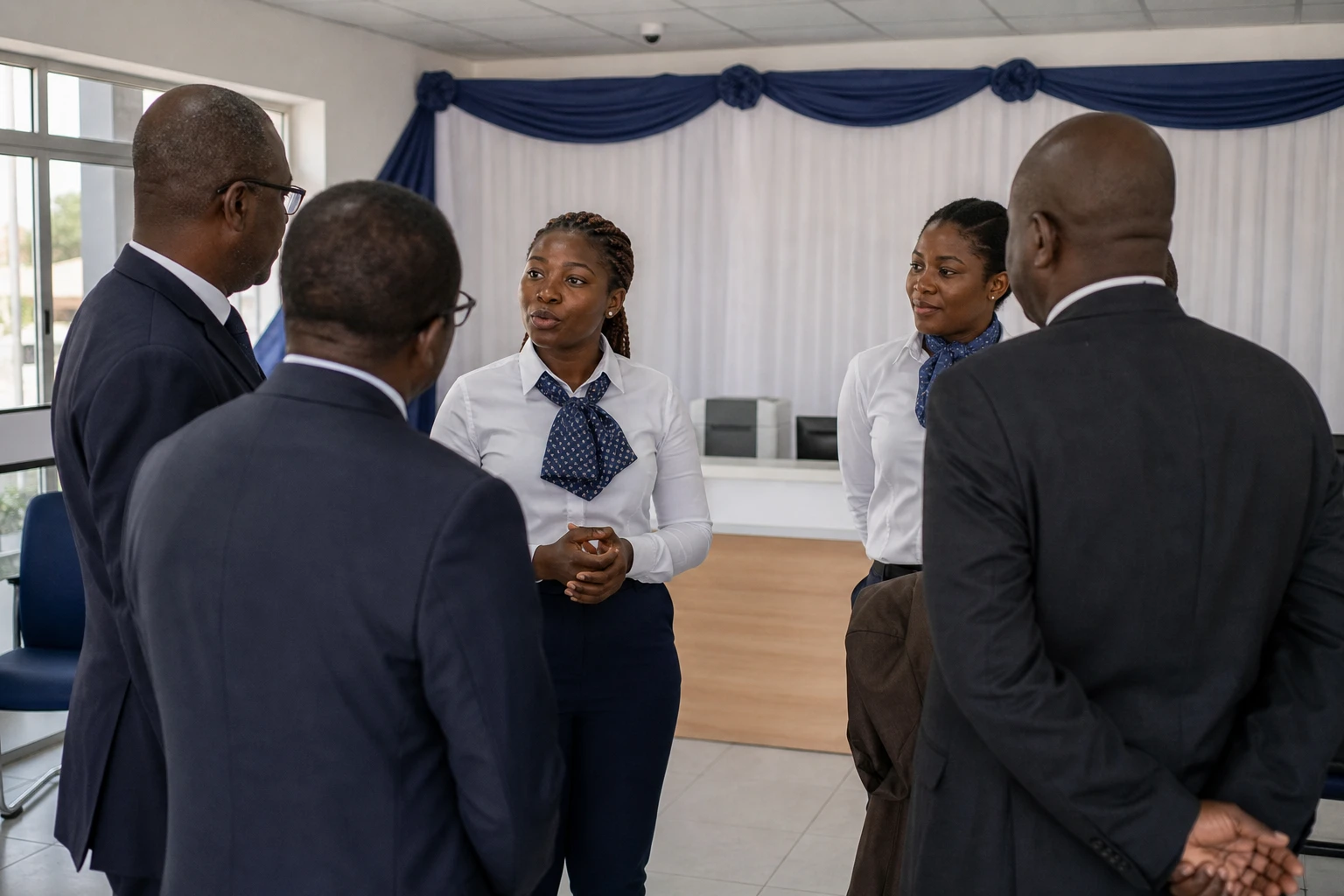
In Bondoukou, access to local banking remains a concrete issue
In eastern Côte d’Ivoire, access to a bank counter is no small matter. For a farmer, trader, cooperative or small business, the distance to the nearest branch can delay a payment, a seasonal loan or a simple cash-management transaction. This is particularly significant in Bondoukou, which serves as the administrative and economic capital of Gontougo, in the north-east of Côte d’Ivoire.
The opening of a permanent branch therefore addresses the need for a lasting banking presence, at a time when the local economy relies heavily on agriculture, trade, livestock and services. Gontougo is also a transit area linking several economic zones within the country and neighbouring states, further strengthening the case for services able to manage cash flows, savings and business financing.
A local presence designed for a hands-on economy
Bondoukou is in a region covering more than 16,000 km², with a population estimated at over 600,000, according to the institutional sources consulted. The Gontougo Regional Council says the area’s main economic potential lies in agriculture, services, mining and livestock. In March 2024, the Ivorian government also carried out operations to support food production among thousands of farmers.
In this context, setting up a bank is about more than commercial communications. It affects the movement of money in an area where transactions still often straddle cash, mobile transfers and short-term credit needs. A physical branch can facilitate account openings, deposits and withdrawals, as well as financing for farming seasons, SME orders and traders’ stock.
NSIA Banque Côte d’Ivoire says it has more than 80 branches and over 120 counters in the country, as well as a representative office in Paris. The bank also describes itself as serving individuals and businesses, with payment, savings, financing, insurance, digital and international trade services. Its expansion across the country follows a clear rationale: capture activity where it is generated, not only in major urban centres.
What a permanent branch means for local businesses
The move from “mobile” to “permanent” has practical significance. A mobile branch allows a bank to test demand, observe usage and build commercial relationships. A fixed branch can then make those relationships lasting, with more comprehensive and regular services. That is what NSIA Banque is seeking to do in Bondoukou, serving individuals, craftspeople, farmers, cooperatives, SMEs and larger, more established businesses.
For small operators, the priority is access to suitable products: invoice advances, seasonal loans, leasing or purchase-order financing. For businesses, the added value lies more in cash-flow management, payment methods and international trade. In a local economy where harvests, sales and supplies follow precise timetables, the speed of banking services can affect profitability.
This momentum is part of a broader trend in Côte d’Ivoire and the WAEMU. The BCEAO says the Union’s strict banking rate is rising, although significant disparities remain between urban, peri-urban and rural areas. At the same time, digital financial services are becoming more widely used, but they do not fully replace a local banking presence when needs become more complex.
An Ivorian story with regional significance
The case of Bondoukou says something about Côte d’Ivoire today: an economy growing beyond Abidjan, with mid-sized cities set to play a more visible role in financial intermediation. Establishing a branch there is no minor step. It recognises that growth also depends on local areas, agricultural supply chains, local markets and the small businesses that shape everyday life.
The significance is also regional. North-eastern Côte d’Ivoire is part of a wider area of commercial movement, on the edge of sub-regional trade, where ECOWAS remains a point of reference for mobility, business and economic integration. In this setting, an Ivorian bank strengthening its presence outside major cities is not only consolidating its network, but also its ability to support local economies connected to wider West African flows.
NSIA Banque Côte d’Ivoire is thus consolidating a territorial coverage strategy already evident in its national network. The message is simple: the contest for Côte d’Ivoire’s banking market is not being fought only on the coast or in the economic capital, but also in cities such as Bondoukou, where demand for financial services is growing as productive activity becomes more structured.



