Algeria
 Egypt
 Libya
 Morocco
 Tunisia
 Benin
 Burkina Faso
 Cabo Verde
 Côte d'Ivoire
 Ghana
 Guinea
 Guinea-Bissau
 Liberia
 Mali
 Mauritania
 Niger
 Nigeria
 Senegal
 Sierra Leone
 The Gambia
 Togo
 Cameroon
 Central African Republic
 Chad
 DR Congo
 Equatorial Guinea
 Gabon
 Republic of the Congo
 São Tomé and Príncipe
 Burundi
 Comoros
 Djibouti
 Eritrea
 Ethiopia
 Kenya
 Madagascar
 Malawi
 Mauritius
 Mozambique
 Rwanda
 Seychelles
 Somalia
 South Sudan
 Tanzania
 Uganda
 Angola
 Botswana
 Eswatini
 Lesotho
 Namibia
 South Africa
 Zambia
 Zimbabwe
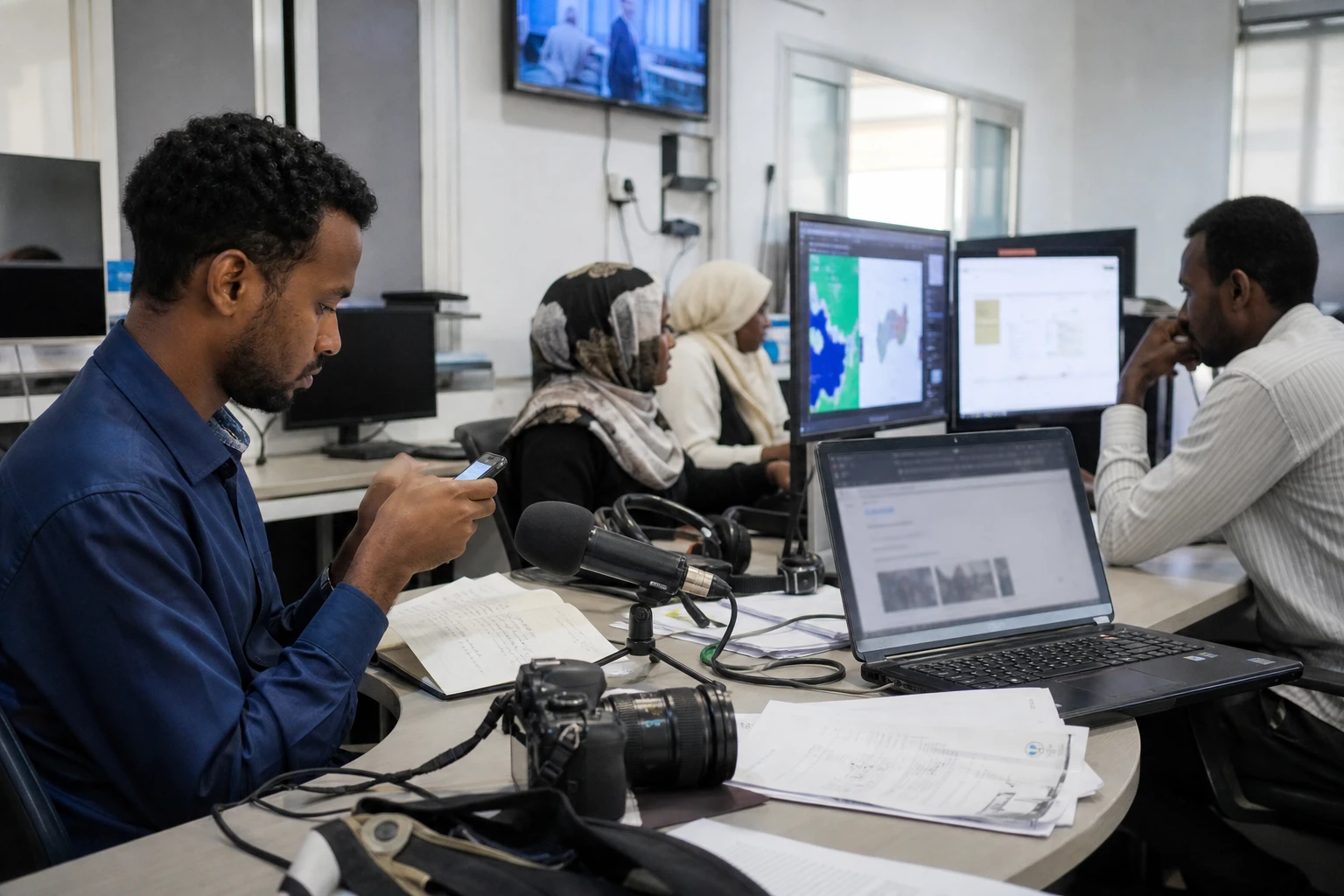
In North Kordofan, children pay the price as the front line moves closer
In central Sudan, the war is no longer visible only along the front lines. It can also be seen in closed schools, targeted markets and blocked roads. Around Al-Obeid, the capital of North Kordofan and a strategic hub on the route to Khartoum, violence is now affecting families in their daily lives. Children are finding themselves on the front line of a conflict that is becoming entrenched.
The local situation is part of a wider national picture. Since April 2023, fighting has pitted the Sudanese army against the Rapid Support Forces, known by the acronym RSF, a paramilitary group that emerged from the former militias involved in the Darfur conflicts. Sudan, a North African country whose capital is Khartoum, remains fragmented by shifting front lines, mass displacement and constant pressure on public services. IGAD, the East African regional organisation to which Sudan belongs, is monitoring the issue, but has yet to secure a lasting political solution.
Alarming tolls, now corroborated by several sources
According to UNICEF, at least 23 children have been killed and 25 others injured in North Kordofan over the past two months, in an area where fighting has intensified around Al-Obeid since the end of May. The latest incident recorded by the UN agency took place on Friday 24 July in the Burbur area, south of Al-Obeid. Four children, two boys and two girls aged between 8 and 16, were reportedly killed.
These figures are not isolated. On 6 July, UNICEF had already warned that at least 330 children had been killed or injured across Sudan during the first six months of 2026. The organisation said at the time that North Kordofan and Darfur had the highest numbers of child casualties, with more than 35 cases reported in North Kordofan state since May, including at least 18 deaths. A further UN warning, published on 21 July, confirmed that the intensifying fighting in Al-Obeid and North Kordofan posed a serious risk to children already caught up in three years of war.
The sequence is consistent with other available information. The AP reports that Al-Obeid is a strategic city on the east-west route linking Khartoum to the Nile Valley, and that drone attacks have already damaged civilian infrastructure there, including neighbourhoods, bridges and power facilities. Africanews also confirmed on 27 July that the Sudanese army had retaken control of a major highway to Al-Obeid, a sign that the corridor remains contested for military and logistical purposes.
What the violence means for Sudanese families
The human toll alone does not tell the whole story. In a war shaped by mobility, control of roads determines access to food, water, healthcare and education. When a route is targeted, traders, ambulances and aid convoys are slowed or brought to a halt. In and around Al-Obeid, insecurity cuts off already fragile services and turns every journey into a gamble. UNICEF says repeated strikes have also damaged homes, schools, health facilities, water networks and markets.
The case of North Kordofan also illustrates a shift in Sudan’s war. Drones have become a central tool in the fighting. They strike from a distance, make cities harder to defend and put civilians at greater risk than combatants. For urban residents, this means more vulnerable neighbourhoods. For rural areas, it often means isolation. For displaced people, it means there is no lasting refuge, as escape routes narrow with each advance by the front lines. UNICEF says children have been killed on roads, in markets and while seeking medical help.
The conflict also has an economic dimension. Al-Obeid is a commercial transit point on the route to Khartoum and central Sudan. When the city is threatened, transport costs rise, goods circulate less freely and local markets contract. In a country where the informal economy supports a large share of households, even the slightest break in logistics triggers an immediate domino effect. Families must choose between food, water, medicines and mobility. Children, meanwhile, bear the cost of delays to essential services.
A warning from Sudan that extends beyond North Kordofan
The tragedy in North Kordofan resonates beyond Sudan’s borders. It is a reminder that the war in Sudan is not just a battle for Khartoum or the major cities in the west. It is also a struggle for corridors, logistics hubs and areas connecting the country to its neighbours. As long as these routes remain contested, humanitarian aid, the return of displaced people and the reopening of schools will remain precarious.
The continental implications are clear. The conflict in Sudan continues to weigh on the Horn of Africa, refugee flows and the African Union’s ability to ensure a minimum level of civilian protection. IGAD and the AU are regularly called upon to act, but on the ground, humanitarian warnings are coming faster than diplomatic progress. The next question is not only military. It is also civilian: will the roads to Al-Obeid remain open, and will basic services be able to withstand the escalation?