
 Algeria
 Egypt
 Libya
 Morocco
 Sudan
 Tunisia
 Benin
 Burkina Faso
 Cabo Verde
 Côte d'Ivoire
 Ghana
 Guinea
 Guinea-Bissau
 Liberia
 Mali
 Mauritania
 Niger
 Nigeria
 Senegal
 Sierra Leone
 The Gambia
 Togo
 Cameroon
 Central African Republic
 Chad
 Equatorial Guinea
 Gabon
 Republic of the Congo
 São Tomé and Príncipe
 Burundi
 Comoros
 Djibouti
 Eritrea
 Ethiopia
 Kenya
 Madagascar
 Malawi
 Mauritius
 Mozambique
 Rwanda
 Seychelles
 Somalia
 South Sudan
 Tanzania
 Uganda
 Angola
 Botswana
 Eswatini
 Lesotho
 Namibia
 South Africa
 Zambia
 Zimbabwe
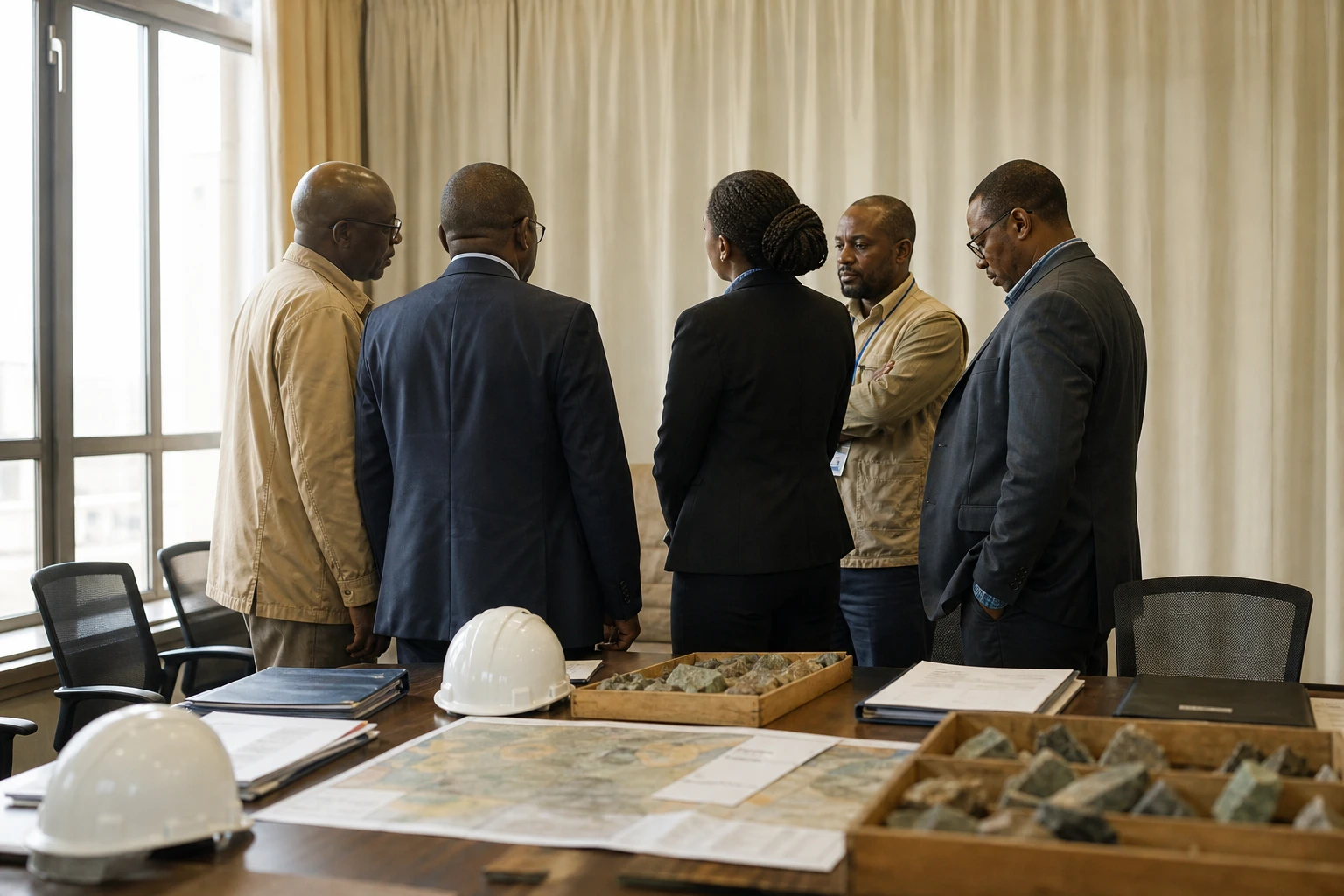
In Haut-Katanga, the contest for strategic metals is no longer being fought solely by major mining groups. European investors are also seeking to establish a foothold in smaller assets that could nevertheless supply global copper and cobalt value chains. The Molulu project, located about 100 kilometres from Lubumbashi, illustrates this new phase of mining competition in the Democratic Republic of the Congo.
A project in the heart of the copper belt
Molulu lies in the Katangan Copperbelt, a vast geological region stretching from the Democratic Republic of the Congo to Zambia. The area accounts for a large share of Congolese copper and cobalt production. It also benefits from an established mining infrastructure network around Lubumbashi, Likasi and Kolwezi.
The Democratic Republic of the Congo remains a central player in the global cobalt market. It also has a rapidly expanding copper industry. Data from the Congolese mining ministry show that in the first quarter of 2025, the country produced 817,639.17 tonnes of copper and 42,855.31 tonnes of cobalt. These volumes place the sector at the heart of export revenues and discussions about local processing.
The DRC is a member of the Southern African Development Community, or SADC, which brings together 16 states in the region. This membership matters for mining projects in the south-east of the country. Road, rail and energy corridors linking the DRC with Zambia, Angola and South Africa partly determine access to markets and processing facilities.
Field campaign to assess the potential
On 2 October 2026, Critical Metals announced the launch of a new field campaign at Molulu. The programme includes geological mapping, trenching and sample collection. The aim is to define mineralised zones more precisely before assessing the possibility of trial extraction.
Critical Metals indirectly owns 70% of the project through Madini Occidental Limited. The company describes Molulu as a former copper and cobalt-producing asset, located close to the smelters and markets of Lubumbashi and Likasi. It says, however, that the geological data still need to be consolidated before any industrial decision is made.
The project has already undergone an initial phase of exploitation. Critical Metals says production began in January 2023, following artisanal mining across several pits. The current campaign is therefore intended to determine whether the identified zones can support an organised and economically viable restart.
Caution is still warranted. The grades cited by the company for certain areas, including between 15% and 40% for copper sulphides and between 2% and 15% for oxides, are project indications. They do not yet constitute an independent, certified estimate of extractable resources.
NIU Invest increases its exposure to Congolese copper
Critical Metals is now controlled by NIU Invest SE, an investment company described as European, with offices in Berlin and London. Available stock-market documents indicate that NIU held 52.07% of Critical Metals’ share capital when the 2026 campaign began.
To support operations, NIU has agreed to subscribe for up to £2.5 million of convertible debt. This type of financing allows debt to be converted into shares at a later date, under conditions set in advance. The deal follows a £2.1 million facility established in December 2025.
The funds are intended to finance work at Molulu, Critical Metals’ operating needs and the refinancing of existing debt. The company said the facility would also give it the means to continue its mining activities and explore other acquisitions.
The strategy confirms NIU Invest’s positioning. The investor is seeking to build a portfolio of assets linked to so-called critical metals, which are used in electricity grids, batteries and certain industrial technologies. Copper meets demand associated with electrification. Cobalt remains a component in several types of batteries, although manufacturers are also seeking to reduce their reliance on the metal.
European presence in a market dominated by Chinese groups
Control of the project by a European investor comes in a sector where Chinese groups hold a major position. Chinese companies are present in several of the DRC’s largest copper and cobalt mines. In 2024, the assets of Tenke Fungurume Mining and Kisanfu Mining, controlled by the CMOC group, accounted for a significant share of Congolese copper and cobalt exports.
This dominance extends beyond extraction. China also plays a central role in refining and processing Congolese cobalt. For European and North American investors, diversifying supply therefore means developing new mining projects, as well as creating processing chains less dependent on a single industrial hub.
The geopolitical context is reinforcing this trend. Kinshasa is seeking to attract more capital and secure greater value from its resources. The United States and the European Union, for their part, want to secure supplies of copper, cobalt, lithium and other strategic minerals. The DRC is thus seeking to broaden its partnerships without abandoning its goal of increasing the share of value captured locally.
For the Congolese, the stakes go beyond the arrival of a new investor. Tangible results will depend on jobs created, tax revenues, compliance with the mining code and relations with communities around the site. They will also depend on the operator’s ability to limit land disputes, environmental impacts and competition with artisanal mining.
The next test will be economic and geological
The campaign at Molulu must first produce reliable data. Critical Metals will then have to determine whether the zones under study allow for trial extraction, and establish the conditions for any potential industrial development. This sequence matters, because a mining permit guarantees neither a mine’s profitability nor the availability of long-term financing.
The project also illustrates how the DRC’s mining landscape is changing. Alongside the very largest mines, smaller companies are seeking to develop targeted assets. They may be able to move more quickly, but are more exposed to cash-flow problems, price fluctuations and logistical difficulties.
At regional level, Molulu’s success will also depend on access to energy, roads and metallurgical facilities. Within SADC, co-operation between the DRC, Zambia and Angola on mining corridors could improve the movement of minerals and processed products. For Kinshasa, the central question will remain value addition: exporting more refined metal rather than raw ore.
The next geological results, the timetable for the convertible financing and Critical Metals’ decisions on a possible production restart will show the true scope of the operation. For now, Molulu represents less a new major mine than a targeted bet on the DRC’s ability to attract diversified capital in a sector where global competition is intensifying.



